

By James Blackman April 17, 2026
Collected at: https://www.rcrwireless.com/20260417/private-5g/ericsson-enterprise-5g-apis-ai-dci
Ericsson is sticking to what it knows: 5G, public and private, and APIs, to expose 5G capabilities to developers and enterprises; it offers more coherent longer-term diversification, it implies, than a Nokia-style switch to ride the AI bandwagon on fiber sales to data centers.
In sum – what to know:
CPaaS and APIs – Ericsson posted 4% organic growth with enterprises in Q1, mostly via its Global Comms Platform, home to its Vonage and Aduna API plays.
WWAN and private 5G – Ericsson wireless WAN division delivered slight growth; private and neutral-host 5G remain small, starting to scale as strategic long-term disciplines.
Edge over data center – Ericsson reiterated its focus on enterprise 5G and APIs for physical and edge AI – versus shorter-term AI growth in data center networking.
Note: this article is continued from here.
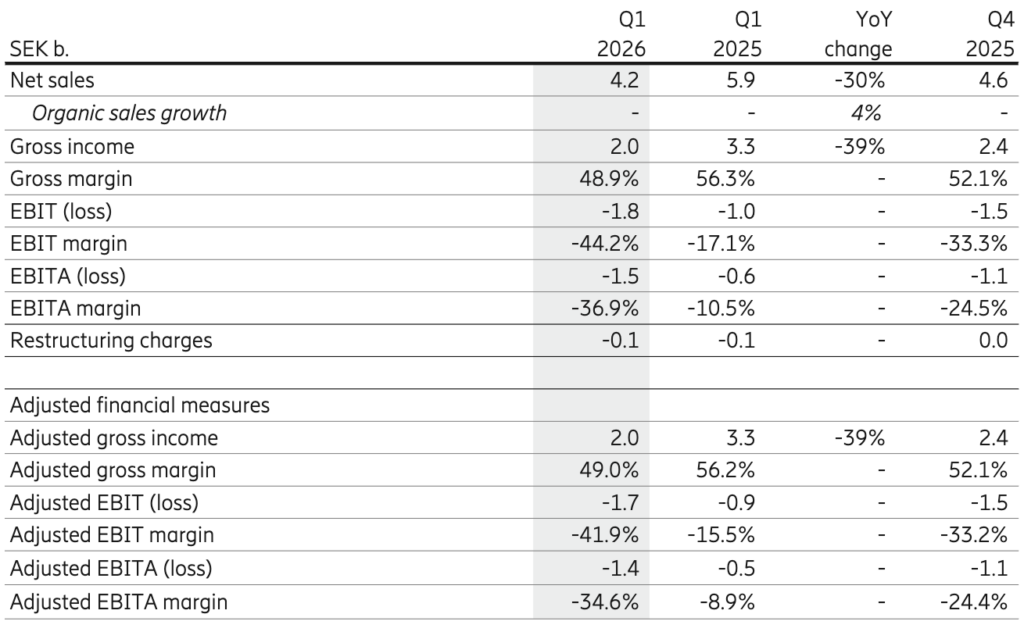
A quick look at Ericsson’s Q1 picture in the enterprise space – just because RCR has been following it, and also wrote about it in the context of the firm’s broader strategy this week. Its four-percent (organic) sales uplift in the period was mostly down to its Global Communications Platform, an umbrella platform for its enterprise-API exposure business – where both its Vonage operation and Aduna venture sit. It cited higher sales in “CPaaS and network API powered solutions”. Meanwhile, growth in standard wireless WAN (WWAN) services – selling routers, SIM services, and managed WAN to enterprises – “benefited” its Enterprise Wireless Solutions (“slight growth”), home to its private and neutral-host 5G operations (discussed here this week, and all the time).
So what about private 5G – which great rival (and market leader) Nokia has decided to exit, and which was called out in headlines, just yesterday, for 2.5-times lower growth (2025 versus 2024)? Well, firstly, just to deal with the forecast about lower growth: Dell’Oro, which called it, also said the private 5G opportunity remains “massive” and “largely untapped” – as it has said for years. Revenue from the sale of private RAN systems was three-to-five percent of total RAN revenue in 2025, it reckons. “The outlook for ‘campus network’ has been revised downward, while WAN growth prospects have strengthened,” it stated. “[But] the high-level message has not changed – private wireless is a massive opportunity, but it will take some time for enterprises to embrace [it].”
Private 5G (and 4G) RAN revenue will grow (CAGR) at about the same rate (10-20 percent), until it comprises five-to-10 percent of total RAN revenue by 2030, the firm forecasts. Ericsson, which remains committed to the idea, appears to be betting on the top of the forecast range, and to take the lion’s share, filling the hole vacated by early market-leader Nokia. Ekholm echoed almost-exactly the message from Åsa Tamsons, in charge of enterprise wireless, in these pages this week. On a Q1 earnings call this morning (April 17), he said: “There are new markets that we see as key opportunities going forward. Of course, new markets take time to develop, but we’re now seeing these efforts start to scale.”
He said more: “We’re… providing the industry’s best networks for AI and by expanding the mobile platform to new use cases and sectors. This includes exposing network capabilities through network-powered solutions, allowing developers to use the network capabilities to create new use cases. It also includes opening up new addressable markets, such as enterprise solutions based on cellular technology and mission-critical networks. This will allow us to capture a greater share of the value from connectivity and drive mid-single-digit growth for Ericsson while achieving our long-term margin targets of 15-18 percent.”
There was also a question on the call about whether Ericsson might get into the data center networking business to provide a “material uplift to group sales” – like Nokia, in other words, which is now competing in data center interconnect (DCI) fiber sales with the likes of Ciena and Cisco as a way to make money elsewhere, while public 5G sales are flat and private 5G sales are small (while “enterprise remains fairly small in the mix”, went the question). Ekholm responded: “We’re not going to see any sales directly from data center expansions right now. Our exposure to AI is going to come from the applications – when you start to see inference play a very different role. We may not be the front runner on the AI wave, but we [have a] longer term [play].”
He went on: “Our exposure will come more from traffic development as AI moves into implementation. It is also going to come from AI in enterprises, where we are starting to see some front-runner industrial companies, still small, but actually picking up demand in two areas – in enterprise wireless connectivity,… [and] network APIs, embedding into enterprise use cases. I don’t want to promote that we have any exposure to data centers. That wave is going to go. We are a little bit behind that, I guess – kind of benefiting from the overall migration of applications towards AI.”
Which is exactly Ericsson’s difference with Nokia – if anyone still wants to make the comparison.
Leave a Reply