
Tanya Weaver Wed 29 Apr 2026
Collected at: https://eandt.theiet.org/2026/04/29/human-hair-thin-shielding-material-blocks-both-electromagnetic-waves-and-radiation
An ultra-thin, stretchable and 3D-printable composite material offers both electromagnetic and radiation shielding in extreme environments, according to a study.
Shielding materials offer protection from electromagnetic waves and radiation. For instance, they are integrated onto spacecraft, semiconductor equipment and advanced medical devices to protect both equipment and people.
With space exploration gaining momentum, the importance of next-generation shielding technology capable of withstanding extreme environments is growing. However, material that is capable of blocking electromagnetic waves and neutron radiation comes with challenges in terms of increasing the weight and structural complexity of equipment.
To address this challenge, a research team at the Korea Institute of Science and Technology (KIST) has developed a composite shielding material solution. It features a single ultra-thin film that is not only thinner than a human hair, but is also stretchy and can be 3D printed.
Dr Joo Yong-ho of KIST, who led the study, said: “This material represents a completely new concept in shielding technology – it is as thin as tape and as flexible as rubber, yet simultaneously blocks both electromagnetic waves and radiation.”
The material combines two types of nanotubes: carbon nanotubes, which are highly conductive and absorb and reflect electromagnetic waves; and boron nitride nanotubes, which are rich in boron and effectively capture neutrons. These two materials naturally form a ‘shell structure’, enveloping each other in a single film capable of simultaneously blocking both types of hazards.
The researchers say the material is capable of blocking 99.999% of electromagnetic waves and reducing neutrons by approximately 72%. This performance is maintained even when the material is stretched to more than twice its original length.
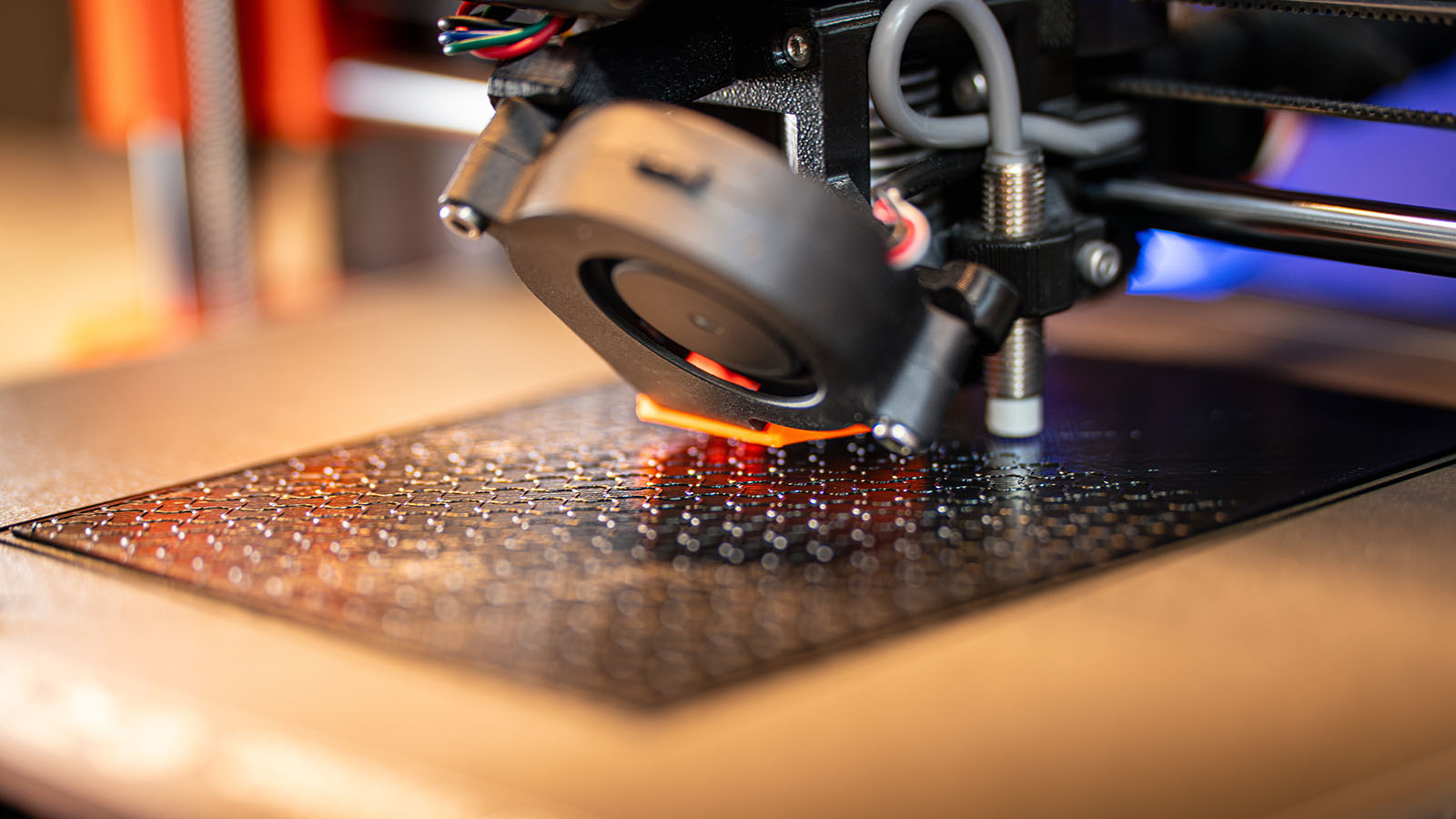
The material can also be 3D-printed into various shapes, including honeycomb structures. In tests, the honeycomb structure was found to offer up to 15% better shielding performance than flat materials of the same thickness.
The material is also capable of withstanding temperatures from -196°C to 250°C, making it suitable for use in extreme environments such as space.
According to the research team, this material could be used in a range of applications where weight reduction is key, such as satellites, space stations, nuclear facilities, cancer treatment equipment and wearable protective gear.
Dr Yong-ho said: “This technology is significant for securing the advanced materials and establishing the domestic production infrastructure necessary for realising the space age. We plan to further enhance its performance through structural design optimisation and actively pursue its application in actual industrial settings.”
The study – Ultrathin, stretchable, and 3D-printable complementary nanotubes–polymer composites for multimodal radiation shielding in extreme environments – has been published in the journal Advanced Materials.
Leave a Reply