
April 24, 2026 by Flinders University
Collected at: https://medicalxpress.com/news/2026-04-ai-heart-disease.html
Digital transformation and artificial intelligence (AI) in health care requires a range of safeguards and standards to work well, but new research from Flinders University provides support for effective AI systems to improve cardiovascular care. The study examines how Clinical Decision Support Systems (CDSS) can transform cardiovascular disease management—a leading cause of death in Australia—by providing more accurate, timely decisions while addressing real-world barriers like workflow integration, usability and clinician adoption.
Published in the International Journal of Medical Informatics, the systematic review stresses the importance of strong governance, workforce readiness and organizational support for sustainable implementation.
Lead author and Ph.D. candidate Samah Sallam says effective AI-driven CDSS can shift disease management from reactive to proactive—moving health care towards early traction and personalized intervention.
Cardiovascular diseases account for the majority of non-communicable disease (NCD) deaths, or at least 19 million deaths in 2021, followed by cancers (10 million), chronic respiratory diseases (4 million), and diabetes (more than 2 million including kidney disease caused by diabetes).
“Alongside skilled clinicians and staff, AI systems can reduce diagnosis delays, streamline intervention opportunities and manage more efficient hospital resources,” says Mrs. Salam, from Flinders Business School.
“It can help to identify disease risk before symptoms emerge through pattern detection across patient data, and support rural and remote health by scaling across primary care and telemedicine with clinical supervision.
“AI works best as a complement to human expertise, not replacement, requiring transparent, deliberate implementation focused on underserved populations.”
However, equity challenges persist: training datasets may be biased, and most health care systems lack AI-integrated prevention protocols.
Senior author Dr. Madhan Balasubramanian, Research Lead at the Flinders Business School and Deputy Director of Health Care Management, says AI decision tools could save Australian lives from heart disease—”but only if we get the implementation right.”
He adds that other NCDs such as cancers, mental health conditions and oral health issues could be significantly improved through the use of AI, particularly in addressing delays in access to care and advancing equity across the health system.
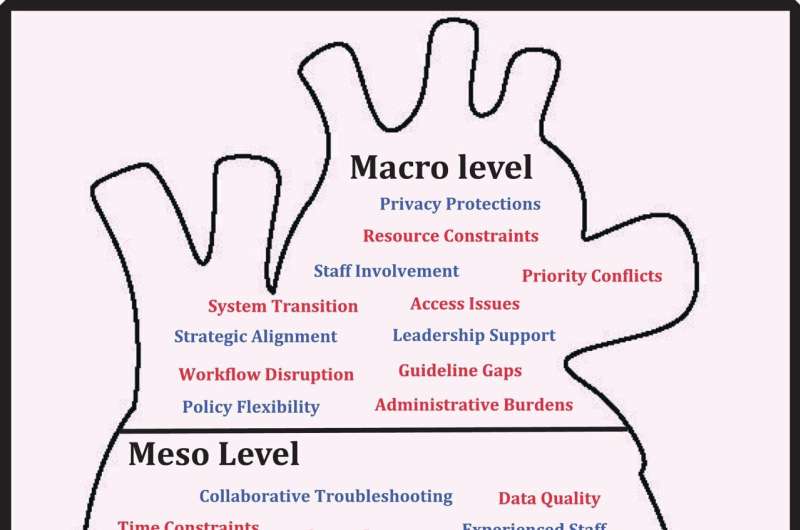
Out of more than 700 studies, the Flinders researchers chose 12 large studies from around the world to assess the strategies and pitfalls of creating the best systems for cardiovascular care.
“Important elements identified included a coordinated governance framework, organizational commitment to CDSS adoption, integration and capacity building, clinician and patient engagement, ongoing training and regulatory alignment,” says Dr. Balasubramanian.
Mrs. Salam adds, “While risks remain, the rewards are great.
“Non-communicable diseases kill more people globally than infectious diseases, yet most are diagnosed late, when treatment is costly and outcomes poor,” she says.
“Australia faces this challenge acutely: one in five will experience depression in their lifetime, while undetected dental disease affects millions, particularly in rural and remote communities.
“For decades, the gap between knowing what prevents these diseases and actually diagnosing and treating them has remained stubbornly wide.
“Artificial intelligence is closing that gap, not through a single breakthrough tool, but through a fundamental shift in how health care systems work. For Australian communities struggling with access, this transformation offers tangible hope.”
Meanwhile, Dr. Balasubramanian and colleagues are working on further research at the Flinders Factory of the Future. The “AI for NCDs Innovation Collaborative” is a transdisciplinary collaboration exploring how AI can help health services work better together across chronic disease pathways, reduce fragmentation, and improve outcomes for people with non-communicable diseases.
More information
Samah Sallam et al, Unlocking the potential of clinical decision support in cardiovascular care: A mixed-methods systematic review of implementation barriers and enablers, International Journal of Medical Informatics (2026). DOI: 10.1016/j.ijmedinf.2026.106415
Leave a Reply