
By Amit Malewar Published: April 5, 2026
Collected at: https://www.techexplorist.com/batteries-candle-wax/102564/
In the sprint toward more sustainable energy storage, researchers have made a discovery that could revolutionize how we build batteries. Dry electrode manufacturing has been hailed for years as a sustainable alternative to the solvent-intensive wet process, but its reliance on polytetrafluoroethylene (PTFE) binders has raised major alarm bells.
Owing to the solubility and high fluorine content of PTFE, its use contradicts the increasing bans on PFAS. Moreover, its poor adhesion forces manufacturers to turn to wet primer coatings, compromising many of the sustainability goals that dry processing sought to achieve.
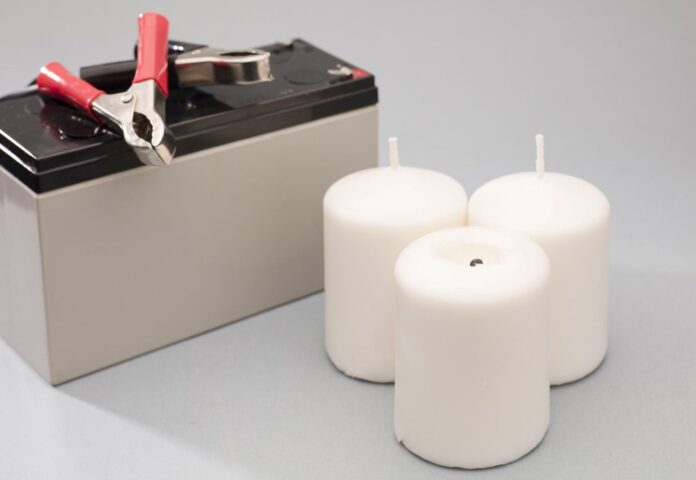
Now, a research team led by Professor Kim Jinsoo in the Department of Energy System Engineering has developed novel dry-electrode binder technology using paraffin, the main component of candles. Parafilm® M, a common laboratory sealing film, has been introduced to overcome the limitation of the dry-electrode process.
Parafilm, composed of saturated linear hydrocarbons such as low-cost paraffin and polyethylene, offers excellent chemical stability due to its strong C–H covalent bonds and the large energy gap separating molecular orbitals. It is fluorine-free, cheap, and environmentally safe compared to PTFE.
Parafilm has a relatively low glass transition temperature and, thus, can be activated at gentle pressure to weld the active materials together without requiring solvent or primer. This indicates a true solvent-free adhesion process, an important milestone in dry electrode technology.
Parafilm® M provides a cleaner, cost-effective alternative for dry electrode fabrication. It also connects with the active material at just 60 °C without any extra wet adhesive layer on current collectors. It can also cut manufacturing costs by 95% vs traditional PTFE binders, and reduce its global warming potential (GWP) to just 1/2,200 of that of PTFE. This development is a major step for battery manufacturers towards a carbon-neutral status.
When tested with LiNi₀. ₈Co₀. ₁Mn₀. ₁O₂ (NCM811) cathode material, as a result, the electrodes showed outstanding electrochemical properties, stabilizing more than 5 mAh cm⁻² capacity after 600 cycles. The result is sustainable living that doesn’t require giving up efficiency, with this durability not only comparing to but far exceeding many traditional methods.
This research team has taken the next step beyond proof-of-concept and shown that their Parafilm-based dry-electrode device could be commercially viable. They have demonstrated not just that it is feasible, but also scalable to an industrial level using a twin-screw continuous extrusion method by producing 3 cm × 4 cm pouch cells.
Batteries are the beating heart of renewable power systems, electric vehicles, and portable electronics. The progress in their design echoes throughout the world of sustainability. To displace a problematic binder that is known to contaminate the quality of molten liquids, scientists succeeded in pushing innovation into areas as mundane as dispensing film last used for sealing lab samples, involving nothing more than dropping an off-the-shelf replacement that is stable, free of environmental hazards and slightly less expensive.
Professor Kim Jinsoo of DGIST said, “The parafilm-based binder we developed is a key proprietary technology that can maximize the economic efficiency and environmental friendliness of dry processes. We will contribute to enhancing South Korea’s leadership in the battery industry by supplying sustainable battery-manufacturing technologies.”
This development could pave the way towards sustainable chemistry and industrial pragmatism converging: batteries that are not only powerful but also planet-friendly.
Journal Reference:
- Kim, M.K., Yu, T., Jang, S. et al. Fluorine-free binder-based dry thick electrodes with Parafilm® M toward sustainable and efficient battery manufacturing. Nat Commun 16, 11174 (2025). DOI: 10.1038/s41467-025-66082-3
Leave a Reply