
Jack Loughran Thu 2 Apr 2026
Collected at: https://eandt.theiet.org/2026/04/02/artemis-ii-astronauts-begin-trip-will-take-them-beyond-far-side-moon
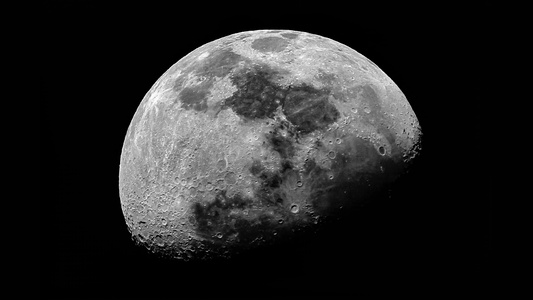
Nasa has launched its Artemis II mission with the goal of conducting a manned fly-by of the Moon on the back of the super heavy-lift Space Launch System.
The 10-day mission’s goals include testing the life support systems aboard the Orion capsule and its manual piloting controls. The crew will travel roughly 47,400km behind the far side of the Moon before using lunar gravity to ‘slingshot’ them back toward Earth.
They are also verifying the ability of Nasa’s Deep Space Network to maintain high-speed communication and precise tracking as they reach a distance of more than 370,000km from Earth.
Artemis II has been in the planning stages for several years, although the scope of the mission has changed several times amid fluctuating goals and long-term plans for Nasa. Originally, the astronauts were going to deliver the first element of the Lunar Gateway – a proposed space station that would have orbited around the Moon – but that project was ultimately cancelled last month.
After reaching space, Orion deployed its solar array wings, enabling the spacecraft to receive energy from the Sun, while the crew and engineers on the ground immediately began the transition from launch to flight operations to start diagnosing key systems. Orion will remain in high-Earth orbit for around a day, where the crew will conduct a manual pilot demonstration to test its handling capabilities.
If all systems remain healthy, mission controllers will issue commands later today to conduct the translunar injection burn that will send the spacecraft on its trajectory around the Moon.
“Aboard Orion are four remarkable explorers preparing for the first crewed flight of this rocket and spacecraft, a true test mission that will carry them farther and faster than any humans in a generation,” said Nasa administrator Jared Isaacman. “Artemis II is the start of something bigger than any one mission. It marks our return to the Moon, not just to visit, but to eventually stay on our moon base, and lays the foundation for the next giant leaps ahead.”
Last month, Nasa announced a new approach to building a permanent base on the Moon, which will begin with a series of technology demonstrators that will be dropped onto the lunar surface, including rovers, instruments, power generation and tools to aid in scientific investigations. It will then move towards building ‘semi‑habitable infrastructure’ and regular logistics before cargo‑capable human landing systems come online.
Leave a Reply