
By University of California – Riverside March 15, 2026
Collected at: https://scitechdaily.com/an-unexpected-planetary-neighbor-may-play-a-surprising-role-in-earths-climate-cycles/
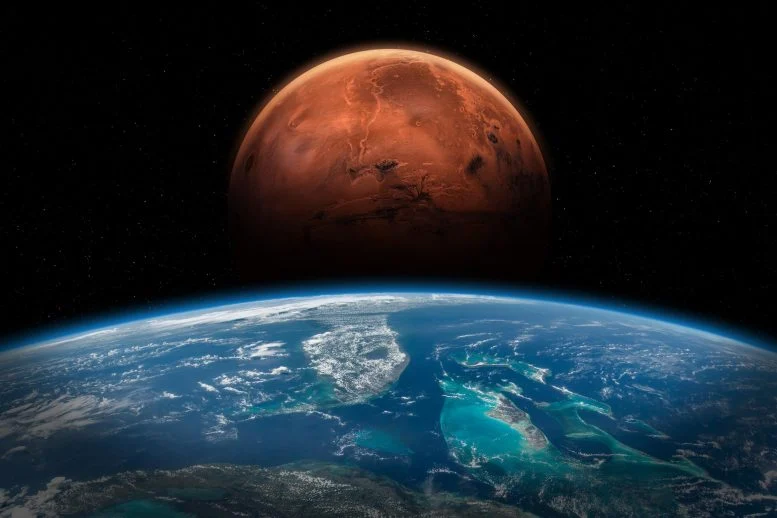
A seemingly small planetary neighbor may play a larger role in Earth’s climate than previously thought.
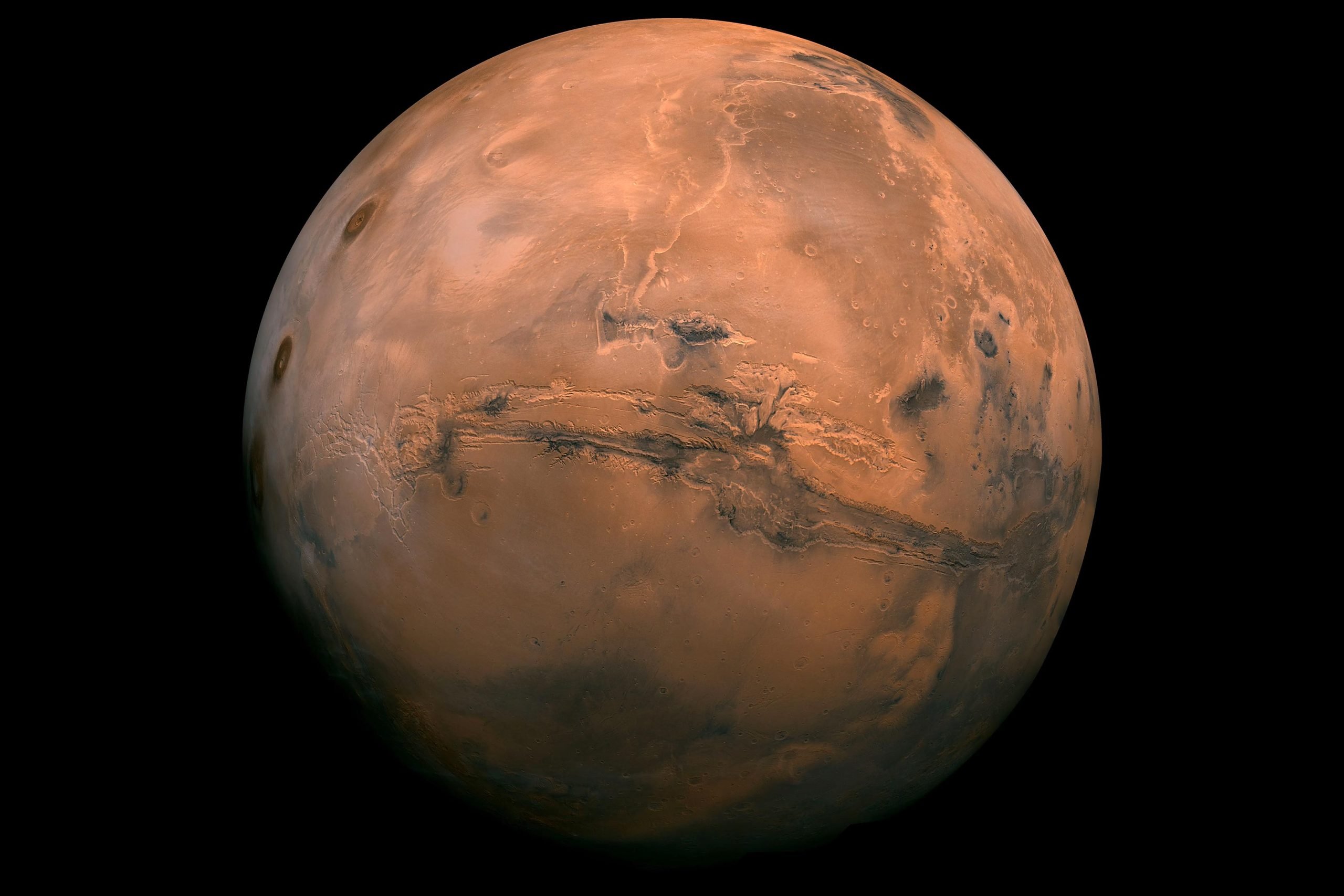
Mars is only about half the size of Earth and has roughly one tenth of its mass, making it relatively small compared with many planets. Despite this, new research shows that the red planet subtly influences Earth’s orbit and helps shape long term climate patterns, including the timing of ice ages.
Stephen Kane, a professor of planetary astrophysics at UC Riverside, began the study with doubts about recent research suggesting that Mars affects Earth’s ancient climate cycles. Those earlier studies proposed that layers of ocean floor sediments record climate rhythms linked to the gravitational pull of Mars, even though the planet is distant and relatively small.
“I knew Mars had some effect on Earth, but I assumed it was tiny,” Kane said. “I’d thought its gravitational influence would be too small to easily observe within Earth’s geologic history. I kind of set out to check my own assumptions.”
Simulating the Solar System
To investigate the idea, Kane ran computer simulations that modeled the solar system and tracked long-term changes in Earth’s orbit and axial tilt. These variations control how sunlight reaches the planet’s surface over timescales ranging from tens of thousands to millions of years.
These patterns are known as Milankovitch cycles, and they are key to understanding the start and end of ice ages. An ice age is a long interval when large ice sheets remain at the poles. Earth has experienced at least five major ice ages during its 4.5 billion-year history. The most recent began about 2.6 million years ago and continues today.
One of these cycles, which lasts about 430,000 years, is driven mainly by the gravitational pull of Venus and Jupiter. During this period, Earth’s orbit slowly changes shape, shifting from nearly circular to more elongated before returning to a rounder path. These changes affect how much solar energy reaches the planet and can influence the growth or retreat of ice sheets.
The Cycles That Disappear Without Mars
That 430,000-year cycle stayed intact in Kane’s simulations, regardless of whether Mars was present. But when Mars was removed, two other major cycles, one that takes 100,000 years to complete, and another stretching 2.3 million years, disappeared entirely.
“When you remove Mars, those cycles vanish,” Kane said. “And if you increase the mass of Mars, they get shorter and shorter because Mars is having a bigger effect.”
These cycles affect how circular or stretched Earth’s orbit is (its eccentricity), the timing of Earth’s closest approach to the Sun, and the tilt of its rotational axis, (its obliquity). These influence how much sunlight different parts of the Earth receive, which in turn affects glacial cycles and long-term climate patterns. Kane’s results show that Mars plays a measurable role in both.
“The closer it is to the sun, the more a planet becomes dominated by the sun’s gravity. Because Mars is farther from the sun, it has a larger gravitational effect on Earth than it would if it was closer. It punches above its weight,” Kane said.
A Surprising Effect on Earth’s Tilt
One of the more unexpected findings was how the mass of Mars influences the rate at which Earth’s tilt changes. Earth is currently tilted at about 23.5 degrees, and that angle varies slightly over time.
“As the mass of Mars was increased in our simulations, the rate of change in Earth’s tilt goes down,” Kane said. “So increasing the mass of Mars has a kind of stabilizing effect on our tilt.”
The paper, published in Publications of the Astronomical Society of the Pacific, not only quantifies Mars’ influence on Earth’s orbit, but also hints at broader implications. Kane’s simulations suggest that even small outer planets in other solar systems could be quietly shaping the stability of worlds that might host life.
“When I look at other planetary systems and find an Earth-sized planet in the habitable zone, the planets further out in the system could have an effect on that Earth-like planet’s climate,” Kane said.
The results also raise other questions about how Earth might have evolved differently. Glacial periods caused forests to shrink and grasslands to expand in shifts that drove key evolutionary changes like walking upright, tool use, and social cooperation.
“Without Mars, Earth’s orbit would be missing major climate cycles,” Kane added. “What would humans and other animals even look like if Mars weren’t there?”
Reference: “The Dependence of Earth Milankovitch Cycles on Martian Mass” by Stephen R. Kane, Pam Vervoort and Jonathan Horner, 18 December 2025, Publications of the Astronomical Society of the Pacific.
DOI: 10.1088/1538-3873/ae2800
Leave a Reply