
March 18, 2026 by University of Alicante
Collected at: https://phys.org/news/2026-03-farming-healthier-diverse-soils-international.html
An international team led by University of Alicante (UA) scientists has found that increasing the share of organic farming may improve crop yields and help maintain soil health and biodiversity. Published in the journal Nature Sustainability, the study concludes that landscapes with at least 50% organic farming optimize crop yields, soil biodiversity and key ecosystem functions such as carbon storage, nutrient cycling and water regulation.
The study, carried out in the framework of the project SOILGUARD (Horizon 2020), analyzes 179 croplands—mostly for grain production—in eight countries from Europe, Africa, Asia and South America, covering a wide range of climate conditions and soil degradation levels. While the authors have observed that ecological management can reduce crop yields on average, the results show that high crop yields do not necessarily trade off against soil biodiversity and functioning at farm level.
Santiago Soliveres Codina, a researcher at the UA Department of Ecology and the Ramón Margalef Multidisciplinary Institute for Environmental Research (IMEM) and co-author of the article, explains that “there are conventional and organic farms that simply excel in all three aspects.” He adds, “The next step is to understand what these farmers do to achieve high yields while keeping soils healthy. Maybe they opt for other regenerative practices, such as reduced plowing frequency, the use of organic soil conditioners or a more permanent vegetation cover, or perhaps the implementation of crops and varieties suited to local conditions.”
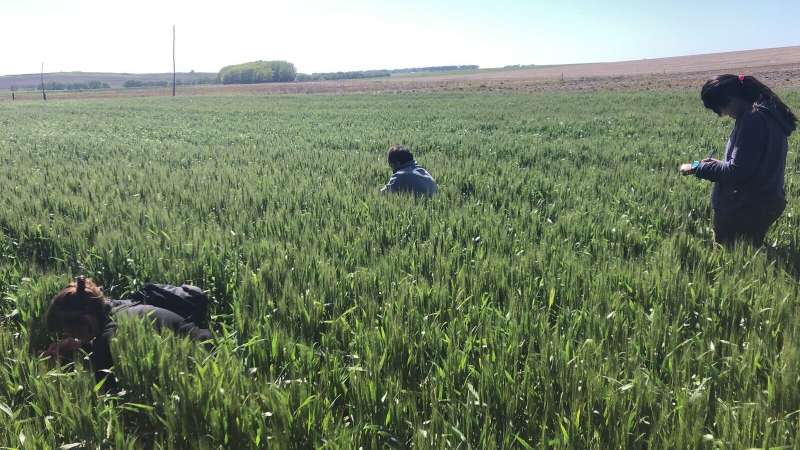
According to lead author Laura García-Velázquez, also a researcher at the University of Alicante’s IMEM, “our findings prove that diverse and functional soils are not incompatible with high crop yields.” Moreover, she notes that “implementing ecological practices in at least 50% of farmland could be key to ensuring the long-term sustainability of our food systems.”In the picture, croplands in Argentina. Credit: Paula Barral.
Economic and environmental challenge
The study argues that the transition to organic farming should be prioritized in moderately to highly degraded soils, as this would maximize environmental benefits and minimize yield loss.
These soils, the researchers highlight, “usually have lower yields. Therefore, from the perspective of farmers and society as a whole, prioritizing the transition to organic farming in those areas would reduce the economic risk involved and increase the environmental benefits obtained.” This strategy would thus maximize soil health and food security; at the same time, it would minimize the risk of conflicts associated with the transition to a new farming model.
Conducted by 22 institutions from 9 countries, the study published provides scientific evidence that supports and furthers the objectives of the European Commission’s From Farm to Fork Strategy, which seeks to achieve 25% of farmland under organic farming by 2030. For the authors, “this goal might not be enough and should be more ambitious so as to guarantee the sustainability of the agri-food system and meet global biodiversity targets.”
The UA researchers point out that the Sustainable Development Goals (SDGs) also aim to reduce water and soil pollution, as well as the use of pesticides, by 50% in the coming years. For this reason, “ecological practices must be implemented.”
Publication details
Laura García-Velázquez et al, Optimizing biodiversity, multifunctionality and yield when transitioning to organic farming, Nature Sustainability (2026). DOI: 10.1038/s41893-026-01791-1
Journal information: Nature Sustainability
Leave a Reply