
By Amit Malewar Published: March 3, 2026
Collected at: https://www.techexplorist.com/tiny-water-bears-help-humans-protect-resources-mars/102150/
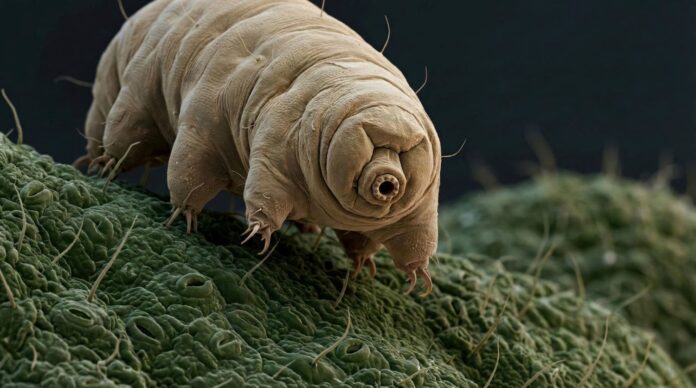
When it comes to preparing humanity for life beyond Earth, the most unlikely heroes may be microscopic. Tardigrades, famously nicknamed “water bears”, are once again proving their resilience, this time in experiments designed to test how life might interact with Martian soil.
An international team co-led by Penn State Altoona Professor of Microbiology Corien Bakermans has been investigating whether tardigrades could play a role in establishing functional soils on Mars. Their findings suggest that these tiny creatures might help us understand both how to grow food on the Red Planet and how to guard against contamination from Earth.
Researchers exposed two tardigrade species, Ramazzottius cf. varieornatus and Hypsibius exemplaris, to Martian regolith simulants, MGS-1 and OUCM-1. These simulants mimic the mineral and chemical composition of soil sampled by NASA’s Curiosity Rover at Gale Crater.
The results were striking: tardigrade activity dropped sharply in MGS-1, with many ceasing movement within two days. OUCM-1 was less harmful but still inhibitory. Surprisingly, when MGS-1 was rinsed with water before exposure, the tardigrades showed almost normal activity levels.
“We were a little surprised by how damaging MGS-1 was,” Bakermans said. “We theorized that there might be something specific in the simulant that could be washed away.”
The discovery raises intriguing possibilities. If water can wash away the harmful parts of Martian soil, astronauts might be able to use it to grow crops. At the same time, the soil’s natural toxicity could act like a shield, stopping Earth’s microbes from spreading.
“When considering sending people to non-Earth environments, we need to understand two things: how the environment will impact the people and how the people will impact the environment,” Bakermans explained.
“With this research, we’re looking at a potential resource for being able to grow plants as part of establishing a healthy community, but we’re also looking at whether there are any inherent damaging conditions in the regolith that could help protect against contamination from Earth, which is a goal of planetary protection.”
Tardigrades are well known for surviving extreme conditions, from space to the deep ocean. When they go dormant, they can resist radiation, dehydration, and freezing. But when they’re active, they’re more delicate, which makes them useful for testing how Martian soil might affect living things.
“It seems that there’s something very damaging in MGS-1 that can dissolve in water, maybe salts or some other compound,” Bakermans noted.
“That was unexpected, but it’s good in a sense, because it means that the regolith’s defense mechanism could stop contaminants. At the same time, it can be washed to help support plant growth or prevent damage to humans who come in contact with it.”
Water is limited in space, so rinsing Martian soil may not be the easiest fix. Still, the study gives scientists important clues for future missions. The team is now examining other factors, such as pressure and temperature, to determine how they affect tardigrade survival in Martian soil.
“Regolith isn’t the only component, of course,” Bakermans said. “But we’re beginning to tease apart components of this overall system where any single piece could be a drawback or benefit the larger understanding of planetary protection.”
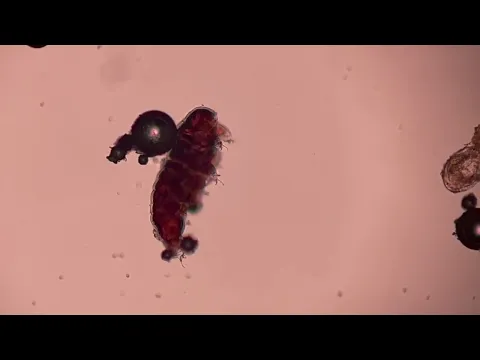
For now, the “Tardiguardians of the Galaxy” are offering scientists a glimpse into how life might adapt, or struggle, on Mars. And while they may not wear capes, these microscopic creatures could be key allies in humanity’s quest to become an interplanetary species.
Journal Reference:
- Corien Bakermans, Matteo Vecchi, and Gillian Pearce. Short-term survival of tardigrades (Ramazzottius cf. varieornatus and Hypsibius exemplaris) in martian regolith simulants (MGS-1 and OUCM-1). DOI: 10.1017/S1473550425100220
Leave a Reply