
February 1, 2026 by EE World Online Editor
Collected at: https://www.eeworldonline.com/design-reliable-fast-chargers-for-nextgen-wearable-mobile-and-portable-devices/
As wearable, mobile, and portable devices continue to evolve, their charging solutions must keep pace, offering faster, safer, and more efficient performance. Engineers involved in research, development, and product design for these next-generation devices are tasked with integrating charging technologies that are both reliable and compliant with international safety standards.
This article outlines vital design recommendations for three critical charging systems—USB-C, Lithium-ion, and wireless charging—and introduces components that ensure robust, standards-compliant designs. With the rapid advancements in rechargeable battery technology, designers must focus on critical electrical hazard protections like overcurrent, overvoltage, electrostatic discharge (ESD), and overtemperature while maximizing efficiency.
Key Highlights:
- Recommendations for USB-C, Lithium-ion, and wireless charging systems.
- Overview of global safety standards for chargers and how to meet them.
- Component solutions from Littelfuse that enable compliant and reliable designs.
The Push for Higher-Power and Faster Charging Systems
As the capacity and energy density of rechargeable batteries continue to grow, so does the demand for faster charging times, even for low-power devices like smartphones and smartwatches, and higher-power applications such as electric bikes and kitchen appliances. Industry standards, like USB Power Delivery (USB PD) and wireless power, are evolving to accommodate these needs, pushing designers to adopt solutions that ensure rapid charging, safety, and reliability.
Evolution of Charging Standards
- USB Power Delivery (USB PD): The USB-Implementers Forum has significantly upgraded the USB PD standard, now enabling up to 240 watts of power transfer via USB-C connectors. This enhanced power capability, adopted by the European Union as the standard for portable devices by 2024, will soon extend to laptops by 2026. The challenge for designers is ensuring high efficiency and safety across various power levels and device types.
- Wireless Charging: The Wireless Power Consortium has set the standard for wireless chargers to support up to 60 watts, offering the convenience of cable-free operation while reducing wear and tear on connectors.
USB-C Charger Design: Balancing Power and Safety
The adoption of USB-C connectors across portable devices necessitates advanced design strategies that focus on safety and protection. High power levels mean greater exposure to electrical hazards such as overvoltage, overcurrent, and ESD. As a result, selecting the right protection components becomes critical in safeguarding both the charger and the devices it supports.
Design Considerations for USB-C Chargers:
- Power Delivery: Ensure that designs meet the USB PD 3.1 specification for up to 240 watts.
- Protection: Utilize components like TVS diodes for ESD protection, fuses for overcurrent protection, and MOSFETs for voltage regulation.
Designing Efficient Lithium-Ion Battery Chargers
Lithium-ion batteries offer flexibility in power output, making them a popular choice for high-power consumer devices like e-bikes and robotic appliances. However, designing chargers for these batteries involves navigating a range of protection and efficiency challenges, from managing heat dissipation to ensuring long-term reliability.
Key Focus Areas for Lithium-Ion Battery Charger Designs:
- Thermal Management: Integrating temperature sensors or thermistors to prevent overheating.
- Overcharge Protection: Using circuit breakers and MOSFETs to avoid battery overcharge scenarios.
Wireless Charging Systems: Cable-Free Convenience, Robust Safety
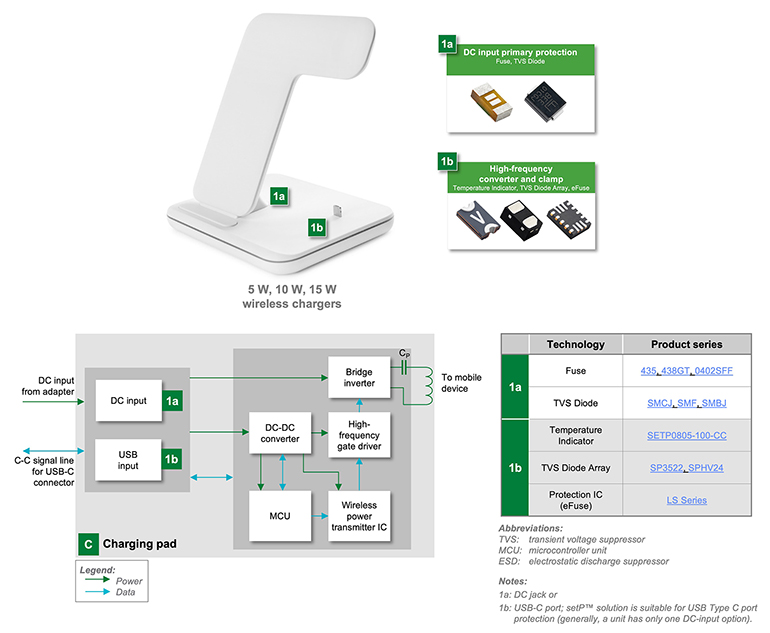
Wireless charging technology continues to gain traction, offering an intuitive, cable-free experience. However, wireless systems come with their own set of design challenges, such as ensuring stable power transfer and protecting devices from potential electromagnetic interference (EMI).
Design Recommendations for Wireless Chargers:
- EMI Protection: Incorporate filters and shielding solutions to reduce noise and interference.
- Safety: Use fuses and thermistors to manage overcurrent and overtemperature conditions.
Navigating Global Safety Standards for Battery Chargers
Meeting national and international safety standards is a critical step in the design process. Different regions enforce varied regulations, but common themes include ensuring protection against electrical hazards and optimizing energy efficiency.
Key Global Standards for Charger Design:
- IEC 62368-1: The international standard for audio, video, and information technology equipment.
- UL 60950-1: A safety standard for electronic and electrical devices, commonly referenced in North America.
Recommended Littelfuse Components for Reliable Charger Designs
Ensuring reliable performance in battery chargers is paramount, especially as consumers become more reliant on portable electronics. Littelfuse offers a range of components that simplify the design process and help engineers meet safety standards while optimizing for performance and durability.
Essential Littelfuse Components:
- TVS Diodes: Protect circuits from transient voltage spikes.
- Fuses: Prevent damage from overcurrent conditions.
- MOSFETs: Ensure efficient power regulation and thermal management.
- Temperature Sensors: Monitor and mitigate overheating risks.
With a wide array of solutions from Littelfuse, engineers can streamline development, ensuring that their designs are not only robust but also compliant with the latest standards. By incorporating these components early in the design process, teams can reduce development time, cost, and complexity.
Conclusion
The future of battery-powered devices demands faster, safer, and more efficient charging solutions. Design engineers can meet the challenges of next-generation charger designs by integrating the latest standards, focusing on electrical protection, and utilizing compliant components. To explore reliable charger design, download the comprehensive whitepaper from Littelfuse, featuring in-depth technical data, recommendations, and component details to enhance your product development process.
Download the Design Reliable Chargers for NextGen Consumer Electronics whitepaper for additional insights and detailed component recommendations for USB-C, Lithium-ion, and wireless charging systems.
Leave a Reply