
February 12, 2026 by Delft University of Technology
Collected at: https://phys.org/news/2026-02-drones-air-quality-sensors.html
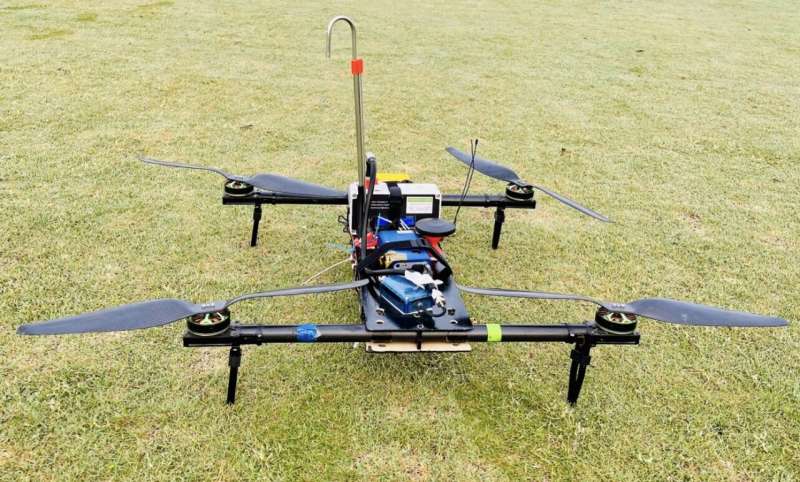
A drone equipped with low-cost air quality sensors has revealed unexpectedly high concentrations of particulate matter at around 100 meters above ground level in Delhi. These new vertical insights could play an important role in urban haze understanding and mitigation. The findings, published in npj Clean Air, demonstrate the feasibility of measuring air pollution up to 100 meters using an affordable, custom-built drone platform.
Particular matter, PM2.5, is a major contributor to air pollution and haze, resulting from emissions from primary sources such as traffic, industry, and biomass or waste burning activities, and secondary formation. Extreme haze events are common in megacities such as Delhi and are known to cause severe health problems.
Until now, most air quality measurements in the region have focused on ground-based monitoring, leaving the pollution conditions aloft unknown.
Interference challenges
Measuring haze at altitude has always been difficult. Aircraft and satellite observations are either too costly or lack sufficient resolution. Drone-based measurements can fill this gap.
Ajit Ahlawat, Assistant Professor at TU Delft, has dedicated years of research to overcoming these challenges and validating the accuracy of the measurements.
“One significant advancement was the design of a customized vertical aerosol sampling inlet, positioned approximately 30 centimeters above the drone’s rotor blades. This design minimizes particle loss caused by rotor turbulence. Another challenge was the high humidity, a meteorological factor that is not particularly rare in the region,” says Ahlawat.
“As air sampling struggles in such conditions, a custom-designed silica-gel dehumidifier was connected to the sampling tube to ensure reliable results.”
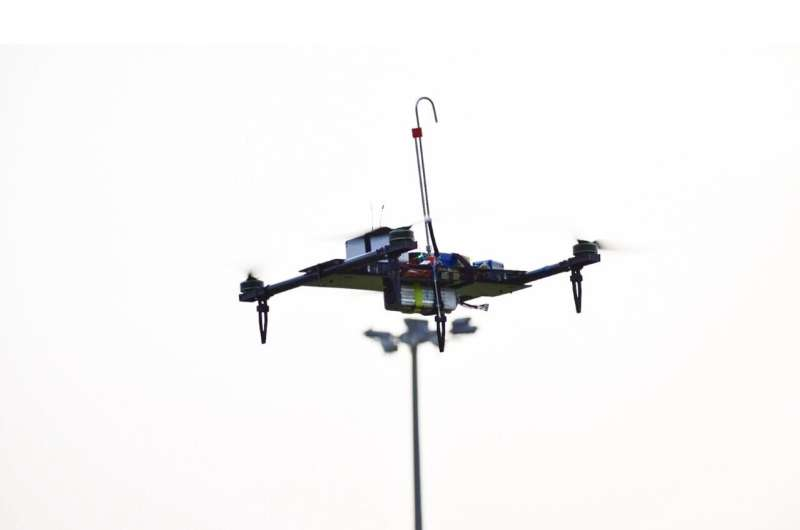
Image of drone during measurement flight. Credit: Rohit k. Choudhary
Air pollution underestimated
The team performed multiple flights in South Delhi in collaboration with the Indian Institute of Technology Delhi, amidst a densely populated urban environment. The payload-carrying drone measured the PM2.5 mass concentrations at vertical levels, which were then validated using model simulations.
The results suggest that current model simulations significantly underestimate PM2.5 mass concentrations during morning haze episodes.
“This may be due to the dry bias of the model, which limits its ability to simulate aerosol hygroscopic growth at high humidity values,” said Mira Pöhlker, Professor at TROPOS and Leipzig University.
Towards better mitigation strategies
Additional insights into the formation of air pollution gained by this new method can help air quality and public health interventions.
Ahlawat said, “I am delighted to say that measuring vertical profiles with low-cost air quality sensors is working, and the methods are openly accessible. This will enable people in megacities to develop better haze forecasting and warning systems and provide valuable insights into identifying pollution at vertical levels.”
Ajit Ahlawat started this study at the Leibniz Institute for Tropospheric Research, where he, together with Professor Sagnik Dey (IIT-CAS) and Dr. Birgit Wehner (TROPOS) conceptualized the study and then conducted the field observations in Delhi, with assistance from colleagues of the Indian Institute of Technology (IIT).
Since 2024, he has been an Assistant Professor at Delft University of Technology in the Netherlands, where he researches air pollution in urban areas, with a particular focus on the formation of haze and fog.
More information
Ajit Ahlawat et al, Drone measurements reveal high near-surface urban haze, npj Clean Air (2026). DOI: 10.1038/s44407-025-00044-3
Leave a Reply