
February 10, 2026 by Peter Westman, Uppsala University
Collected at: https://techxplore.com/news/2026-02-ease-pressure-electricity-grid.html
Demand-side flexibility, the ability to adjust electricity consumption in response to system needs, is often highlighted as a key tool for managing both growing electrification and a higher share of variable renewable energy, and is therefore seen as a core part of the energy transition. In the article Command and control: A systematic approach to demand-side flexibility, published in the journal Utilities Policy, Fouad El Gohary outlines an alternative approach to helping deliver flexibility at scale.
To date, demand-side flexibility policy in the EU has largely relied on market-based instruments, where electricity users are expected to respond to price signals and optimize their consumption accordingly, ostensibly benefiting the system. According to the article, this approach has produced limited and inconsistent results, despite decades of research and numerous pilot projects.
“For a long time, policy has mainly relied on subsidies, incentives and other market-based instruments. In some areas, however, where progress has been too slow, the EU has turned to regulation to accelerate the transition, for example by mandating solar installations on new buildings. The same way of thinking should also be applied to other parts of the energy transition, including demand-side flexibility,” says Fouad El Gohary.
Governance at system level
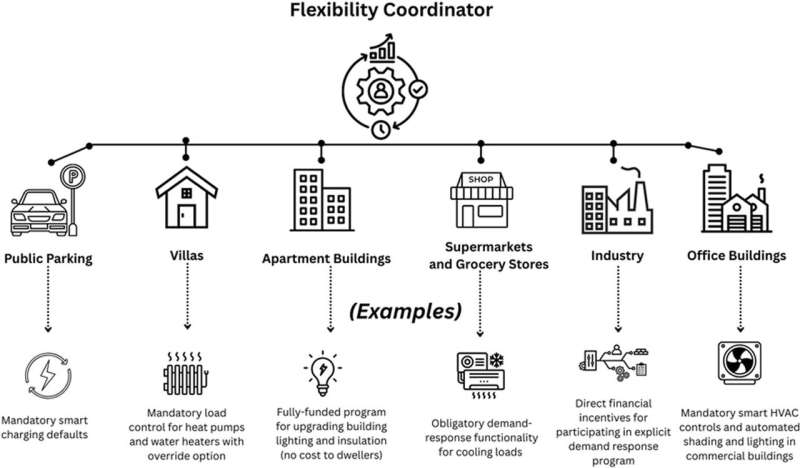
Instead of using increasingly complex price signals to steer individual behavior, the article argues for a shift toward a system-level perspective. A central element of the proposed framework is the introduction of a dedicated actor responsible for coordinating and implementing flexibility measures based on grid needs.
In this model, flexibility is embedded in the system through regulation and automation, rather than relying on active decision-making by households and businesses in everyday life. Examples discussed include introducing controllability requirements for heat pumps, electric vehicle chargers and other large loads, designed to minimize disruption while safeguarding user comfort and preferences.
“A next step would be to ensure that heating systems have the technical capability for external load control, without necessarily mandating that such control be used. More research is needed on how minimally intrusive forms of heat control can be designed, communicated and normalized in ways that remain acceptable to electricity users,” says Fouad El Gohary.
Particularly relevant in Sweden
The findings are particularly relevant in a Swedish context, where issues related to grid capacity and local congestion are becoming increasingly prominent.
“This is particularly important in the case of Sweden, which is increasingly facing issues with grid congestion and local capacity shortages. Policymakers have placed considerable, and arguably misplaced, optimism in price-based approaches as tools for managing these challenges, despite their limited results so far,” says Fouad El Gohary.
Based on this experience, he argues that Sweden should also explore more direct regulatory alternatives for managing demand and easing pressure on the grid.
More information: Fouad El Gohary, Command and control: A systematic approach to demand-side flexibility, Utilities Policy (2026). DOI: 10.1016/j.jup.2025.102137
Leave a Reply