
February 5, 2026 by Michael Miller, University of Cincinnati
Collected at: https://medicalxpress.com/news/2026-02-powerful-ai-substance-disorder-treatment.html
Diagnosing substance-use disorder can be difficult because of patient denial related to the stigma attached to addiction. Now a study by the University of Cincinnati has used a novel artificial intelligence to predict substance-use-defining behaviors with up to 83% accuracy, and with 84% accuracy to predict the severity of the addiction. Researchers say this could allow clinicians to provide treatment faster to patients who need it.
The work is published in the journal npj Mental Health Research.
The clinical standard for psychiatry defines substance use disorder as four categories of destructive behaviors related to impaired control, physical dependence, social impairments and risky use, irrespective of the substance being used. Successful prediction of these can help researchers understand the general processes defining addiction.
The study is one of the first of its kind to use a computational cognition framework with artificial intelligence to assess how human judgment can be used to predict substance-use disorder defining behaviors, identify the substances used and determine the severity of the addiction.
“This is a new type of AI that can predict mental illness and commonly co-occurring conditions like addiction. It’s a low-cost first step for triage and assessment,” UC College of Engineering and Applied Science Professor Hans Breiter said.
Previously, Breiter and his team had demonstrated that their novel AI was effective at predicting other health issues such as patient anxiety and willingness to get vaccinations.
Breiter worked with longtime collaborator and UC Senior Research Associate Sumra Bari, the paper’s lead author, to apply their novel AI system to substance use disorder.
The study examined 3,476 participants ages 18 to 70 who provided written, informed consent and answered questionnaires that were then used as the target of AI-based prediction.
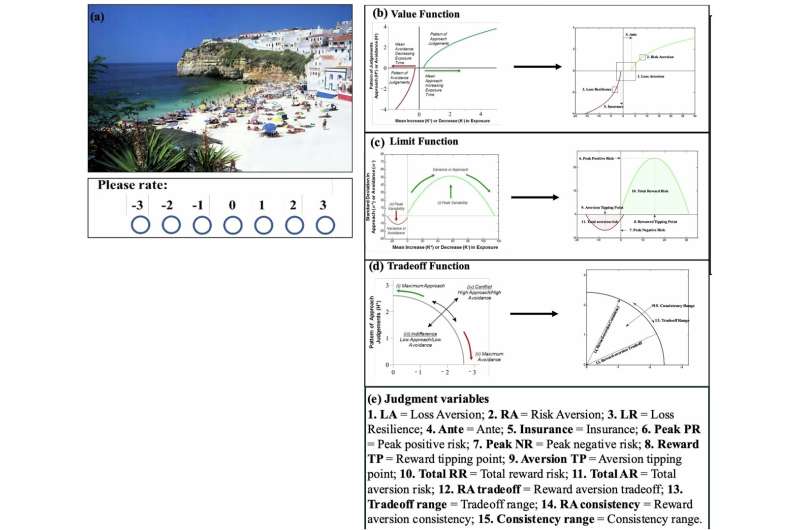
Respondents also rated the degree to which they liked or disliked 48 pictures with mildly emotional stimuli. The picture rating data were used to quantify mathematical features of people’s judgments, including variables commonly related to behavioral economics. These variables, along with a small set of demographics, were then used with artificial intelligence algorithms to predict substance-use disorder-defining behaviors and identify both the substances being used and the severity of the disorder.
“Anyone with a smartphone or computer can do the picture rating task. It’s low cost, scalable and resilient to manipulation,” Bari said.
The picture ranking task might seem simple, she said. But it evaluates an individual’s unique profile of preferences among 1.3 trillion possibilities, creating a surprisingly powerful tool. The system utilizes concepts familiar in the world of economics, such as aversion to losses, aversion to risk, and desire for insurance against bad outcomes. It quantifies a set of variables that describe human judgments.
The system was able to identify the type of substance used (stimulants, opioids, or cannabis) with up to 82% accuracy and the severity of the addiction with up to 84% accuracy. A statistical evaluation of the judgment data revealed that participants with higher substance use disorder severity were more risk-seeking, less resilient to losses, had more approach behavior and had less variance in preferences, informing the behavioral profile of individuals with substance use disorder.
By predicting substance use disorder behaviors directly, this approach would enable assessment across a broader spectrum of addictions, potentially including behavioral addictions such as excessive social media use, gaming or food consumption, Bari said.
More information
Sumra Bari et al, Predicting substance use behaviors with machine learning using small sets of judgment and contextual variables, npj Mental Health Research (2026). DOI: 10.1038/s44184-025-00181-3
Leave a Reply