
Jack Loughran Mon 19 Jan 2026
Collected at: https://eandt.theiet.org/2026/01/19/honda-reveals-towable-solar-powered-trailer-can-sleep-family-four
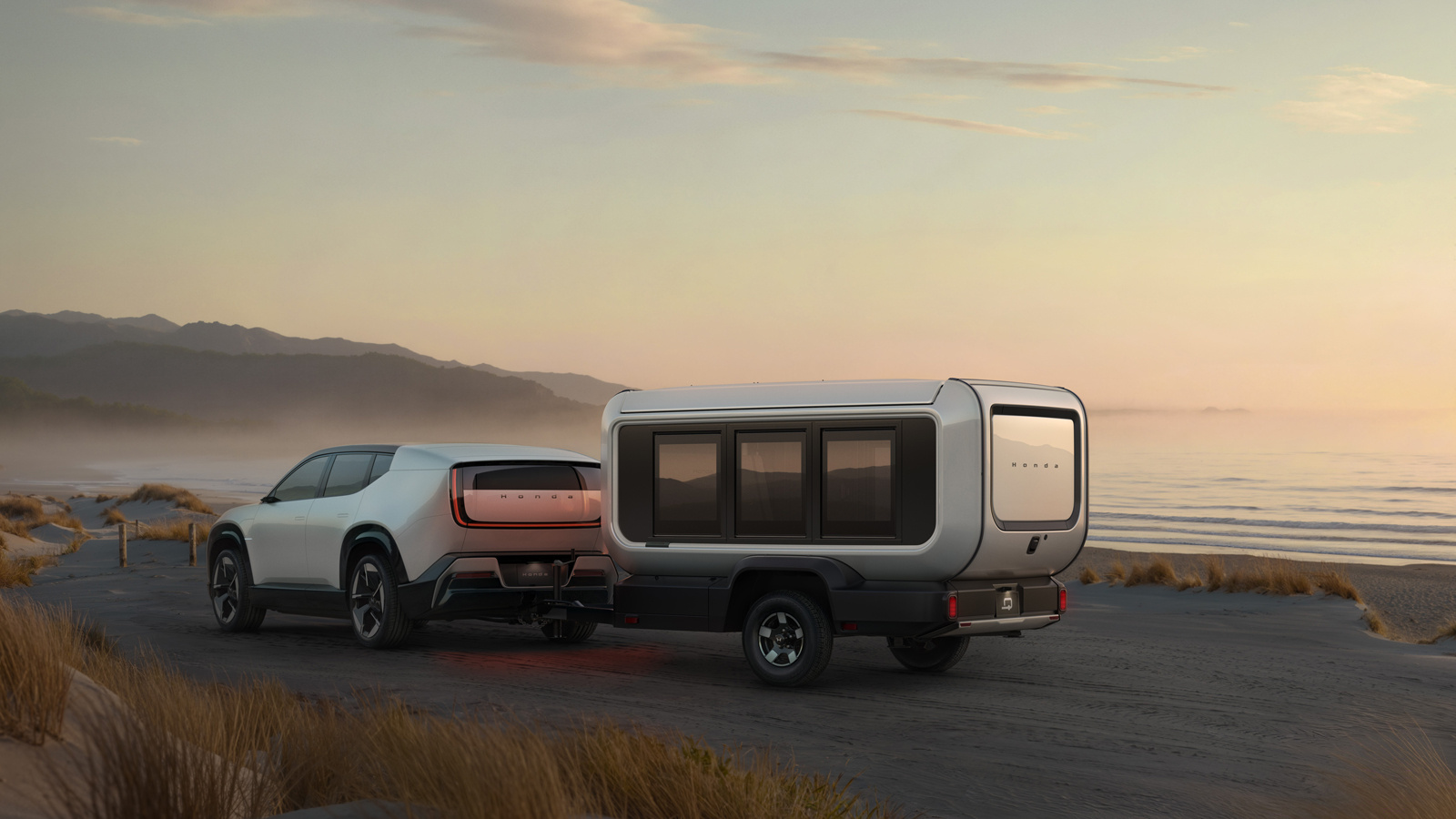
Honda has unveiled a solar-powered towable travel trailer designed to be lightweight so it can be attached to the back of compact SUVs.
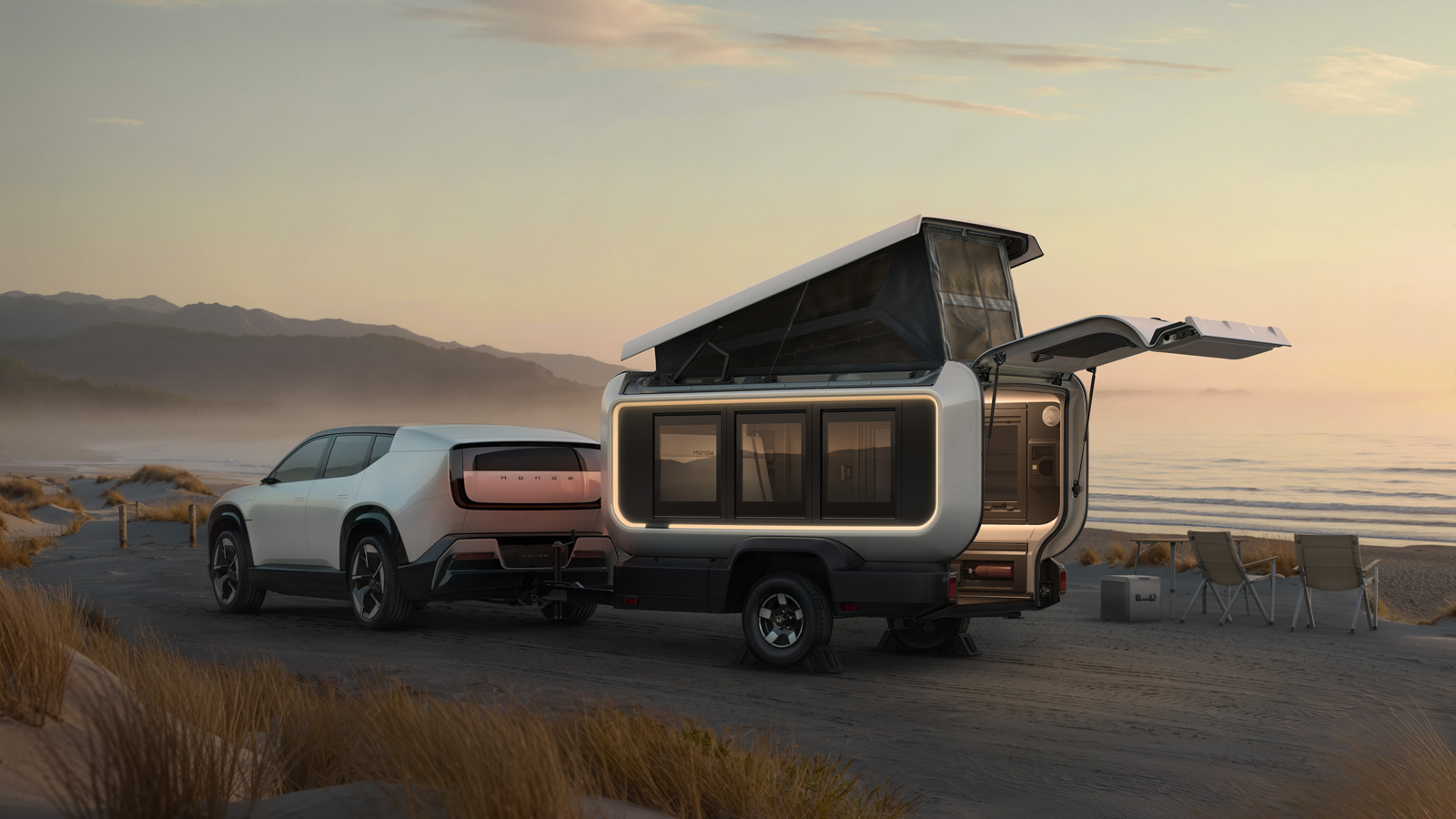
Dubbed the Base Station Prototype, the trailer can be fitted with various optional accessories, including an air conditioner, an external shower and an external kitchen, complete with running water and an induction stovetop. It comes with five side windows as default but these can be removed and replaced with the accessories depending on how users want to customise the trailer.
The designers were able to keep the weight under 700kg by utilising a fibre-glass upper shell resting on a full aluminium cage and chassis. This allows it to be towed by a wider range of lower-power vehicles, including electric SUVs.
The top of the Base Station Prototype can be raised to around 2.1 metres to create a space tall enough to stand up in, while a top-hinged rear tailgate is designed to allow easy access to a nearby camping area. Honda claims the Base Station can sleep a family of four comfortably with a futon-style couch that folds out to provide a queen-sized sleeping area and an optional bunk bed for children.
Honda
The Base Station can be used entirely off-grid, powered by its lithium battery, inverter and integrated solar panels, or it can be hooked up to external power sources for extended stays.
“Base Station is a perfect example of what can happen when you let a team of researchers, designers and engineers pursue bold new ideas to create new value for our customers,” said Jane Nakagawa, vice-president of the American Honda R&D Business Unit. “Base Station is the product of fresh and innovative thinking. We designed it to make camping more accessible and enjoyable for families across America.”
While solar-powered automotives are still far from the mainstream, there is increasing interest in incorporating solar panels as electric vehicle (EV) adoption increases.
In October, Nissan unveiled an EV with an extendable solar roof that allows it recharge on the road without plugging in. The technology is designed to extend a charge or provide top-ups to the battery as it would take anywhere from eight to 13 days to achieve a full charge when relying on the sun.
Leave a Reply