
By Amit Malewar Published: December 16, 2025
Collected at: https://www.techexplorist.com/flash-light-now-create-plastic-electrodes/101562/
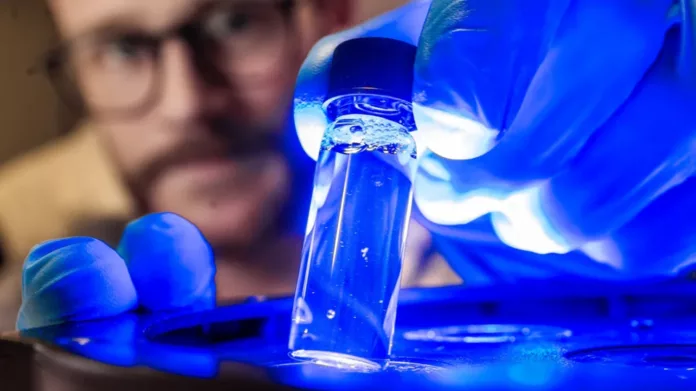
In a quiet lab in Sweden, a beam of visible light has rewritten the rulebook for how we build the electronics of the future. Researchers at Linköping University and Lund University have unveiled a technique that turns simple, conductive plastics into fully formed electrodes, without relying on a single hazardous chemical.
Their findings hint at a future where medical sensors, wearable electronics, and organic circuits can be created directly on almost any surface, from glass to fabric to skin.
“I think this is something of a breakthrough. It’s another way of creating electronics that is simpler and doesn’t require any expensive equipment,” says Xenofon Strakosas, assistant professor at the Laboratory of Organic Electronics (LOE) at Linköping University.
For years, LOE researchers have explored the promise of conductive plastics, conjugated polymers that behave like metals or semiconductors but bend and flex like ordinary plastics. These materials are built from long hydrocarbon chains, each chain consisting of monomers that must be stitched together through polymerisation. Traditionally, that stitching requires strong, often toxic chemicals, making large‑scale or biomedical use difficult.
But the Swedish team, working with collaborators in Lund and New Jersey, has flipped that paradigm. They’ve engineered water‑soluble monomers that polymerise under nothing more than visible light. No harsh reagents. No UV lamps. No post‑processing steps.
The result is a process so gentle it can be performed directly on living tissue.
“It’s possible to create electrodes on different surfaces such as glass, textiles, and even skin. This opens up a much wider range of applications,” Strakosas explains.
The method works almost like light‑based calligraphy. A solution containing the monomers is spread onto a surface. A laser, or any focused light source, then “draws” the desired pattern. Wherever the light touches, polymerisation occurs. The unreacted solution is rinsed away, leaving behind clean, functional electrodes.
This simplicity belies the sophistication of the resulting material.
“The electrical properties of the material are at the very forefront. As the material can transport both electrons and ions, it can naturally communicate with the body, and its gentle chemistry ensures that tissue tolerates it, a combination that is crucial for medical applications,” says Tobias Abrahamsson, LOE researcher and lead author of the study published in Angewandte Chemie.
To test the technology, the researchers photo‑patterned electrodes directly onto the skin of anaesthetised mice. The electrodes captured low‑frequency brain activity more clearly than traditional metal EEG electrodes, a promising sign for future clinical and wearable applications.
And the possibilities don’t stop there.
“As the method works on many different surfaces, you can also imagine sensors built into garments. In addition, the method could be used for large-scale manufacture of organic electronics circuits, without dangerous solvents,” Abrahamsson adds.
This light‑driven polymerisation technique doesn’t just simplify fabrication, it reimagines where and how electronics can exist: circuits woven into clothing, medical sensors printed directly onto skin, organic devices manufactured without toxic waste streams.
For now, it’s a milestone in a lab. But the glow of visible light might soon shine a light on a whole new generation of safe, flexible, and body-friendly electronics.
I can also craft a shorter version for social media, a headline package, or a more narrative feature style.
Journal Reference:
- Tobias Abrahamsson, Fredrik Ek et al. Visible-Light-Driven Aqueous Polymerization Enables in Situ Formation of Biocompatible, High-Performance Organic Mixed Conductors for Bioelectronics. Angewandte Chemie. DOI: 10.1002/ange.202517897
Leave a Reply