
Jack Loughran Mon 15 Dec 2025
Collected at: https://eandt.theiet.org/2025/12/15/solar-power-beamed-aircraft-ground-step-toward-space-based-energy
A start-up aiming to collect solar energy from space and send it back to Earth has demonstrated its concept using an aeroplane in flight.
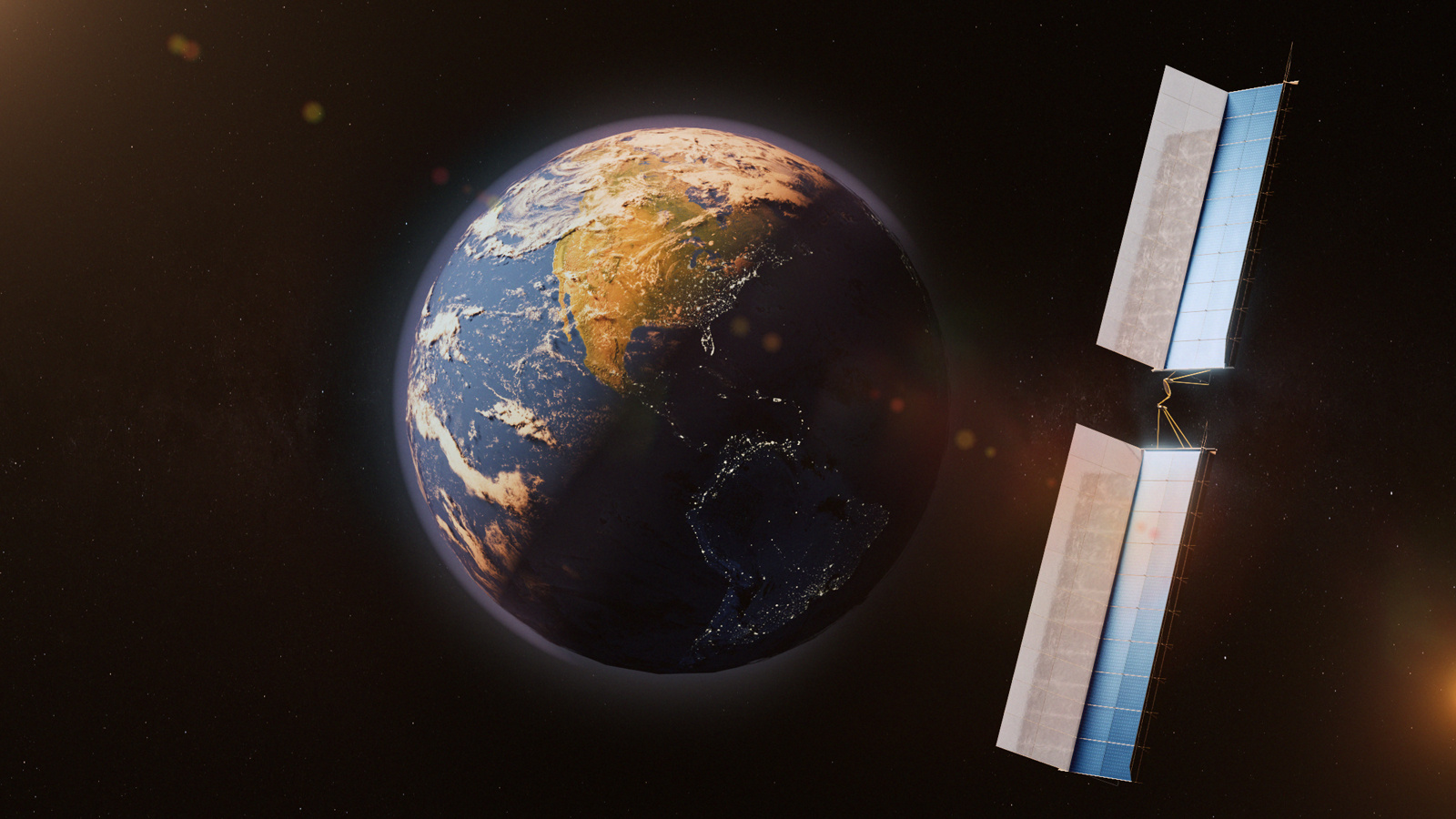
The Northern Virginia-based Overview Energy wants to solve some of the intermittency challenges around solar power by harvesting it from satellites in orbit around the Earth.
While it has not achieved this yet, last month the firm successfully transmitted power from a moving aeroplane to solar panels on the ground, across a distance of more than 5,000 metres.
It claimed it is the first demonstration of high-power wireless power transfer from any moving platform and is the final validation step needed before it can move its solar harvesting system into space.
The team installed Overview’s laser and optical systems on a Cessna Caravan and flew at an altitude of over 5,000m. On the ground, a receiver of standard solar panels was installed that are similar to the type used in utility-scale projects or homes.

Overview Energy
As the aircraft flew overhead, the system identified the receiver, locked onto it and delivered power through an eye-safe beam. The panels converted that light into electricity in the same way they convert sunlight.
“We took the fundamental systems we’ll be using in orbit, put them on a moving platform, and asked everything to perform with the precision required for space. And it worked,” Overview Energy said.
“We set out to tackle the hardest parts of space solar energy, and prove each component could be integrated together. We moved our lasers out of the lab and into the real world, and paired them with optics built for aiming in real-world conditions.”
It also believes that aiming from an aeroplane is actually more difficult than from a satellite, since it experiences turbulence and has a higher angular velocity relative to the ground site.
The firm now plans to launch a low-Earth orbit pilot in 2028 that demonstrates the full system in space before launching geosynchronous orbit satellites in 2029-2030 that will be able to receive solar energy around 99% of the time.
There are a number of challenges that need to be overcome before the technology can make a genuine contribution to global energy needs. In the long run, space solar power satellites would need to be kilometres across to generate meaningful amounts of electricity, and this would increase the chance of them getting hit by space debris.
The overall efficiency from sunlight to usable grid power may also be significantly lower than terrestrial systems due to energy conversion losses at various stages of the transmission.
Leave a Reply