
Tanya Weaver Tue 11 Nov 2025
Collected at: https://eandt.theiet.org/2025/11/11/natural-fibres-replace-hard-recycle-composites-wind-turbine-blades-new-study
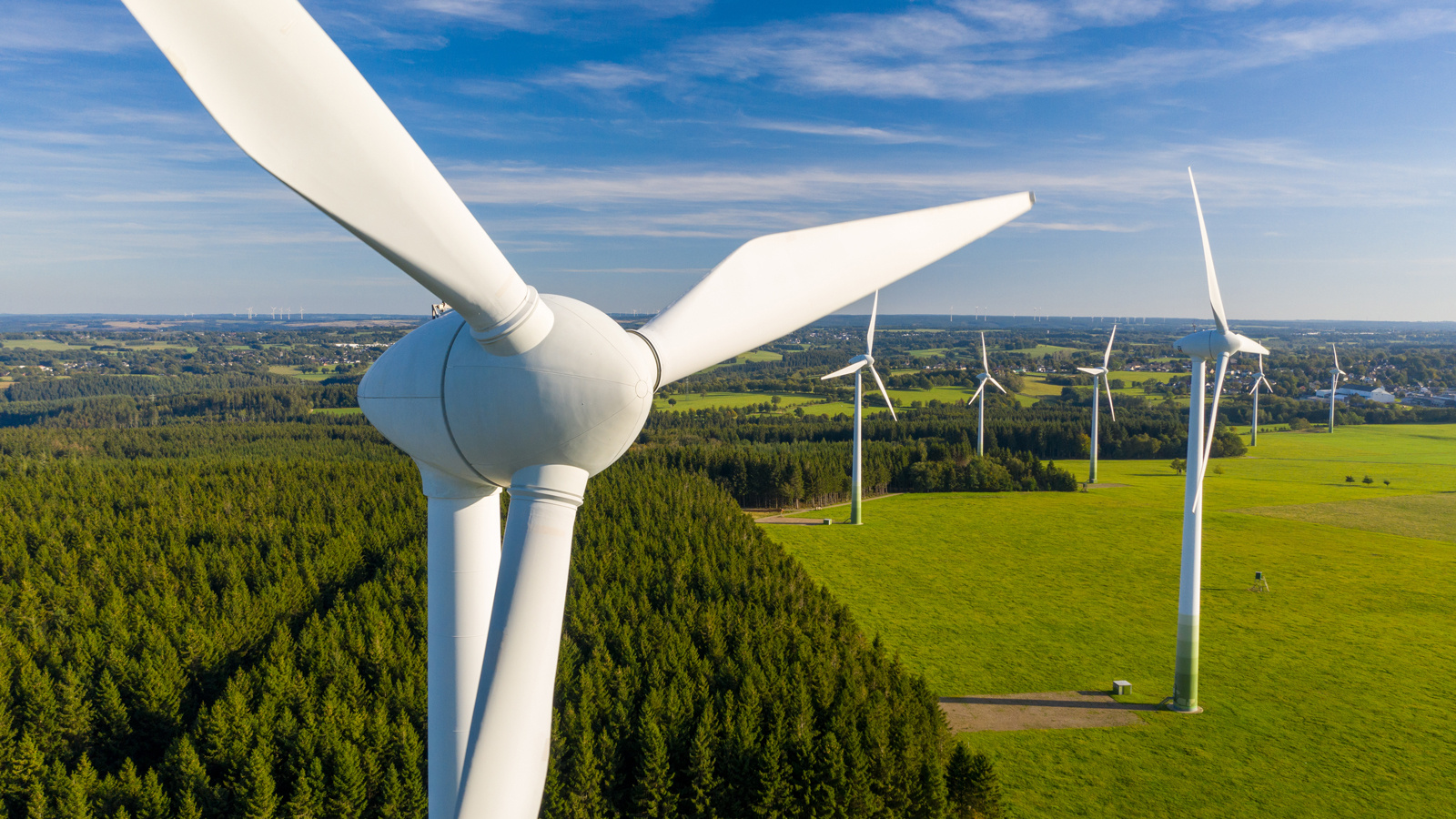
Wind turbine rotor blades made from renewable natural fibres could provide a sustainable alternative to costly and environmentally harmful composite materials, according to a German research team.
Researchers from the Kiel University of Applied Sciences (HAW Kiel) have teamed up with German boatbuilder Nuebold Yachtbau to develop wind turbine rotor blades made entirely from renewable materials. The project aims to reduce the waste footprint of decommissioned wind turbine blades.
Disposing of wind turbines once they have reached the end of their useful lives can be challenging, particularly the blades.
While the shell, nacelle, gearbox and other metallic internal components can be recycled or reused, the disposal of the rotor blades presents a significant challenge. To ensure they are lightweight and durable they have been made with composite materials including fibreglass, carbon fibre and epoxy resin. This not only makes them costly and energy intensive to produce, but also difficult and expensive to recycle at end-of-life.
To address this challenge, the research team looked at what renewable materials rotor blades for small wind turbines (with rotor areas under 200 square meters) could be made from while still meeting all relevant technical requirements.
Leandra Freese
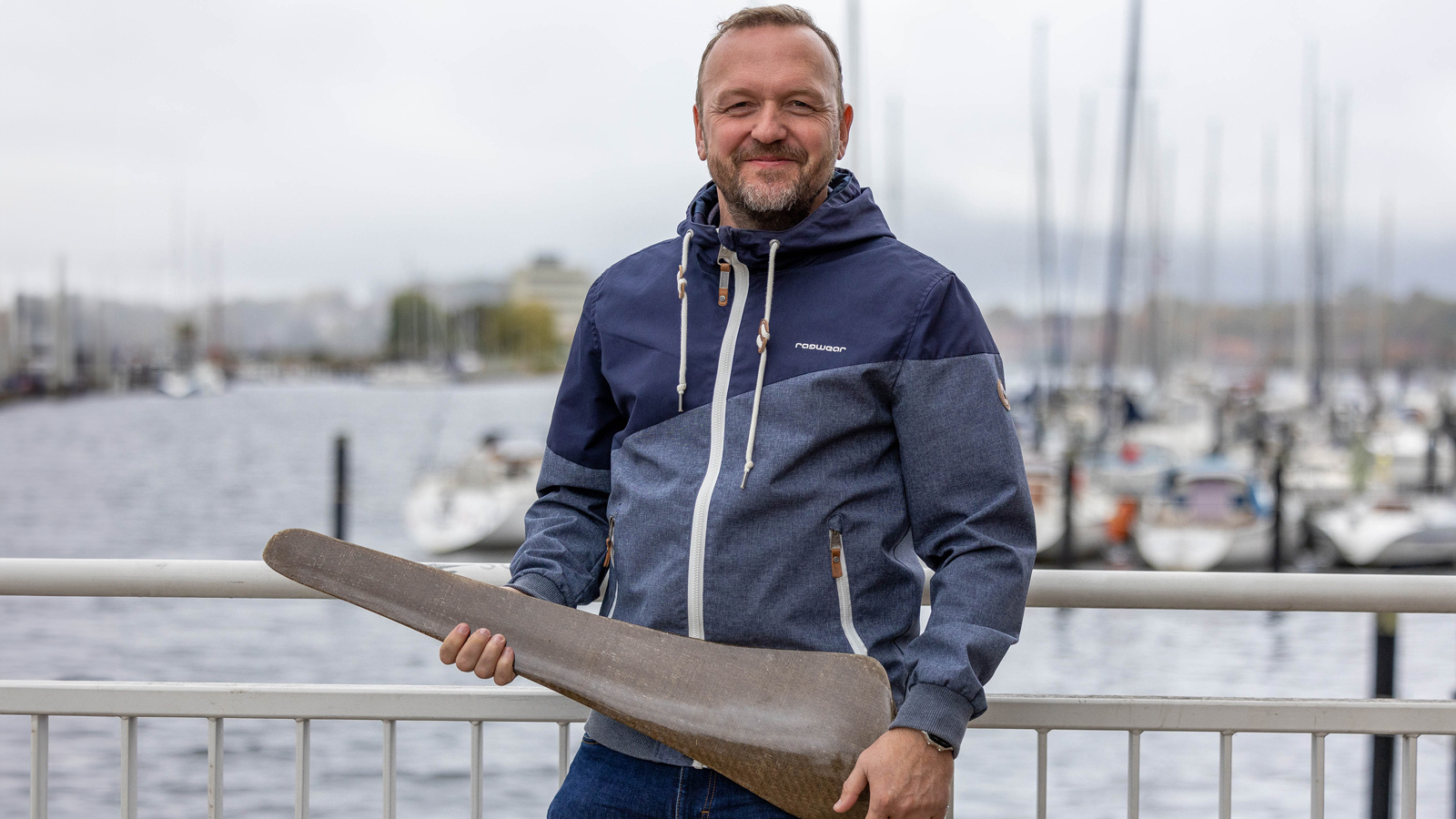
Professor Sten Böhme (above) from HAW Kiel, who is managing the project, said: “We want to demonstrate that sustainable rotor blades made from flax fibres and other renewable raw materials can meet all technical requirements and thus make a real contribution to a more sustainable wind energy sector.”
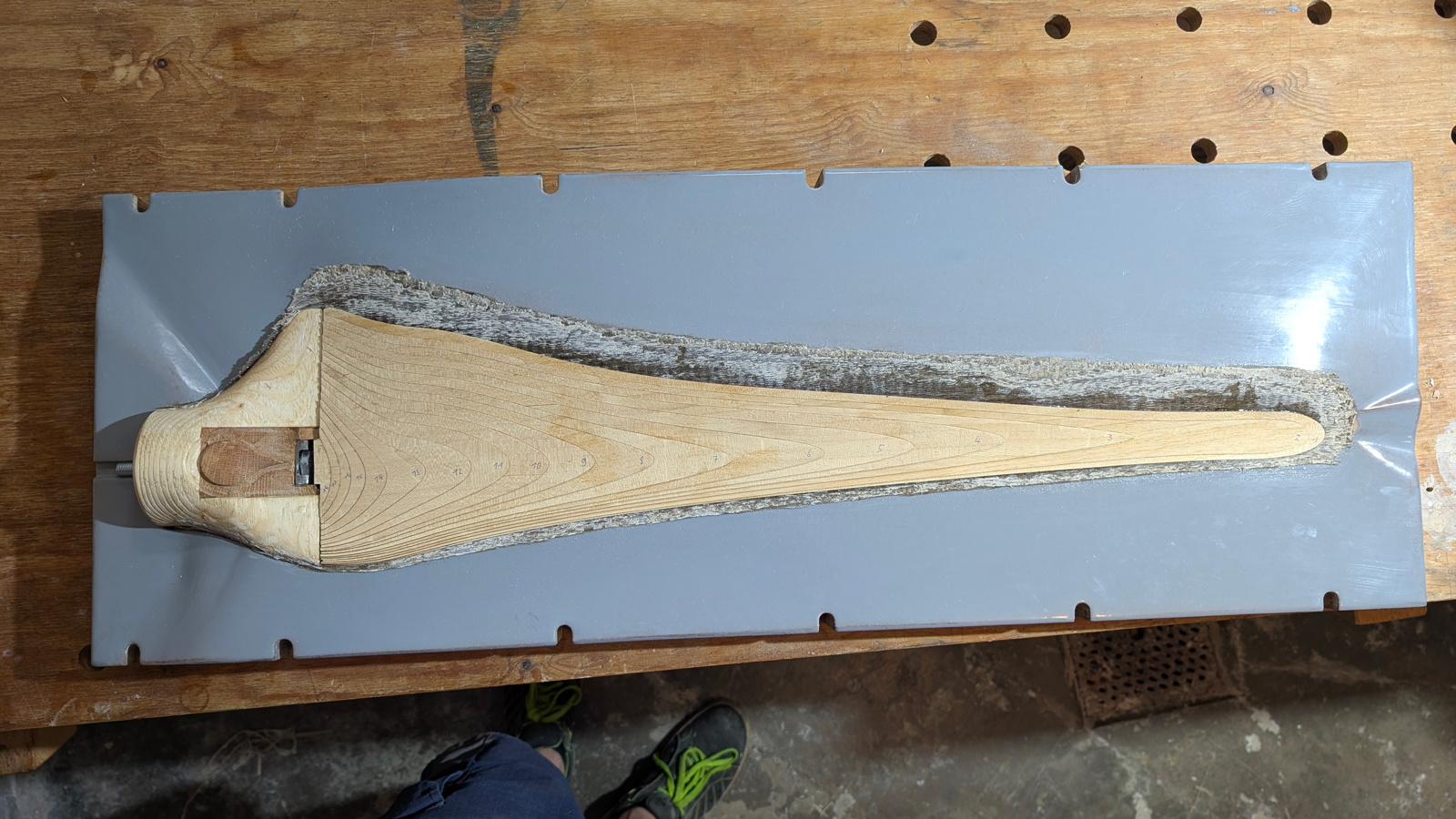
The team started by examining natural fibre materials such as flax, balsa wood and paulownia (a type of empress tree). With project partner Nuebold Yachtbau, samples have been made and tested for load-bearing capacity and stability.
Peter Schönhardt
Jaron Nübold, managing director of Nuebold Yachtbau, said: “Currently, the composite component is being replaced, for example, by flax fibre, without taking into account the special material properties of the natural fibre.
”We are convinced that insights into the dynamic material properties, in particular, can enable a breakthrough in widespread application.”
With approximately €175,000 in funding from the Schleswig-Holstein Energy and Climate Protection Agency (EKSH), the team aim to develop a prototype blade by 2027.
Frank Osterwald, managing director of EKSH, said: “Wind is Schleswig-Holstein’s most important energy source, and the dismantling and recycling of the generation facilities should be considered right from the construction stage.
“The development of rotor blades for small wind turbines made from natural materials can be implemented quickly locally, and simultaneously provides important impetus for large-scale installations worldwide.”
In another recent study earlier this year, a Chinese research team developed technology to repurpose decommissioned wind turbine blades into a material for use in asphalt mixtures and cement concrete.
Leave a Reply