
November 3, 2025 by Baha Badran, Global Head of Engineering, Taoglas
Collected at: https://www.eeworldonline.com/fragmentation-in-wireless-standards-an-rf-specialists-analysis/
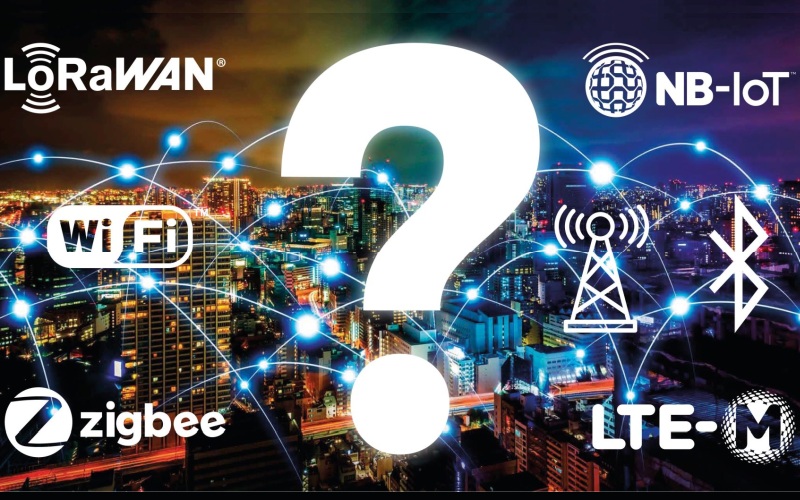
The wireless communications landscape is highly fragmented, with a wide variety of radio technologies from Wi-Fi and Bluetooth to 5G, LoRaWAN, and many others. While this diversity offers exciting opportunities for increased connectivity and smarter infrastructure, it also brings significant challenges for design engineers, integrators, and end-users who must navigate this complex ecosystem. As the proliferation of wireless technologies accelerates, driven by the explosive growth of the Internet of Things (IoT) and Industry 4.0, understanding which wireless standard to choose for your design becomes increasingly difficult.
This article delves into this fragmentation in wireless standards, categorizing the main technologies by their capabilities and examining the factors that influence technology selection.
The constantly evolving landscape
Today’s wireless landscape features multiple protocols, each supporting different communications requirements. LPWAN technologies offer low power and wide area capabilities, while 5G RedCap promises to better align the cost of cellular connectivity to the needs of the IoT market. Wi-Fi connectivity is ubiquitous in local area networking, and Bluetooth, Zigbee, and Thread, with their mesh-networking capabilities, increasingly compete in the smart home and office space. The market for wireless positioning and secure access is currently experiencing strong growth, driving the development of the short-range technologies RFID, NFC, and UWB.
Each technology gets support from several industry groups, such as 3GPP, the CSA (for Zigbee), and the Bluetooth SIG, all focused on evolving the capabilities of their respective technologies through a series of releases. Engineers must understand how these technology roadmaps are likely to influence their product lifecycles.
Before considering how to navigate this complex environment, take a brief look at the major wireless technologies available on today’s market.
The Major wireless technologies
Wireless technologies in common use today can be broadly classified into three main categories: Cellular, LPWAN, and short-range.
Cellular connectivity offers the best coverage of all wireless technologies (Figure 1) and, by using licensed spectrum, delivers a stable and reliable service, but incurs the cost of a data plan. The ongoing roll-out of 5G networks is set to deliver step-changes in data rates and latencies, and future 3GPP releases will continue to improve cellular IoT and push this connectivity option to serve more IoT applications under one network.

Figure 1. Cellular connectivity offers comprehensive coverage but requires a subscription to a cellular data service.
LPWAN is an umbrella term for any network that supports communication over long distances and uses minimal power (Figure 2). These networks are best suited for applications that send small and infrequent amounts of non-time-sensitive data, such as smart metering, asset tracking, smart agriculture, and environmental monitoring. LPWAN networks can be further divided into two categories based on their use of unlicensed or licensed spectrum.

Figure 2. LPWAN is an umbrella term for any network that supports communication over long distances and uses minimal power.
LoRaWAN and Sigfox are leaders in unlicensed LPWAN networks. Developed and maintained by the LoRa Alliance, LoRaWAN is based on an open standard with an architecture based on gateways that relay messages between end-devices and a central network server. LoRaWAN can be deployed as a private network or offered as a public network through integrators. The Sigfox network, on the other hand, is owned and maintained by a French company, is based on patented, proprietary technology, and is operated on a subscription model.
Licensed LPWAN connections use cellular networks and typically offer higher-quality connectivity, with less interference and fewer dropped connections. The three primary cellular standards aimed at IoT applications are NB-IoT (LTE Cat-NB), LTE-M (LTE Cat-M), and LTE Cat 1bis. Each has its advantages in terms of cost, data rates, and power consumption, and coverage of NB-IoT and LTE-M is more fragmented than LTE Cat 1bis.
Short-range is possibly the most complex and fragmented area in wireless communications, owing to the wide range of technologies, each adapted to different sets of requirements. In many cases, these technologies offer overlapping capabilities. Key technologies in this area include:
- Wi-Fi has long been the dominant technology for local wireless networking in homes, offices, and public spaces. It operates in unlicensed spectrum (2.4 GHz, 5 GHz, and 6 GHz), providing high-speed data transmission but with a limited range compared to cellular networks.
- Bluetooth is widely used for short-range communication between devices such as headphones, speakers, and smartwatches. BLE is a power-efficient version designed for battery-operated devices, offering low power consumption and moderate data rates.
- Zigbee primarily targets IoT applications in smart homes, industrial automation, and energy management. It operates in the 2.4 GHz ISM band and is designed for low-power, low-data-rate applications.
- Thread networking is a low-power, wireless mesh networking protocol designed for IoT applications, particularly smart home devices. Thread enables devices to communicate with each other and the internet using IPv6, offering a more robust and efficient alternative to Wi-Fi or Bluetooth for certain applications.
- NFC and RFID are short-range technologies used for applications such as contactless payments, asset tracking, and access control. They operate in the unlicensed 13.56 MHz band, with NFC being a subset of RFID.
- Ultra-wideband (UWB) technology is a short-range, high-bandwidth wireless communication technology that uses radio waves to achieve precise location and tracking capabilities. Operating over a wide frequency band with low power, minimizing interference with other wireless systems, UWB delivers high-accuracy distance measurement, with centimeter-level precision. UWB is also highly secure and is well-suited to applications such as precise location and tracking, indoor navigation, secure access control, and wireless payments.
Selecting your wireless technology
While this dynamic market offers significant opportunities for innovation, it also presents the developer with a range of challenges when selecting the best wireless technology.
Licensed spectrum technologies like 5G, LTE, and NB-IoT offer guaranteed coverage, interference resistance, and higher data rates, but come with higher costs and regulatory oversight. Sigfox, Wi-Fi, Bluetooth, and Zigbee are lower-cost but can suffer from interference and congestion in crowded environments. Some applications may require multi-mode wireless capabilities. A tracking device might have to operate inside a warehouse and during shipping, requiring both indoor and outdoor positioning capability.
The wireless technology roadmap will significantly influence the longevity of a proposed product. The sunset of 2G and 3 G networks is forcing the migration of many IoT applications to LTE, and now 5G REDCap is emerging as the future. LTE-M and NB-IoT will continue to operate on 4G networks for the foreseeable future, and REDCap chipsets are only just arriving on the market, so developers must choose mature networks or be certain that the emerging REDCap ecosystem will align with their product roadmaps. Also, with each new release, capabilities can overlap; Bluetooth 6.0, for example, is endowed with new features improving its competitiveness in the positioning market, and Zigbee, Thread, and Bluetooth Mesh all offer capabilities to the developer of smart home applications.
Ease of deployment, and hence speed to market, should not be overlooked when selecting a wireless technology, and developers should look for a strong ecosystem of chipsets, modules, and development tools. RF design is complex, requiring specialist expertise, and most deployment regions will have specific certification requirements. The time and cost of certification should not be underestimated, and modules offer an effective way of “outsourcing” the RF work to specialist manufacturers, enabling the developer to focus on the application. Where production volumes or design complexity dictate the use of chipsets, antenna design and selection are key tasks.
Conclusion
The wireless communication landscape is complex and fragmented, with multiple technologies serving various application requirements. Selecting the right technology requires careful consideration of the specific needs of each application, as well as factors such as power consumption, range, data rate, and ecosystem support. By understanding the nuances of different wireless standards and technologies, engineers can make informed decisions that enable them to build more efficient, future-proof wireless applications.
Baha Badran has over 20 years of experience in RF, antenna design and product development across thousands of projects. He currently leads a team of 60 engineers at Taoglas and is an expert in the field of RF and radio communications. He holds a
Bachelor of Engineering (B.Eng.) degree in Electrical, Electronics and Communications Engineering from An-Najah National University and a Master’s degree in Personal Mobile and Satellite Communications from the University of Bradford.
Leave a Reply