
By Tel-Aviv University November 2, 2025
Collected at: https://scitechdaily.com/ancient-radio-signals-could-reveal-what-dark-matter-really-is/
Scientists at Tel Aviv University have developed a new way to investigate dark matter by studying faint radio waves from the Universe’s earliest era, known as the cosmic dark ages.
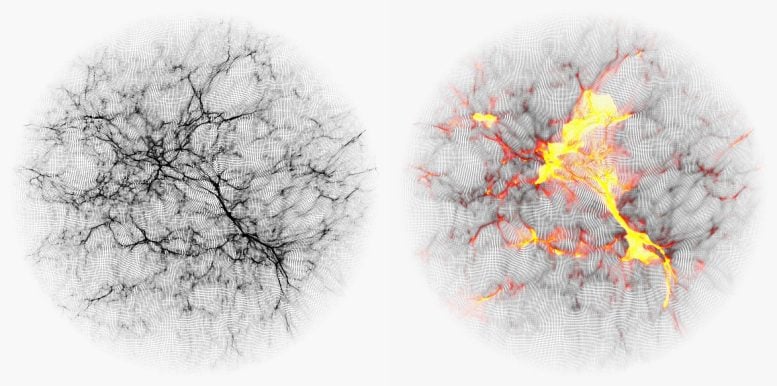
Their research suggests that clumps of dark matter pulled in hydrogen gas, triggering emissions of radio waves that may still be detectable today.
Dark Matter’s Hidden Hand in the Cosmic Dark Ages
For the first time, scientists at Tel Aviv University have predicted what could be revealed by detecting ancient radio waves still traveling through space from the early Universe. Their findings indicate that during the cosmic dark ages, dark matter gathered into dense clusters that drew in hydrogen gas. This interaction caused the gas to emit powerful radio signals, offering a new way to investigate the hidden nature of dark matter through these faint cosmic echoes.
The study, led by Prof. Rennan Barkana of Tel Aviv University’s Sackler School of Physics and Astronomy, included Ph.D. student Sudipta Sikder and researchers from Japan, India, and the United Kingdom. The team’s conclusions were recently published in Nature Astronomy.
Why the Moon May Be the Perfect Radio Observatory
The scientists explain that the cosmic dark ages (the period before the first stars were born) can be explored by capturing the radio waves emitted by hydrogen gas that filled the Universe at that time. Although ordinary antennas easily detect radio signals, the specific wavelengths from this early era are blocked by Earth’s atmosphere. To capture them, instruments must be placed in space—especially on the moon, which offers an undisturbed environment free from atmospheric and human-made interference.
Building a lunar radio telescope would be a major technological challenge, but growing global interest in lunar exploration makes it increasingly feasible. The United States, Europe, China, and India are all preparing new missions involving probes and astronauts, and each space agency is seeking meaningful scientific goals for future lunar bases. This new study highlights one of the most promising: detecting the radio signals left over from the cosmic dark ages.
Probing the Unseen: Clues Hidden in Hydrogen’s Glow
Prof. Barkana explains: “NASA’s new James Webb space telescope discovered recently distant galaxies whose light we receive from early galaxies, around 300 million years after the Big Bang. Our new research studies an even earlier and more mysterious era: the cosmic dark ages, only 100 million years after the Big Bang.
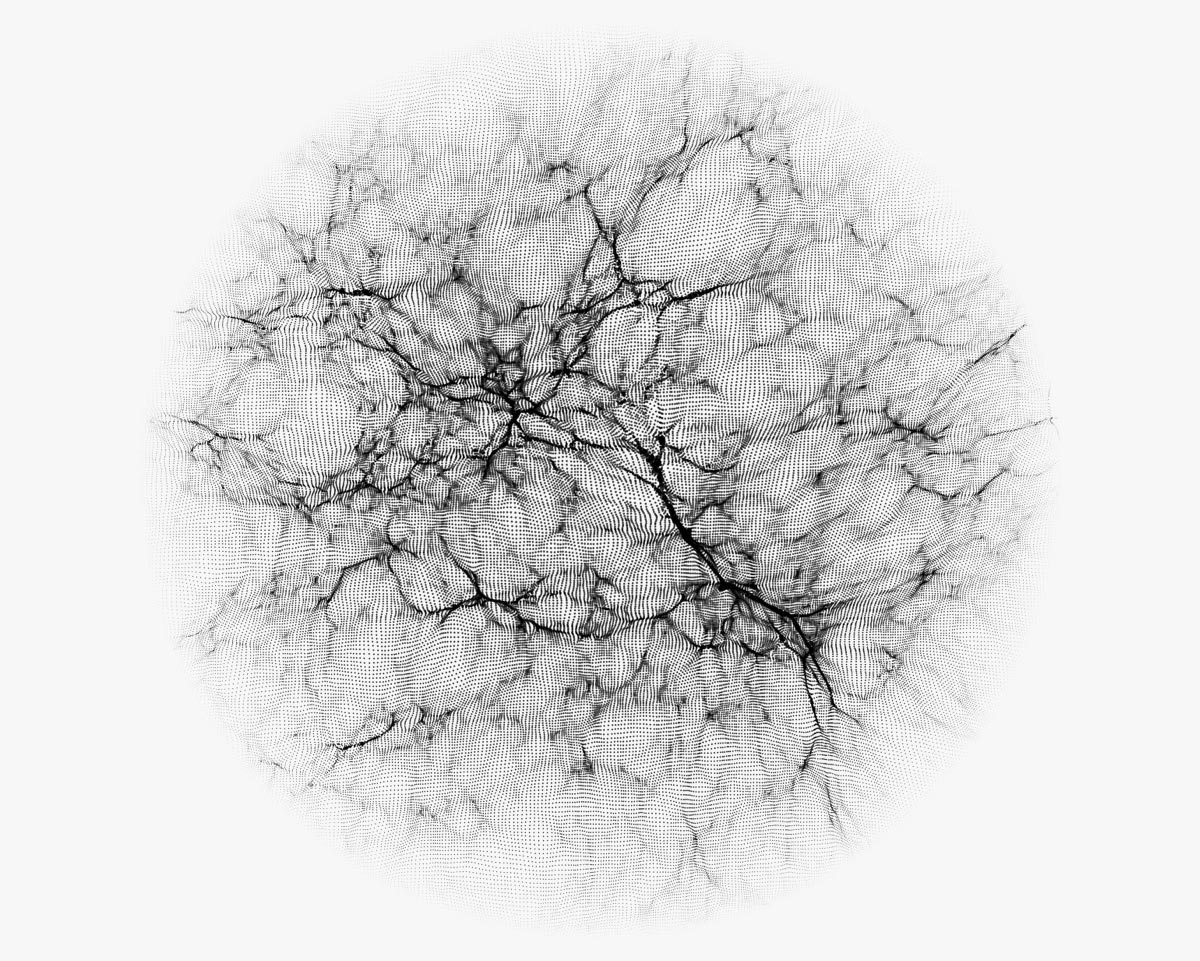
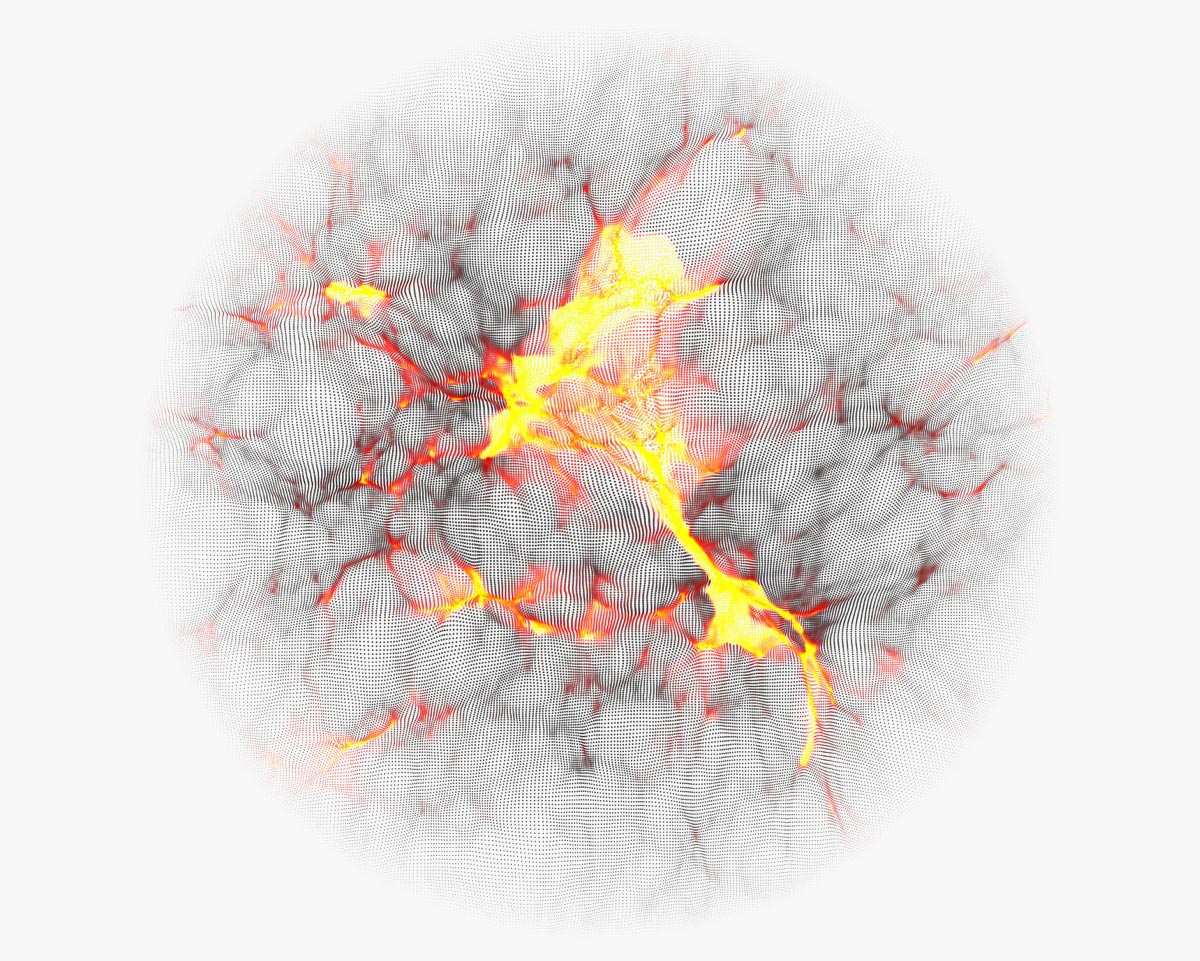
“Computer simulations predict that dark matter throughout the Universe was forming dense clumps, which would later help form the first stars and galaxies. The predicted size of these nuggets depends on, and thus can help illuminate, the unknown properties of dark matter, but they cannot be seen directly. However, these dark matter clumps pulled in hydrogen gas and caused it to emit stronger radio waves. We predict that the cumulative effect of all this can be detected with radio antennas that measure the average radio intensity on the sky.”

Tuning Into the Universe’s First Signals
This radio signal from the cosmic dark ages should be relatively weak, but if the observational challenges can be overcome, it will open new avenues for testing the nature of dark matter.
When the first stars formed a short time later, in the period known as cosmic dawn, their starlight is predicted to have strongly amplified the radio wave signal. The signal from this later era should be easier to observe, and this can be done using telescopes on Earth, but the radio measurements will be more challenging to interpret, given the influence of star formation with all of its complexity.
In this case, though, a great deal of complementary information is potentially available from large radio telescope arrays that will attempt to produce a complete map of the radio waves on the sky, looking for patterns of strong and weak emission that should also reveal the presence of the same dark matter clumps. Prof. Barkana is part of the largest such international collaboration, the Square Kilometre Array (SKA), which includes a massive array of 80,000 radio antennas currently being rolled out in Australia.
A New Window Into the Mysteries of Dark Matter
The researchers assess that the findings may be very significant for the scientific understanding of dark matter. In the present Universe, dark matter has had billions of years to interact with stars and galaxies, making it more difficult to decode its properties. In contrast, the pristine conditions in the early Universe offer a potentially perfect laboratory for astrophysicists.
Prof. Barkana concludes: “Just as old radio stations are being replaced with newer technology that brings forth websites and podcasts, astronomers are expanding the reach of radio astronomy. When scientists open a new observational window, surprising discoveries usually result. The holy grail of physics is to discover the properties of dark matter, the mysterious substance that we know constitutes most of the matter in the Universe, yet we do not know much about its nature and properties. Understandably, astronomers are eager to start tuning into the cosmic radio channels of the early Universe.”
Explore Further:

Leave a Reply