
Jack Loughran Fri 19 Sep 2025
Collected at: https://eandt.theiet.org/2025/09/19/tea-plants-found-thrive-lunar-soil-space-farming-breakthrough
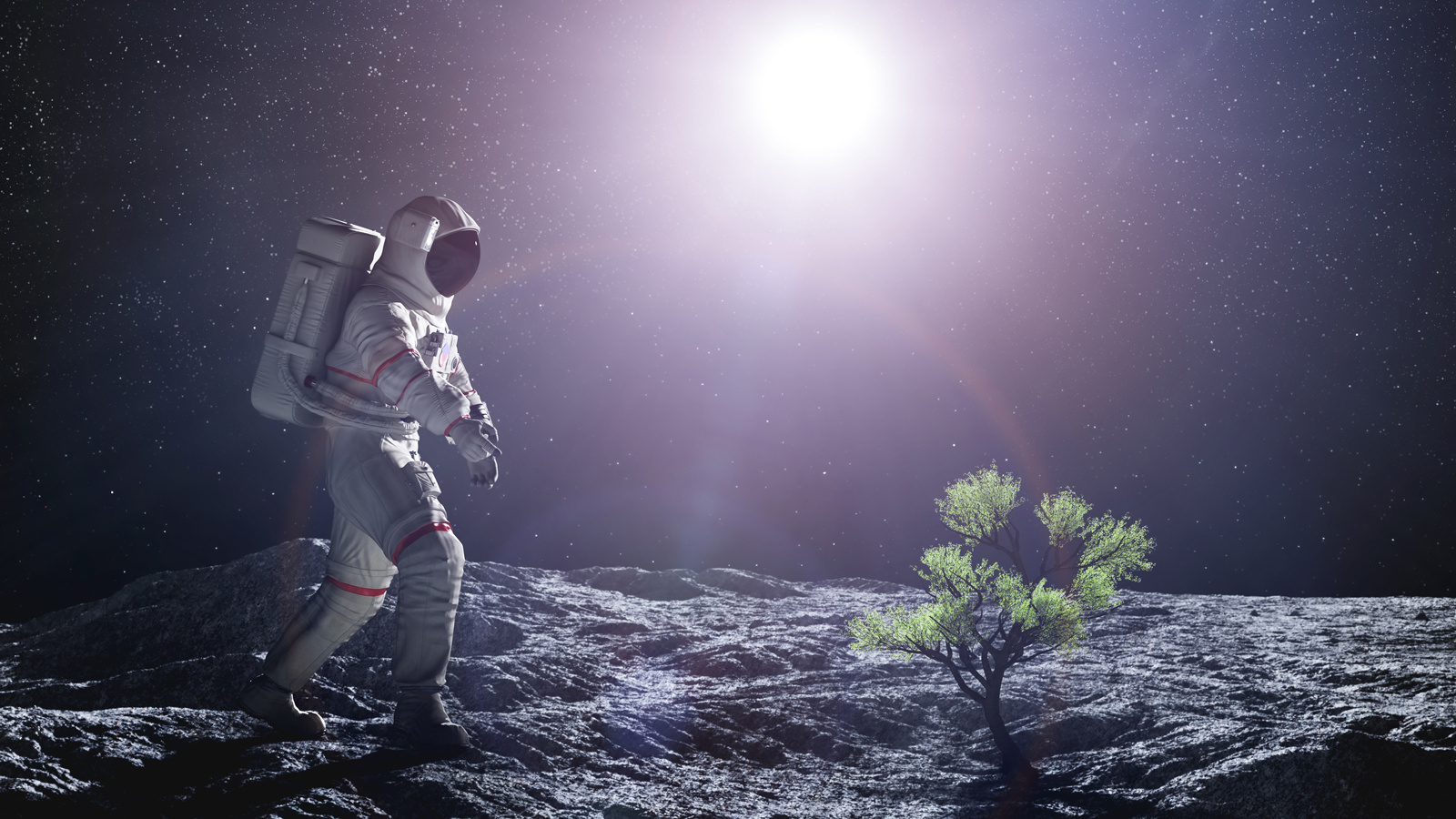
Tea plants can grow in lunar soil, researchers have found – a discovery that could make a manned base on the Moon a more realistic proposition.
A team from the University of Kent planted saplings in soils that mimic those found on the surface of the Moon and Mars.
They monitored how the plants developed over the course of several weeks and compared their performance with a control sample planted in Devonian soil – with temperature, humidity and lighting controlled to mimic conditions in space. The plants in lunar soil were able to take root and grow as well as the control, although the plants in simulated Martian soil failed to grow.
The experiment also has potential implications closer to home as the team learnt about how crops and plants can survive harsh environments and poor soils. Poor soils are a point of concern for climate scientists, with over-farming and use of fertilisers steadily depleting the amount of viable soil available for agriculture. The researchers say that the work is a stepping stone to developing a greater understanding of how to transform sterile, lifeless soils into viable growing ones.
The researchers worked with UK tea plantation Dartmoor Tea, Lightcurve Films and Europlanet on the study.
Nigel Mason, professor of molecular physics at the University of Kent, said: “We’re moving into a new age of space, where we think about settling in space and building bases on the Moon or Mars. One of the first things you want to know is: ‘What will people eat?’
“These experiments reveal that terrestrial plants such as tea may be cultivated in lunar soils within lunar greenhouses, allowing inhabitants of such bases some degree of autonomy and access to fresh food. We are at the very earliest stages of research into space agriculture but it is reassuring that we may be able to provide access to the great British tradition of a tea break.”
Dr Sara Lopez-Gomollon said: ‘The results of this project are very encouraging as they demonstrate that a tea, a crop, can be grown in lunar soils. Our next step is to better understand the physiology of the plant under these conditions so we can improve growth and ideally translate these findings to other crops.
“This is particularly exciting as we move beyond simply sending astronauts to the Moon and begin to think seriously about making it habitable, paving the way for long-duration space missions. Additionally, just as our experience with how plants cope with stress on Earth informs our work in space agriculture, we hope that the knowledge gained from studying plant survival in extreme extraterrestrial environments will also be applied to improving crop resilience here on Earth.”
Over the summer, Chinese researchers unveiled a technology to extract water from lunar soil and use it to convert carbon dioxide into oxygen and chemicals for fuel.
Leave a Reply