
September 9, 2025 by Monash University
Collected at: https://techxplore.com/news/2025-09-smartphones-cars-cities-rough-roads.html
Potholes could be a thing of the past, after a team of Monash engineers found a way to use smartphones to monitor roads—a cheaper, quicker alternative to Australia’s current road survey methods.
The smartphone method doesn’t just detect bumps, cars feed footage into an app that builds a live map of road conditions across an entire city.
The Monash team led by Dr. Yihai Fang, at the ARC Smart Pavements Australia Research Collaboration (SPARC) Hub, has already trialed crowdsourcing with 22 student drivers sharing data from their phones. They now hope to expand the project in partnership with road authorities. The research is published in the IEEE Internet of Things Journal.
“The more data we get from different vehicles, phones and road conditions, the stronger the system becomes,” Dr. Fang said.
“This could one day help create a city-wide road health map powered by everyday drivers.”
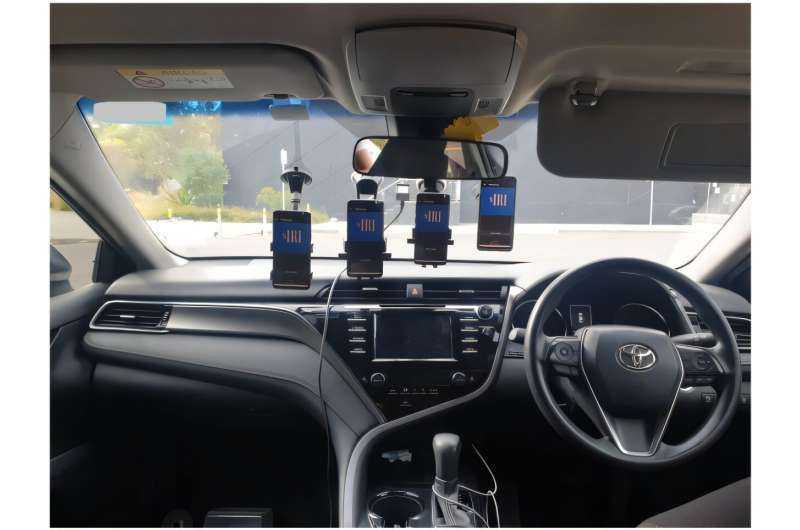
Dr. Fang said around 25 vehicles were fitted with smartphones and driven along Melbourne roads over two months. The team used different types of cars and phone positions to mimic real-world conditions.
“Our research shows that smartphones, supported by deep learning models, can reliably capture road roughness data across different vehicles and mounting positions,” Dr. Fang said.
Road authorities currently use specialized survey trucks fitted with laser equipment to monitor road conditions. These provide accurate results but are costly and usually only deployed once or twice a year.
Climate change and extreme weather are placing additional stress on road networks, creating a need for more frequent checks. Affordable tools like smartphones could help provide extra data between surveys, supporting smarter use of Australia’s $15.8 billion annual roads budget, about half of which is spent on maintenance and renewal.
“By using cars that are already on the road, we can make monitoring more frequent and responsive. This could help spot problems earlier, before they turn into costly repairs,” Dr. Fang said.
More information: Ye Sang et al, Smartphone-Based IRI Estimation for Pavement Roughness Monitoring: A Data-Driven Approach, IEEE Internet of Things Journal (2024). DOI: 10.1109/JIOT.2024.3369109
Journal information: IEEE Internet of Things Journal
Leave a Reply