
By Royal Astronomical Society August 22, 2025
Collected at: https://scitechdaily.com/whats-really-inside-jupiter/
New research challenges the long-standing idea that Jupiter’s unusual core was formed by a colossal planetary collision.
Instead, scientists now believe its “dilute core”—a fuzzy mix of rock, ice, hydrogen, and helium—formed gradually as the planet grew.
Jupiter’s Core Mystery Deepens
The mystery surrounding Jupiter’s interior has taken an unexpected turn, with new research indicating that a giant collision may not have created the planet’s unusual core.
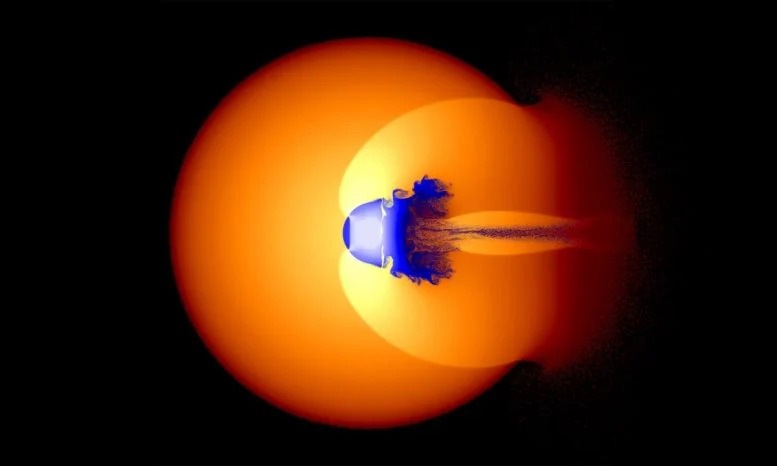
For years, scientists believed that Jupiter’s interior could be explained by a massive impact in the planet’s early history. In this scenario, a planet containing roughly half the material of Jupiter’s core would have slammed into the gas giant, stirring its central layers enough to account for the structure observed today.
But a study published in the Monthly Notices of the Royal Astronomical Society offers a different explanation. According to the research, Jupiter’s core likely developed from the way the planet gradually pulled in both heavy and light elements during its growth and evolution.
Juno’s Revelations Spark Questions
Data from NASA’s Juno spacecraft revealed that Jupiter’s core does not end abruptly, as scientists once assumed. Instead, it blends smoothly into the surrounding hydrogen-rich layers, forming what is called a dilute core.
Since Juno uncovered this surprising structure, researchers have been trying to determine how such a diffuse core could have formed. To explore the idea, scientists from Durham University, working with colleagues at NASA, SETI, and CENSSS, University of Oslo, carried out advanced computer simulations of planetary impacts. These models used new methods to better track how different materials mix together, helping to test whether a giant collision could have been responsible for the core’s unusual form.
Supercomputers Put Jupiter to the Test
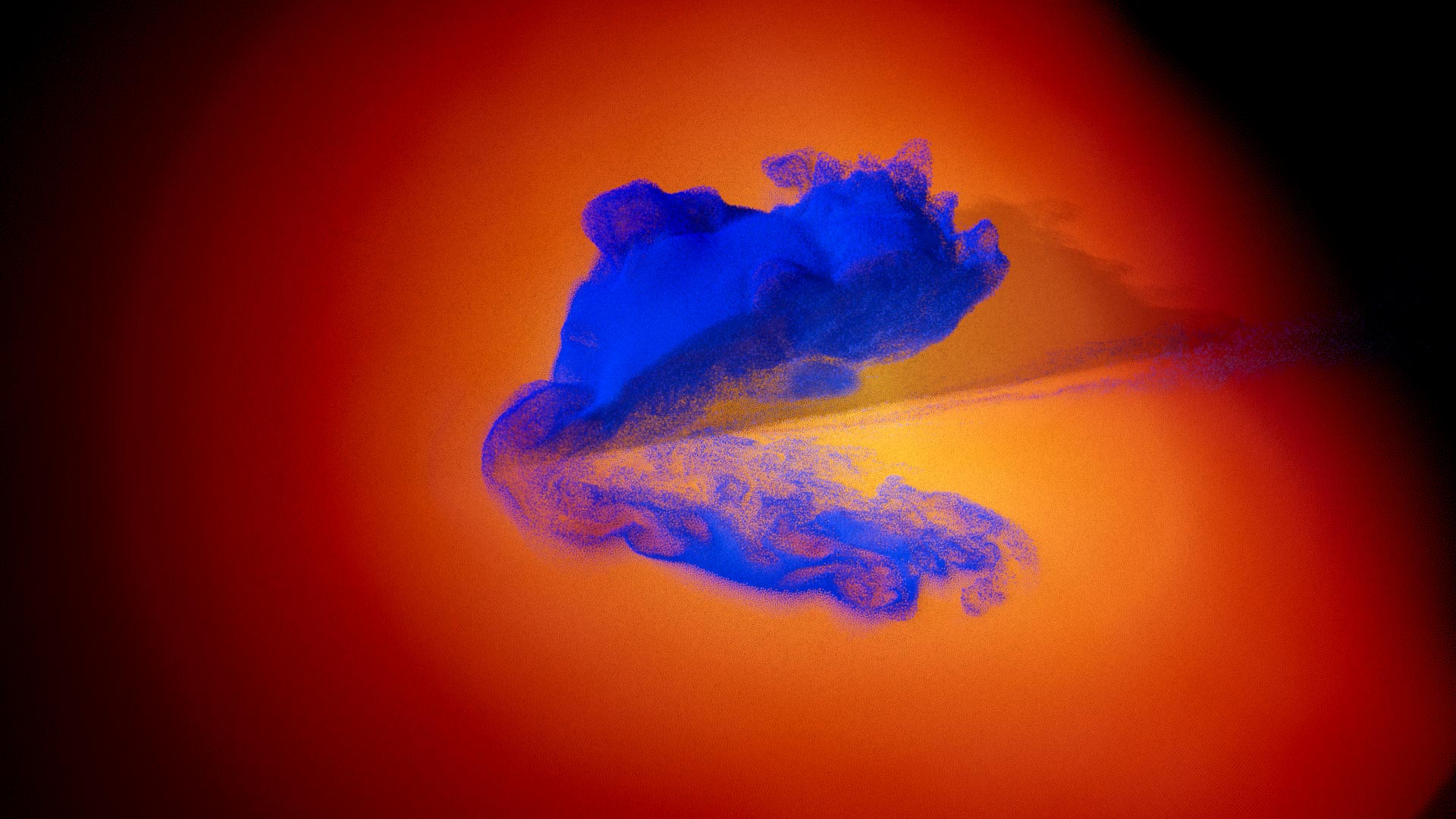
The simulations were run on the DiRAC COSMA supercomputer hosted at Durham University using the state-of-the-art SWIFT open-source software.
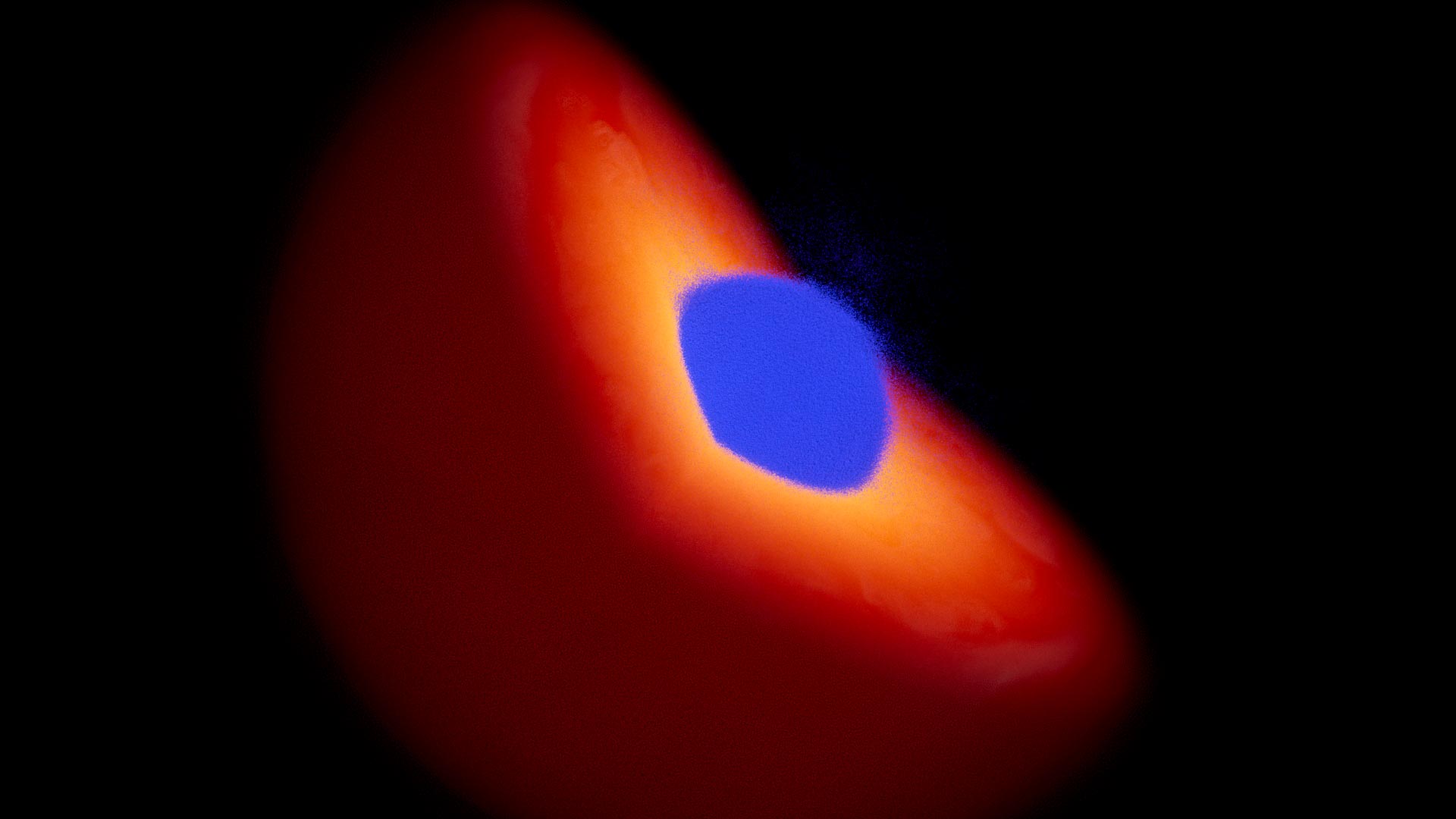
The study found that a stable dilute core structure was not produced in any of the simulations conducted, even in those involving impacts under extreme conditions.
Instead, the simulations demonstrate that the dense rock and ice core material displaced by an impact would quickly re-settle, leaving a distinct boundary with the outer layers of hydrogen and helium, rather than forming a smooth transition zone between the two regions.
Scientists React to Findings
Reflecting on the findings, lead author of the study, Dr. Thomas Sandnes, of Durham University, said: “It’s fascinating to explore how a giant planet like Jupiter would respond to one of the most violent events a growing planet can experience.
“We see in our simulations that this kind of impact literally shakes the planet to its core – just not in the right way to explain the interior of Jupiter that we see today.”
Saturn Adds to the Puzzle
Jupiter isn’t the only planet with a dilute core, as scientists have recently found evidence that Saturn has one too.
Dr. Luis Teodoro, of the University of Oslo, said: “The fact that Saturn also has a dilute core strengthens the idea that these structures are not the result of rare, extremely high-energy impacts but instead form gradually during the long process of planetary growth and evolution.”
The findings of this study could also help inform scientists’ understanding and interpretation of the many Jupiter- and Saturn-sized exoplanets that have been observed around distant stars. If dilute cores aren’t made by rare and extreme impacts, then perhaps most or all of these planets have comparably complex interiors.
New Tools for Cosmic Mysteries
Co-author of the study, Dr. Jacob Kegerreis, said: “Giant impacts are a key part of many planets’ histories, but they can’t explain everything!
“This project also accelerated another step in our development of new ways to simulate these cataclysmic events in ever greater detail, helping us to continue narrowing down how the amazing diversity of worlds we see in the Solar System and beyond came to be.”
Reference: “No dilute core produced in simulations of giant impacts on to Jupiter” by T D Sandnes, V R Eke, J A Kegerreis, R J Massey and L F A Teodoro, 4 July 2025, Monthly Notices of the Royal Astronomical Society.
DOI: 10.1093/mnras/staf1105


Leave a Reply