
Tanya Weaver Tue 29 Jul 2025
Collected at: https://eandt.theiet.org/2025/07/29/french-floating-solar-system-near-shore-use-gains-marine-classification-0
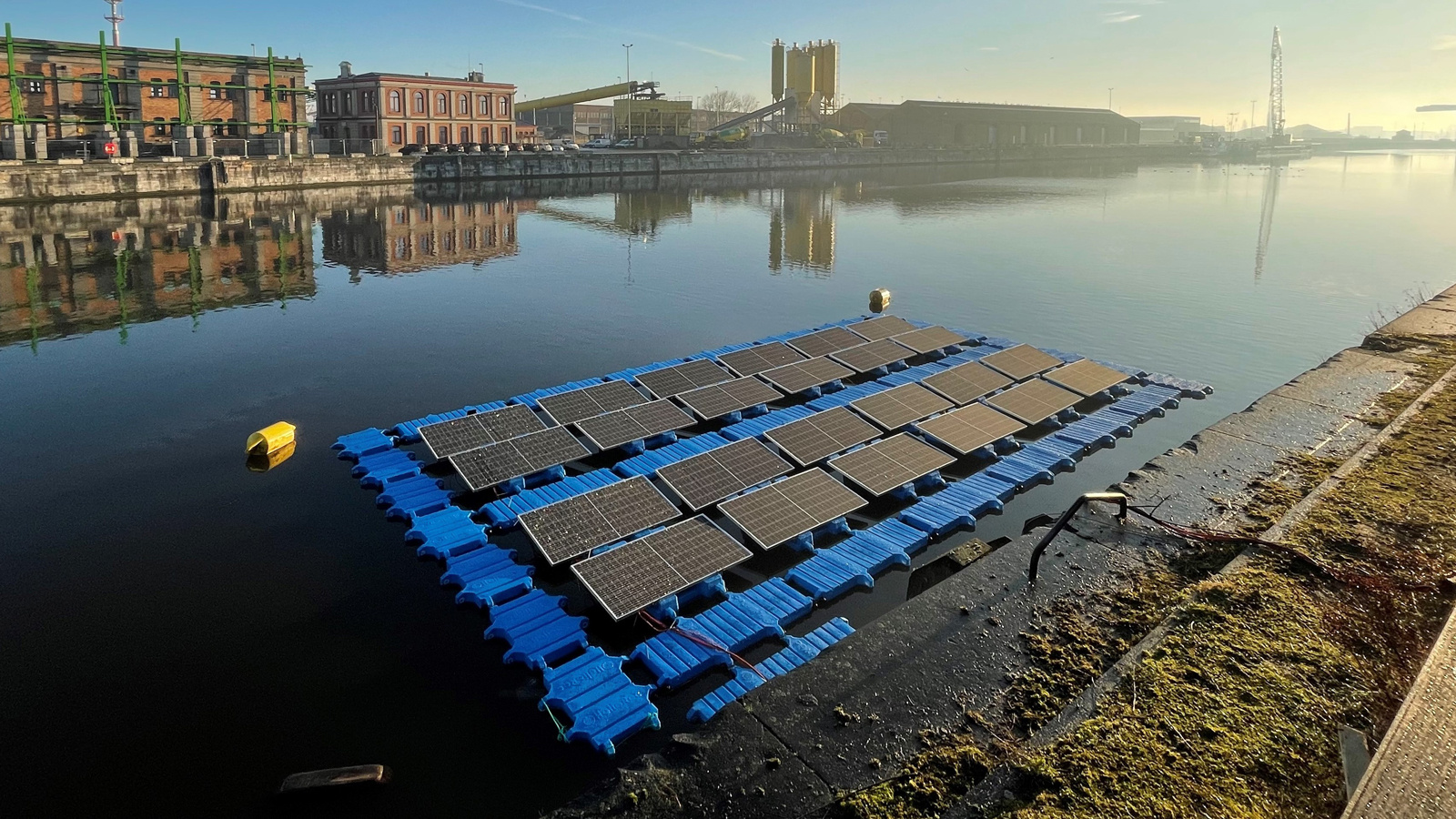
French clean-tech company HelioRec has reached a significant certification milestone for its near-shore floating solar system.
The firm received approval in principle (AiP) level II for its technology from Bureau Veritas Marine & Offshore, a certification body for the maritime and offshore energy industries.
Founded in Nantes, France, in 2019, HelioRec has been developing floating solar power plants for near‑shore and port environments.
While conventional solar farms sometimes attract controversy because of the amount of land they use, floating solar farms occupy much less valuable space above bodies of water.
They have become a feature in the secluded waters of lakes and reservoirs; however, HelioRec’s system can also be used in coastal waters.
The company is focusing on ports and near-shore sites close to urban areas and industrial sites so the system can more easily and cost-effectively connect to the electricity grid.
HelioRec said the certification was “a strong endorsement of the technical integrity and feasibility of our marine energy system.
“The AiP confirms that the core design choices and system architecture meet marine classification requirements ‘in principle’ – a vital step in scaling our floating solar technology across ports, coastal municipalities and offshore infrastructure.”
The certification covers design regulations for offshore floating structures, mooring systems, material and welding requirements, and fatigue testing of key components such as mooring chains.
HelioRec
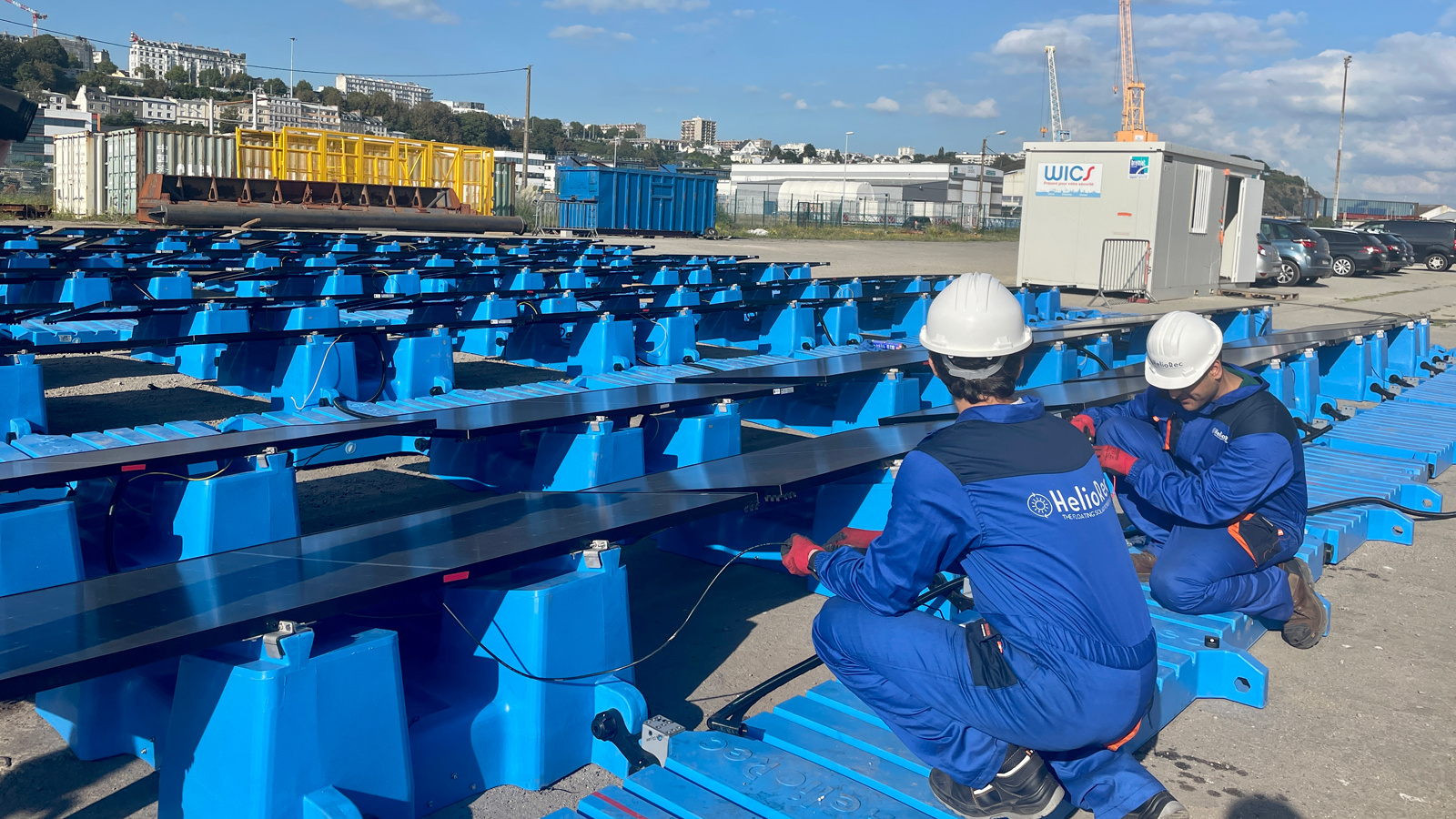
HelioRec’s technology features a patented hydro-lock design. The system’s floating solar units are able to retain water inside their hollow structures. This water provides additional mass, which helps to stabilise the system on the water surface. As such, it doesn’t require a heavy metal or concrete ballast to anchor it as other types of marine renewable technologies do.
It is also considered to be an environmentally friendly solution as the floating design has a low impact on the marine environment.
The system is made from recyclable materials and features UV and saltwater-resistant flexible connectors between the floating elements, which helps distribute mechanical stress across the floating array during turbulent weather.
This design means that HelioRec’s floating platforms are able to withstand extreme near-shore weather, including wind speeds exceeding 160km/h and wave heights up to two metres.
The system was validated during an installation in 2023 at a site in the Port of Brest, France (video of the project above). Here the 25kW system experienced very challenging conditions, including high tidal variation, waves exceeding two metres and wind speeds of 100km/h but continued to operate reliably.
In April 2025, HelioRec announced that it had signed a memorandum of understanding with Shoreham Port on the south-east coast of UK to develop a floating solar power project.
According to HelioRec, this collaboration aims to transform unused water spaces at the port into sources of renewable energy, supporting the port’s efforts to reduce carbon emissions.
At the start of this year, HelioRec also launched the EU-funded STEWART project aimed at advancing sustainable floating solar solutions. The project is backed by the Clean Energy Transition Partnership (CETPartnership) and the Région Pays de la Loire, an administrative region of France, under the European Union’s clean energy strategy.

Leave a Reply