
By Mara Johnson-Groh, NASA’s Goddard Space Flight Center February 21, 2025
Collected at: https://scitechdaily.com/massive-solar-storm-unleashes-mysterious-new-radiation-belts/
A fierce solar storm in May 2024 did more than disrupt GPS — it created two new radiation belts. A revived CubeSat captured this rare event, revealing a belt with protons, a first in space weather history.
- The May 2024 solar storm led to the formation of two temporary radiation belts around Earth.
- While similar belts have appeared after past solar storms, these lasted much longer, especially the new proton belt.
- This discovery is significant for spacecraft traveling to geostationary orbit, as passing through these radiation belts can pose a risk to their systems.
A Solar Storm Unleashes Chaos
In May 2024, Earth experienced its most powerful solar storm in two decades. For several days, intense waves of charged particles from the Sun bombarded the planet, lighting up the skies with dazzling auroras and briefly disrupting some GPS communications.
Scientists have now discovered that this solar storm did more than create a spectacular light show — it also formed two new temporary radiation belts around Earth. This unexpected finding, made possible by a NASA satellite that unexpectedly came back to life, could provide valuable insights into how future solar storms might affect technology.
The Van Allen Belts and Spaceflight Safety
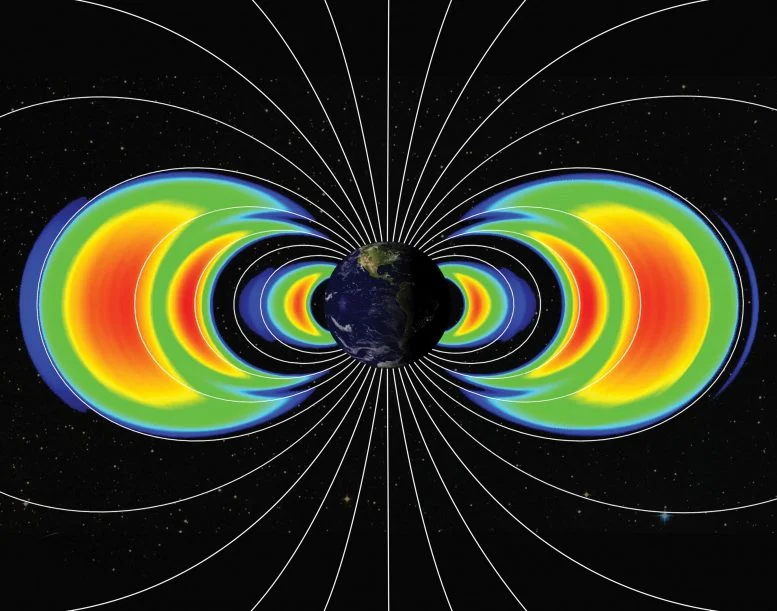
These newly formed radiation belts appeared between the two permanent Van Allen Belts, which encircle Earth like concentric rings above the equator. The Van Allen Belts, made up of high-energy electrons and protons trapped by Earth’s magnetic field, pose risks to both spacecraft and astronauts. Understanding how these radiation belts evolve is crucial for ensuring safe space travel.
The discovery was made using NASA’s Colorado Inner Radiation Belt Experiment (CIRBE) satellite and was published on February 6, 2025, in the Journal of Geophysical Research: Space Physics. This breakthrough is particularly significant for spacecraft heading into geostationary orbit, as they must pass through the Van Allen Belts multiple times before reaching their final destination.
New Belts Amaze Scientists
Temporary belts have been detected in the aftermath of large solar storms before. But while previous belts have been composed mostly of electrons, the innermost of the two new belts also included energetic protons. This unique composition is likely due to the strength and composition of the solar storm.
“When we compared the data from before and after the storm, I said, ‘Wow, this is something really new,’” said the paper’s lead author Xinlin Li, a professor at the Laboratory for Atmospheric and Space Physics (LASP) and Department of Aerospace Engineering Sciences at the University of Colorado Boulder. “This is really stunning.”
Unexpected Longevity of the Belts
The new belts also seem to have lasted much longer than previous belts. Whereas previous temporary belts lasted around four weeks, the new belt composed primary of electrons lasted more than three months. The other belt, that also includes protons, has lasted much longer than the electron belt because it is in a more stable region and is less prone to the physical processes that can knock the particles out of orbit. It is likely still there today.
“These are really high-energy electrons and protons that have found their way into Earth’s inner magnetic environment,” said David Sibeck, former mission scientist for NASA’s Van Allen Probes and research scientist at NASA’s Goddard Space Flight Center in Greenbelt, Maryland, who was not involved with the new study. “Some might stay in this place for a very long time.”
How long such belts stick around depends on passing solar storms. Large storms can provide the energy to knock particles in these belts out of their orbits and send them spiraling off into space or down to Earth. One such storm at the end of June significantly decreased the size of the new electron belt and another in August nearly erased the remainder of that electron belt, though a small population of high-energy electrons endured.

CubeSat Fortuitously Comes Back to Life to Make the Discovery
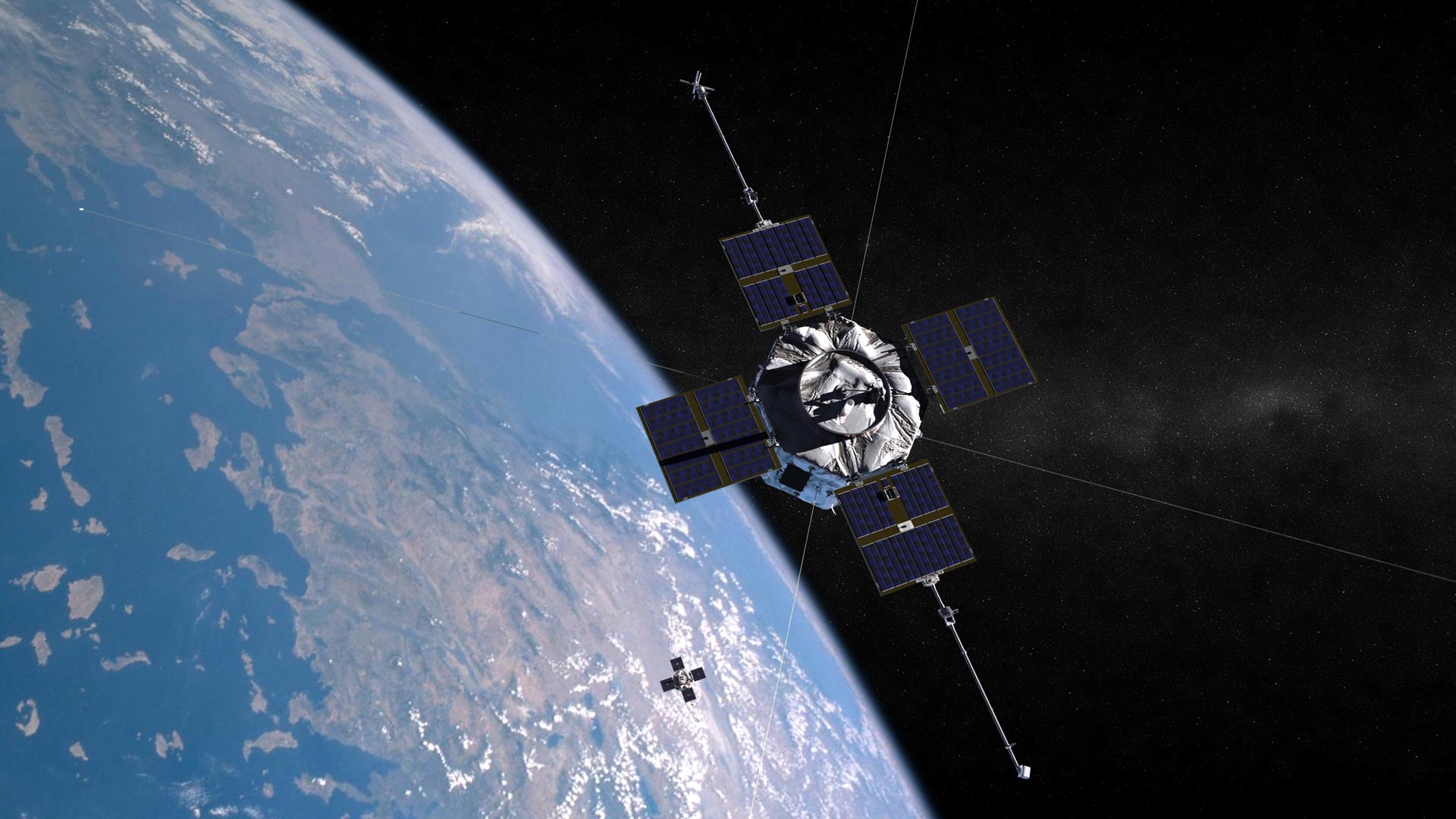
The new discovery was made by NASA’s CIRBE satellite, a CubeSat about the size of a shoebox that circled the planet’s magnetic poles in a low Earth orbit from April 2023 to October 2024. CIRBE housed an instrument called the Relativistic Electron Proton Telescope integrated little experiment-2 (REPTile-2) — a miniaturized and upgraded version of an instrument that flew aboard NASA’s Van Allen Probes, which made the first discovery of a temporary electron belt in 2013.
After a year in space, the CubeSat experienced an anomaly and unexpectedly went quiet on April 15, 2024. The scientists were disappointed to miss the solar storm in May but were able to rely on other spacecraft to provide some preliminary data on the electron belt. Luckily, on June 15, the spacecraft sprang back to life and resumed taking measurements. The data provided high-resolution information that couldn’t be gleaned by any other instrument and allowed the scientists to understand the magnitude of the new belts.
“Once we resumed measurements, we were able to see the new electron belt, which wasn’t visible in the data from other spacecraft,” Li said.
A Bittersweet Success
Having the CubeSat in orbit to measure the effect of the solar storm has been bittersweet, Li said. While it provided the opportunity to measure the effects of such a large event, the storm also increased atmospheric drag on the CubeSat, which caused its orbit to decrease prematurely. As a result, the CubeSat deorbited in October 2024. However, the spacecraft’s data makes it all worth it.
“We are very proud that our very small CubeSat made such a discovery,” Li said.
Reference: “A New Electron and Proton Radiation Belt Identified by CIRBE/REPTile-2 Measurements After the Magnetic Super Storm of 10 May 2024” by Xinlin Li, Zheng Xiang, Yang Mei, Declan O’Brien, David Brennan, Hong Zhao, Daniel N. Baker and Michael A. Temerin, 6 February 2025, Journal of Geophysical Research: Space Physics.
DOI: 10.1029/2024JA033504
Leave a Reply