
Tanya Weaver Thu 13 Feb 2025
Collected at: https://eandt.theiet.org/2025/02/13/first-space-weather-monitor-uk-40-years-installed-cornwall
A ground-based neutron monitor has been installed at a Met Office site in Cornwall to help understand and mitigate the impacts of space weather.
The new NM-2023 monitor, the first to be built in the UK in more than four decades, will provide real-time data and new measurement capabilities to help better understand and mitigate the impacts of space weather.
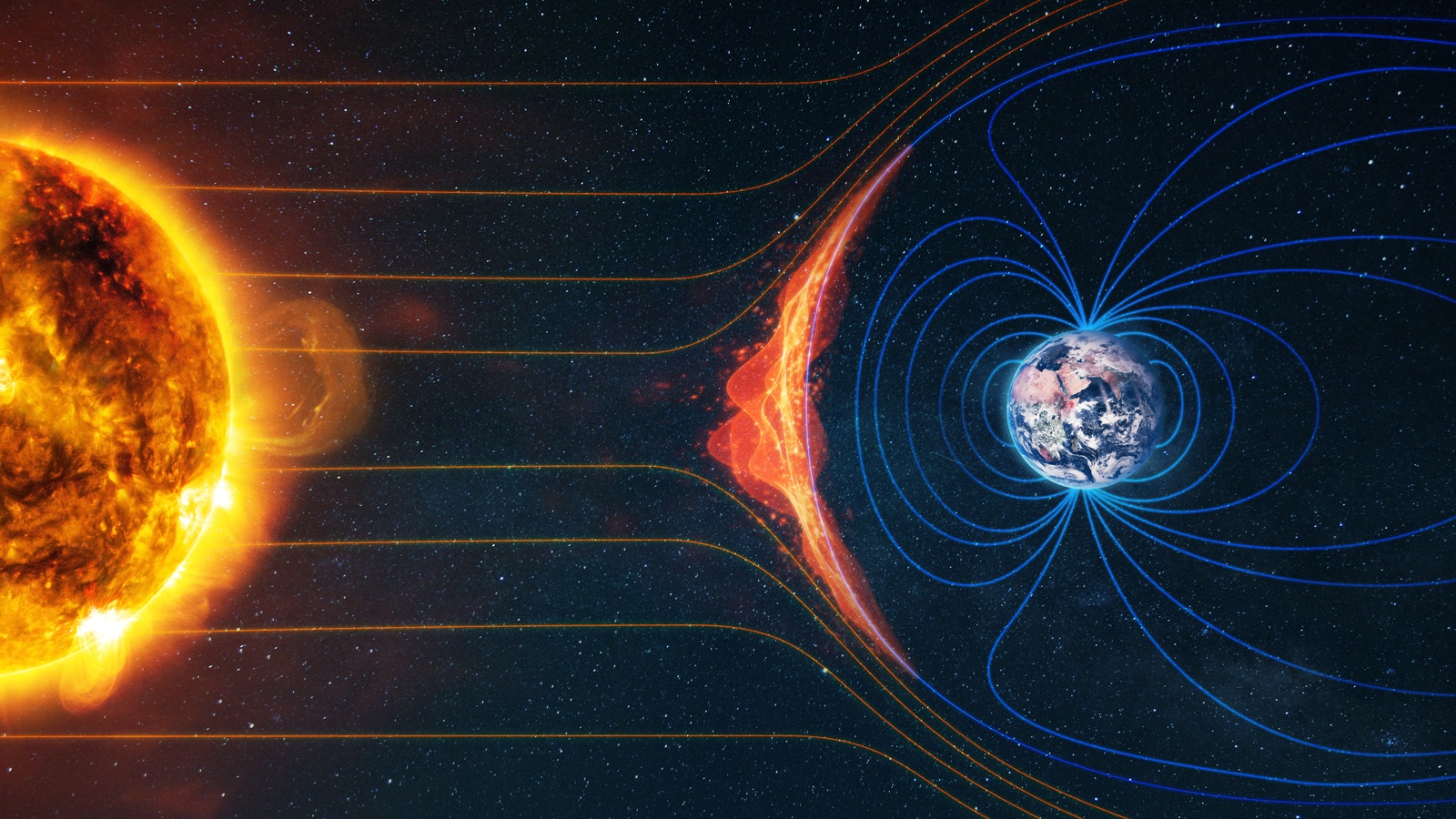
Space weather is a consequence of the behaviour of the Sun, the nature of Earth’s magnetic field and atmosphere, and our location in the Solar System. Space weather can drive changes in the electromagnetic and radiation environment in near-Earth space, in the atmosphere and at the surface.
As such, it can represent a real threat and can have an impact on human technology, including satellites, power grids, communications, navigation and transport infrastructure . The most severe solar radiation storms can travel from the Sun to Earth in as little as 10 minutes.
Michael Aspinall, principal investigator at the University of Lancaster, said: “This project marks a major milestone for the UK in advancing our space weather monitoring capabilities – something crucial for safeguarding modern infrastructure and daily life.”
The monitor’s development was a collaborative effort between Lancaster’s School of Engineering, the UK Atomic Energy Authority and radiation detection and instrumentation company Mirion Technologies (Canberra UK).
Rigorous testing of the monitor was conducted on the ChipIr beamline at the Science and Technology Facilities Council’s (STFC) ISIS neutron and muon source.
This new monitor is one of 45 similar sensors worldwide that are continually monitoring changes in neutrons at the Earth’s surface to assess the influence of space weather.
The NM-2023 monitor will be chiefly looking for spikes in neutrons, also known as ground-level enhancements, which occur during solar radiation storms caused by the acceleration of particles close to the Sun.
The new monitoring capability will enable alerts to be issued and validate existing forecasting methods of solar radiation storms, which can disable satellites and cause nationwide power outages on Earth.
Simon Machin, Met Office space weather manager, said: “The new UK-based neutron monitor will enhance global monitoring of space weather events and will be an important part of our ongoing space weather forecasting and validating service.
“While severe space weather events are rare, this increased capability and resilience will help scientists and industries to manage risks and mitigate impacts where possible.”
The project also plans to deploy a smaller monitor at Lancaster University, further bolstering the UK’s monitoring capabilities.
Below is a brief video from the Met Office about the project and an explanation of what the monitor will do.
Leave a Reply