
Tanya Weaver Tue 31 Mar 2026
Collected at: https://eandt.theiet.org/2026/03/31/flexible-hydrogel-could-power-your-wearables-using-just-body-heat
A soft material that converts body heat into electricity could pave the way for self-powered wearable devices, according to a new study.
Researchers at Queensland University of Technology (QUT) in Brisbane, Australia, found that a soft hydrogel was able to capture wasted heat and turn it into usable electrical power with “record efficiency”.
Low-grade heat is widely distributed in industrial processes, the environment and even the human body, accounting for a significant share of global energy loss. In their research, the team investigated how efficiently a soft hydrogel material could convert this wasted heat into electricity using the thermal diffusion process known as the Soret effect.
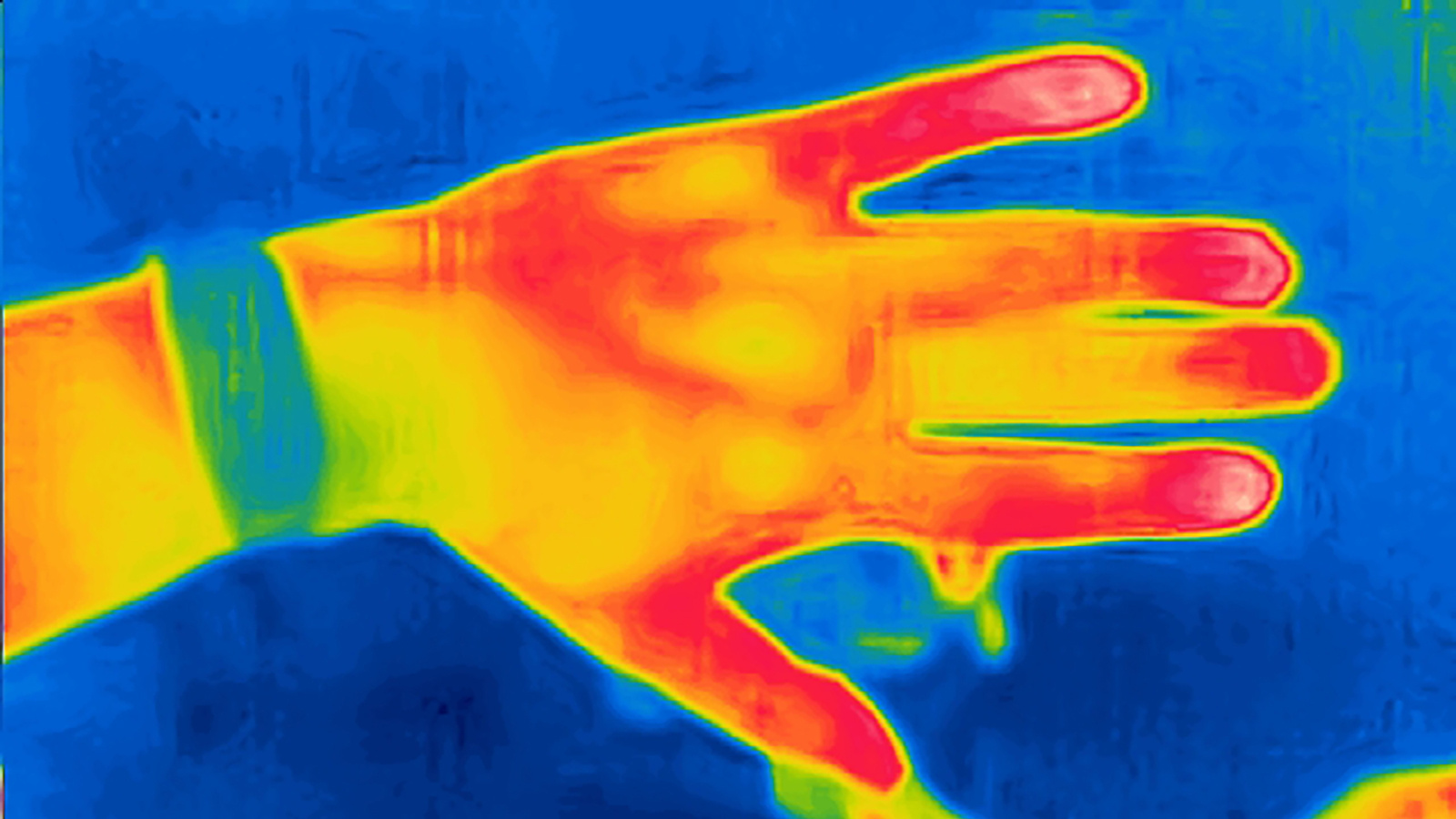
The hydrogel achieves this by controlling how charged particles move through a soft polymer network, allowing the material to efficiently generate electricity from small temperature differences, such as the heat naturally produced by the human body.
Professor Zhi-Gang Chen, professor of energy materials in the School of Chemistry and Physics at QUT and research lead, said: “With this gel, we demonstrated how we can turn heat that would otherwise be wasted, such as body heat, into a practical power source.
“Remarkably, a small 10mm square device can generate around 0.46 volts. Although that is a small example, it demonstrates strong potential for real-world applications.”
Unlike traditional thermoelectric materials, which are often rigid, expensive and difficult to scale, the hydrogel is soft, flexible, low-cost and suitable for scalable manufacturing, while also delivering excellent performance at room temperature.
Chen said the potential of their discovery was that future wearable electronics could be powered without relying as heavily on conventional batteries. It could enable a new generation of technologies, including battery-free health monitors, smart fabrics and e-textiles, self-powered sensors and IoT devices, and systems that recover wasted heat for useful energy.
This is the latest in a series of studies in recent years in which Professor Chen and his team have been focusing on the challenge of the enormous amounts of energy lost globally as waste heat. “From powering wearables to reducing emissions, new technologies like this have the potential to transform how energy is captured and used in everyday life,” he said.
Earlier this year, researchers at Pennsylvania State University took inspiration from the biology of electric fish, such as eels, to develop a hydrogel-based soft material capable of conducting electricity.
Leave a Reply