
Jack Loughran Mon 23 Feb 2026
Collected at: https://eandt.theiet.org/2026/02/23/atlas-1-satellite-demonstrate-high-speed-secure-laser-communication-space
Space start-up Astrolight is preparing to launch its first laser-based communication satellite, which can provide data rates of up to 1Gbps from space without the use of radio waves.
With the Earth’s orbit getting increasingly crowded, operators of smallsats – compact, low-mass spacecraft typically weighing under 500kg – are struggling with radio spectrum licensing. The limitation means they often have to sacrifice downlink speed to afford missions and face a higher risk of signal interference. While big players such as Starlink already use laser communication as an alternative means of communication, very few smallsat-friendly solutions have been proven in orbit.
The Lithuania-based Astrolight has been developing a satellite dubbed ATLAS-1 with a focus on keeping the size, weight and power of the satellite to a minimum without sacrificing major communication capabilities. It will communicate with a ground-based station through a high-powered laser beam. As laser communication uses narrow, focused beams of infrared light, it can transmit data at up to 100 times faster rates than traditional radio frequency and is immune to electronic interference, jamming and interception.
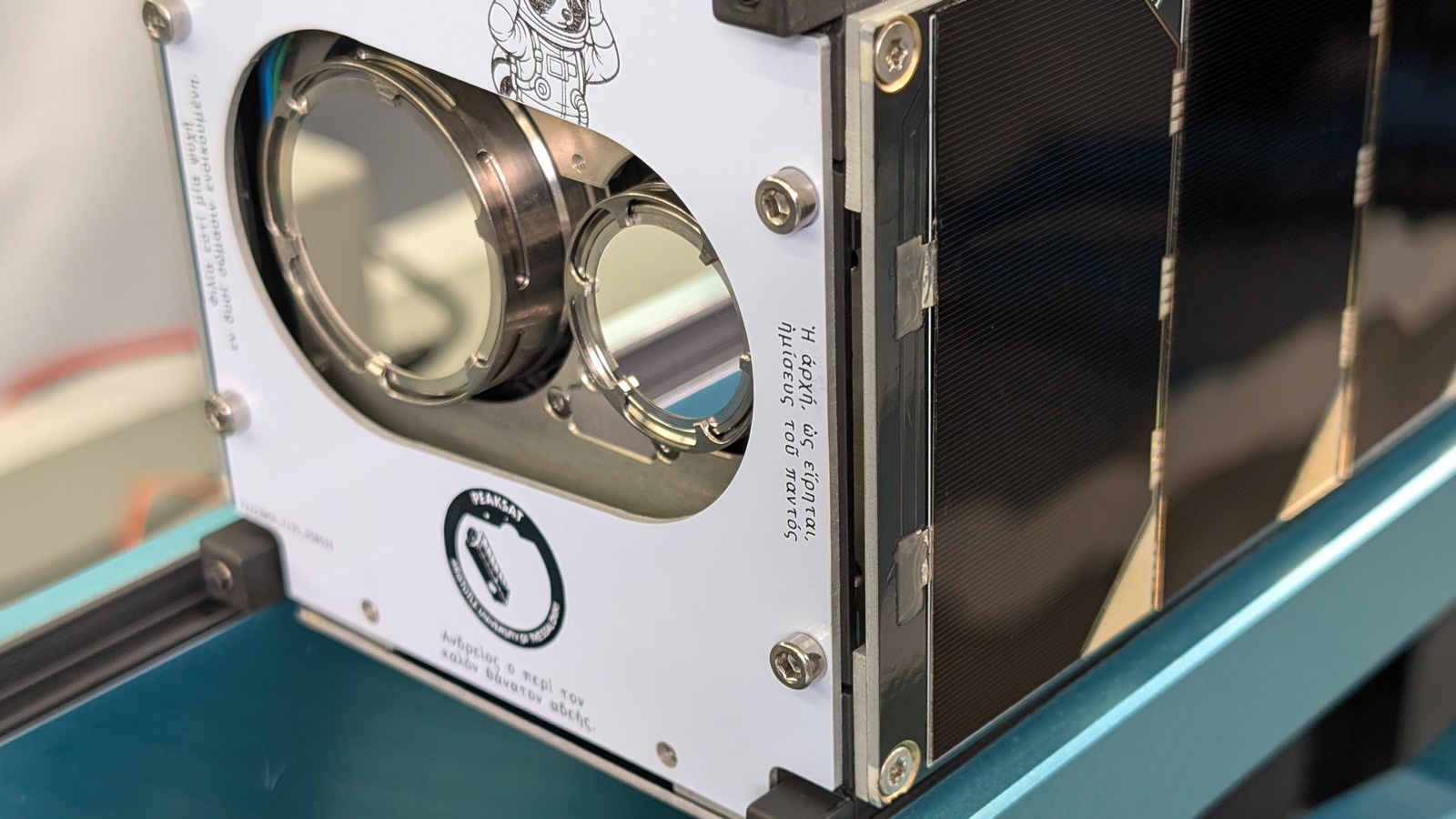
Two satellites carrying ATLAS-1 will be part of Greece’s national small satellite initiative – the country’s flagship effort to establish sovereign space capabilities. Astrolight hopes they will demonstrate gigabit-per-second downlinks to optical ground stations in Greece.

University of Thessaloniki
“These in-orbit missions are a big milestone for the global small satellite industry,” said Laurynas Mačiulis, CEO of Astrolight. “Smallsat operators have long faced the issue of having to sacrifice data traffic due to the limitations of radio spectrum and the need for big antennas. Because ATLAS-1 is laser-based, it provides high data rates, but with equipment that is smaller and more affordable than many other solutions on the market. Laser communication is also much more secure than traditional radio frequency.”
Ahead of the demonstrations in space, each ATLAS-1 terminal has completed comprehensive testing to confirm reliable and consistent operation on satellites and across a range of environmental conditions.
Once in space, the laser link between ATLAS-1 and the ground station will be tested across a range of scenarios, including different elevation angles, weather conditions and illumination environments.
“With this first in-orbit demonstration of ATLAS-1, we want to prove that high-speed, secure downlinks don’t have to be reserved for large spacecraft,” said Mačiulis. “In the near future, laser links will save small satellite operators time and resources necessary to pursue more high-scale missions, while enhancing the throughput and security of communication.”
Leave a Reply