
Jack Loughran Thu 19 Feb 2026
Collected at: https://eandt.theiet.org/2026/02/19/gps-mars-new-system-lets-perseverance-locate-itself-within-25cm
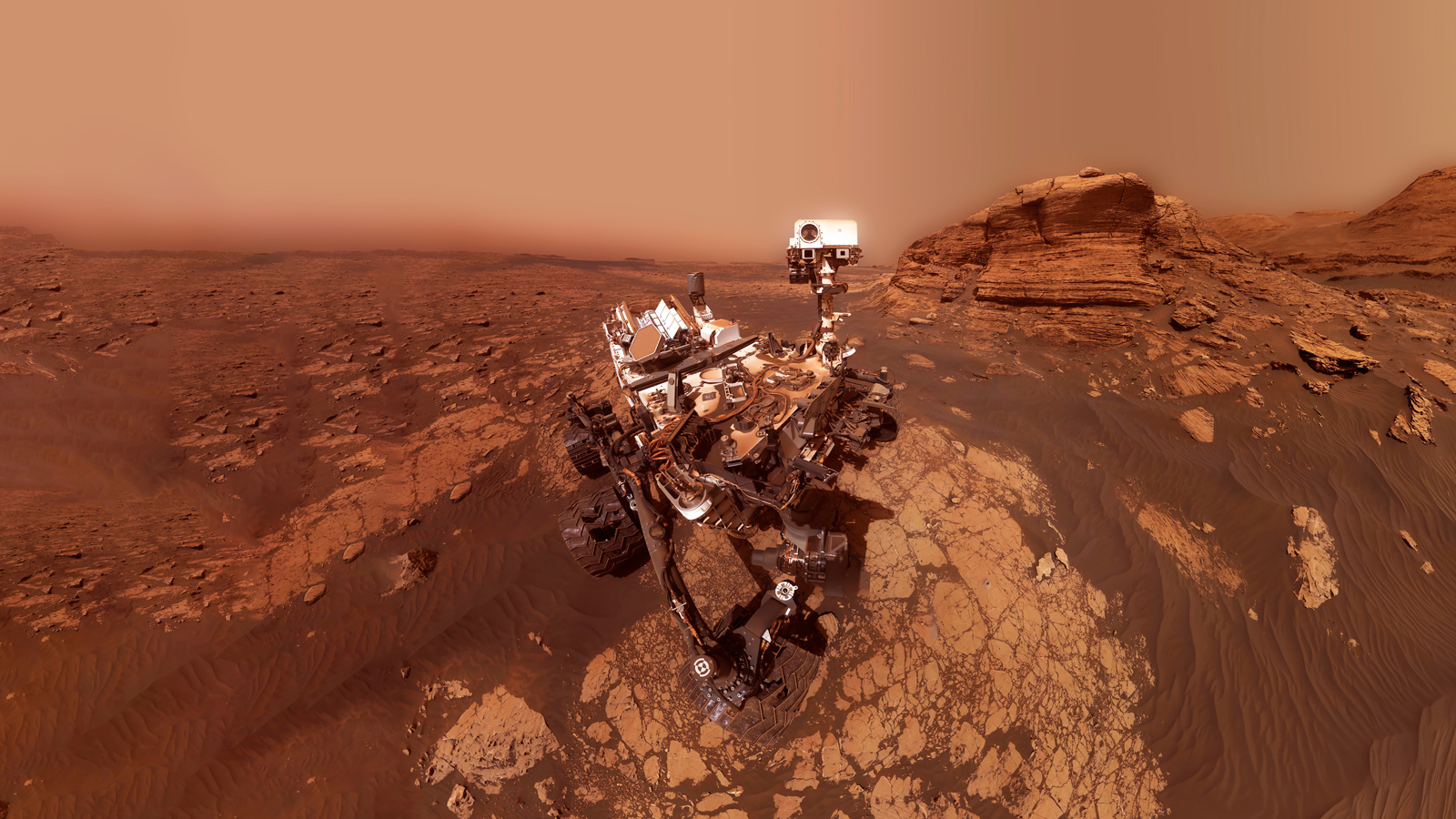
Nasa has developed a new technology that allows Perseverance, its most recently deployed Mars rover, to locate itself on the planet with an accuracy within 25cm.
Though it carries tools it can use to determine its general location, until now the rover has needed operators on Earth to tell it precisely where it is. Previously Perseverance tracked its position using visual odometry by analysing geologic features in camera images taken every few feet while accounting for wheel slippage. But as tiny errors in the process added up over the course of each drive, the rover became increasingly unsure about its exact location.
This can be a problem when, due to planetary alignment, communication with Perseverance can be limited to just twice in a day, meaning it sometimes has to wait hours before the correct location data can be successfully received.
Researchers at Nasa’s Jet Propulsion Laboratory (JPL) have developed a new technology enabling Perseverance to calculate its whereabouts without the need for human operators. Dubbed Mars Global Localization (MGL), the technology features an algorithm that rapidly compares panoramic images from the rover’s navigation cameras with onboard orbital terrain maps.
Running on a powerful processor that Perseverance originally used to communicate with the Ingenuity Mars Helicopter, the algorithm takes about two minutes to pinpoint the rover’s location within 25 centimetres.
Nasa said that MGL has already been deployed on the rover and has been used twice successfully in regular mission operations on 2 and 16 February.
“This is kind of like giving the rover GPS. Now it can determine its own location on Mars,” said JPL’s Vandi Verma, chief engineer of robotics operations for the mission. “It means the rover will be able to drive for much longer distances autonomously, so we’ll explore more of the planet and get more science. And it could be used by almost any other rover traveling fast and far.”
The upgrade is especially valuable given how well Perseverance’s auto-navigation self-driving system has been working. Enabling the rover to re-plan its path around obstacles en route to a pre-established destination, AutoNav has proved so capable that the distance Perseverance can drive without instructions from Earth is largely limited by the rover’s uncertainty about its whereabouts. Now that it can stop and determine its exact location, Perseverance can be commanded to drive to potentially unlimited distances without calling home.
“Humans have to tell it, ‘You’re not lost, you’re safe. Keep going,’” Verma said. “We knew if we addressed this problem, the rover could travel much farther every day.”
Key to the MGL system is the rover’s Helicopter Base Station, which Perseverance used to communicate with the now-retired Ingenuity Mars Helicopter. Equipped with a commercial processor that powered many consumer smartphones in the mid-2010s, the HBS runs more than 100 times faster than the rover’s two main computers, which, built to survive the radiation-heavy Martian environment, are based on hardware introduced in 1997.
Leave a Reply