
Jack Loughran Mon 16 Feb 2026
Collected at: https://eandt.theiet.org/2026/02/16/driverless-cars-could-soon-see-around-corners-holoradar-system
The safety of autonomous vehicles could be boosted with a new system that allows robots to see around corners.
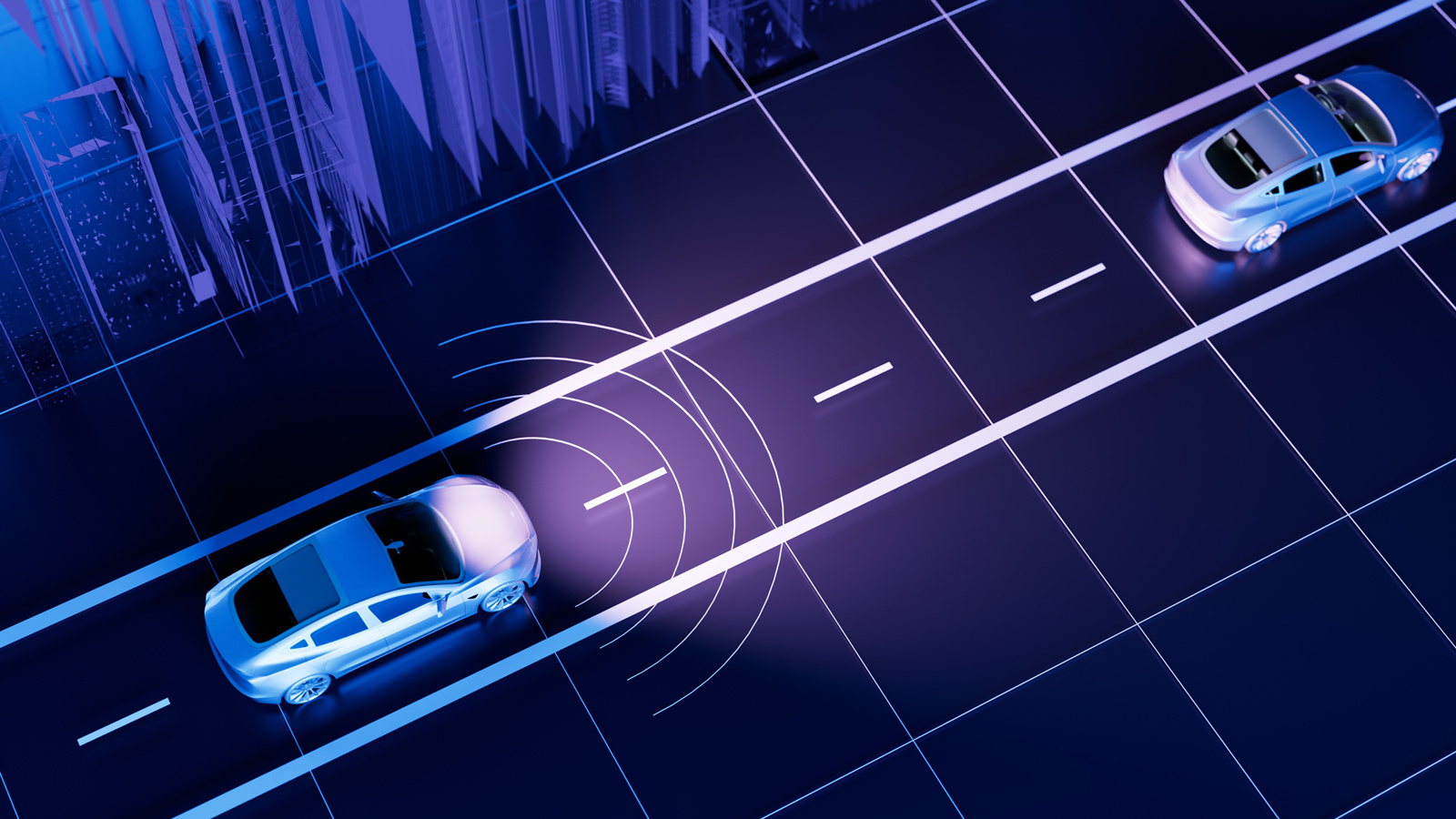
Developed by engineers at the University of Pennsylvania, HoloRadar enables robots to see around corners by using radio waves that are processed by AI. Robots equipped with the technology were able to reconstruct three-dimensional scenes outside their direct line of sight, including pedestrians.
Unlike previous approaches to non-line-of-sight perception, which have depended on visible light, HoloRadar works reliably in darkness and under variable lighting conditions.
“Robots and autonomous vehicles need to see beyond what’s directly in front of them,” said assistant professor Mingmin Zhao. “This capability is essential to help robots and autonomous vehicles make safer decisions in real time.”
Radio signals have much longer wavelengths than visible light – something traditionally seen as a disadvantage for imaging because it limits resolution. However, Zhao’s team realised that, for peering around corners, those longer wavelengths are actually an advantage.
“Because radio waves are so much larger than the tiny surface variations in walls, those surfaces effectively become mirrors that reflect radio signals in predictable ways,” said Haowen Lai, co-author of the paper ‘Non-line-of-sight 3D reconstruction with radar’. In practical terms, this means that flat surfaces such as walls, floors and ceilings can bounce radio signals around corners, carrying information about hidden spaces back to a robot. HoloRadar captures these reflections and reconstructs what lies beyond direct view.
“It’s similar to how human drivers sometimes rely on mirrors stationed at blind intersections,” Lai said. “Because HoloRadar uses radio waves, the environment itself becomes full of mirrors, without actually having to change the environment.”
Other researchers have demonstrated systems with similar capabilities in recent years, typically using visible light. Those systems analyse shadows or indirect reflections, making them highly dependent on lighting conditions. Attempts to use radio signals, meanwhile, have relied on slow and bulky scanning equipment, limiting their real-world applications.
“HoloRadar is designed to work in the kinds of environments robots actually operate in,” Zhao said. “This system is mobile, runs in real time and doesn’t depend on controlled lighting.”
The technology’s aim is to augment the safety of autonomous robots by complementing existing sensors, rather than replacing them. While autonomous vehicles already use lidar, a sensing system that uses lasers to detect objects in vehicles’ direct line of sight, HoloRadar adds an additional layer of perception by revealing what those sensors cannot see, giving machines more time to react to potential hazards.
Leave a Reply