
Tanya Weaver Fri 13 Feb 2026
Collected at: https://eandt.theiet.org/2026/02/12/samsung-starts-mass-shipping-next-gen-ai-memory-chip
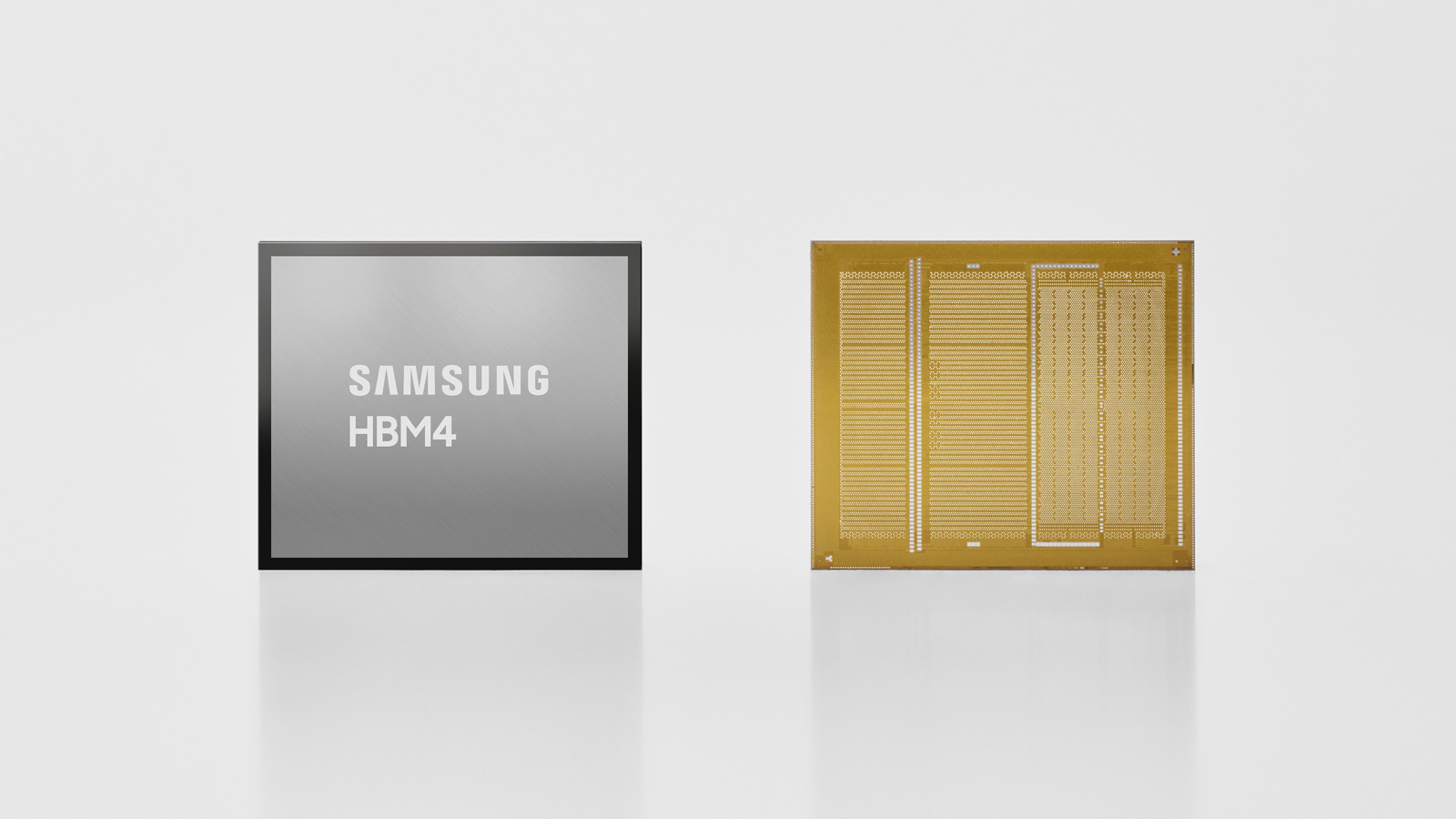
South Korean tech giant Samsung says it is the first to deliver next-generation high-bandwidth memory chips (HBM4) at scale.
The new HBM4 chips are designed for high-performance AI and computing workloads, delivering processing speeds of 11.7Gbps. Samsung says this exceeds the industry standard of 8Gbps by 46% and sets a “new benchmark for HBM4 performance”, with the chips capable of reaching up to 13Gbps.
Compared with its predecessor (HBM3E), the new chip offers a 1.22 times higher pin speed and the total memory bandwidth per stack has also increased 2.7 times, reaching a maximum of 3.3TBps.
Samsung said: “This achievement marks a first in the industry, securing an early leadership position in the HBM4 market.”
It puts Samsung alongside rivals SK Hynix and Micron Technology in the highly competitive market for next-generation memory chips, which are crucial for AI computing and data centre infrastructure.
According to predictions from Taipei-based research firm TrendForce, memory chip industry revenue is due to surge more than $840bn in 2027.
US tech giant Nvidia — which produces GPUs that rely on high-bandwidth memory — is widely expected to be one of Samsung’s main customers.
Samsung
Sang Joon Hwang, head of memory development at Samsung, said: “By leveraging our process competitiveness and design optimisation, we are able to secure substantial performance headroom, enabling us to satisfy our customers’ escalating demands for higher performance, when they need them.”
To address power consumption and thermal challenges driven by the extra speed achieved with the chip, Samsung designed built-in low-power technologies. It says the HBM4 also achieves a 40% improvement in power efficiency using redesigned low-voltage through-silicon-via technology and power distribution network optimisation.
With its first-to-market HBM4 shipment advantage, the tech giant anticipates its HBM sales will more than triple in 2026 compared with 2025. Following the introduction of HBM4 to market, HBM4E (the high-performance, enhanced version of HBM4) is expected to begin in the second half of 2026. To meet this anticipated demand, Samsung says it is “proactively expanding its HBM4 production capacity”.
Leave a Reply