
January 19, 2026 by University of Warwick
Collected at: https://techxplore.com/news/2026-01-publish-manual-bamboo.html
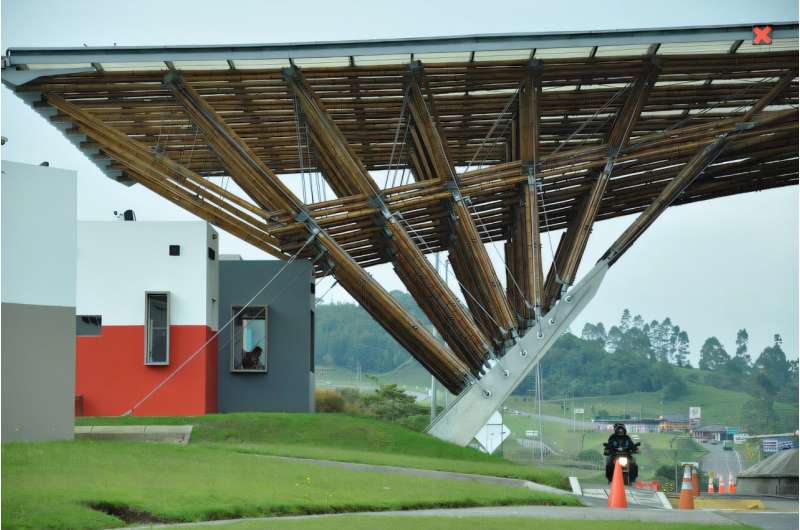
Comprehensive guidance about the design of permanent bamboo structures has been published by the Institution of Structural Engineers (IStructE).
The manual was developed by four international experts from both academia and industry, all of whom are members of the INBAR Bamboo Construction Task Force, a leading authority on the structural use of bamboo. The authors include David Trujillo from the University of Warwick, Kent Harries from the University of Pittsburgh, Sebastian Kaminski from Arup, and Luis Felipe Lopez from the Base Bahay Foundation.
“Manual for the design of bamboo structures to ISO 22156:2021” aims to help structural engineers and other architecture, engineering and construction (AEC) professionals understand how this prolific bio-based material can be used safely, with the ISO standard and the manual limited to two-stories because of fire concerns.
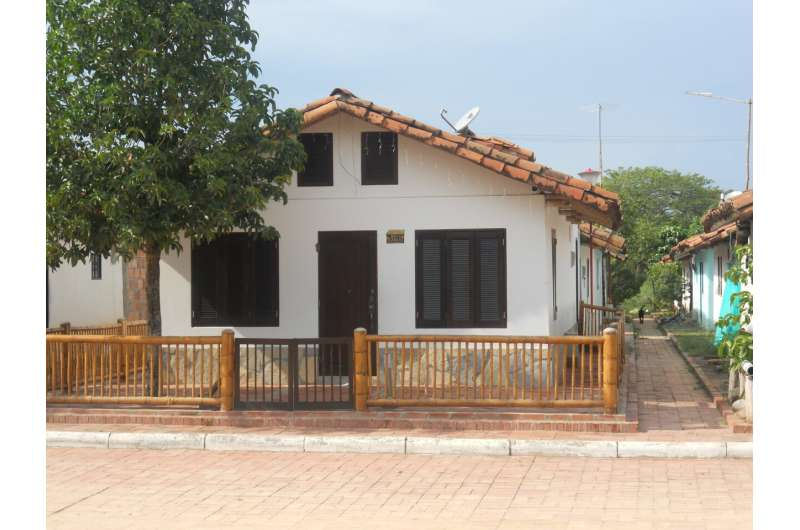
Composite Bamboo Shear Wall (CBSW) House in Colombia. Credit: Dr. David Trujillo/University of Warwick.
Lead author Dr. David Trujillo, University of Warwick says, “This manual marks a significant milestone for the safe use of bamboo for permanent structures. Most structural design codes are developed in higher-income countries to address their own needs. Only later are they adopted or adapted by lower and middle-income countries—but the starting point is never the needs of those regions.
Professor Kent Harries, University of Pittsburgh adds, “There are some 1,600 known species of bamboo. Structurally, it has remarkable mechanical properties. It has also become a very promising bio-based resource, with growing credentials as a sustainable construction material. Nonetheless, this is hugely dependent on designing and building safe and durable structures. Our detailed manual helps to achieve this.”
Sebastian Kaminski, Arup explains, “Bamboo has great potential to contribute to a low-carbon construction sector. Bamboo engineering is a very young field compared to mainstream materials and its unique possibilities are increasingly recognized and supported by growing research and innovation. Our manual is structured to support the design engineer along the journey, from sourcing bamboo to detailed design.”
Luis Felipe Lopez, Base Bahay highlights, “The construction industry contributes nearly 40% of carbon emissions globally, and bamboo, a regenerative and durable material, is redefining how we build our structures.
“From being an alternative to a reliable building material, bamboo is now gaining global recognition, and the need for a comprehensive framework is essential to support design engineers and ensure the safe and proper use of bamboo in the built environment, maximizing its full potential and environmental advantages.
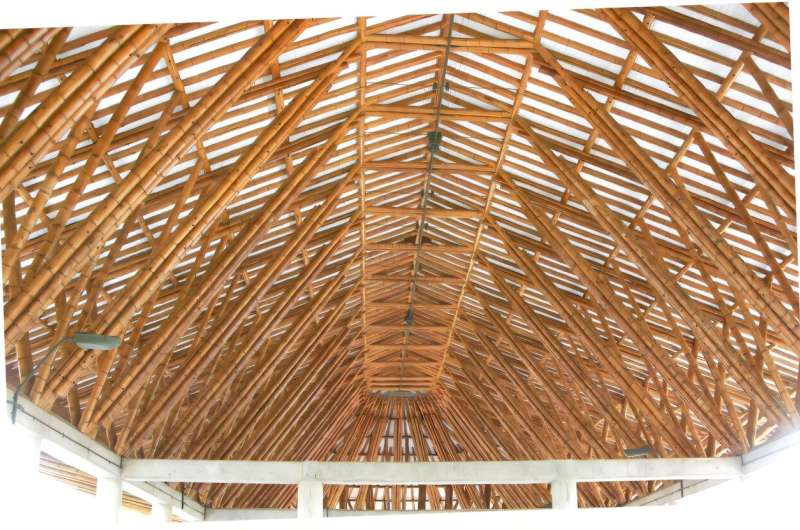
Bamboo Clubhouse roof in Colombia. Credit. Dr. David Trujillo/University of Warwick.
Kewei Liu, Coordinator of the INBAR Global Bamboo Construction Program, adds, “The publication of this guide is of great significance in promoting the application of the current ISO 22156:2021 standard, which has been the most widely accepted international bamboo standard since the 2000s. The authors have made a remarkable contribution to the global use of bamboo construction.”
Bamboo is native to all continents apart from Antarctica and Europe, although numerous species successfully thrive across Europe. Its lifecycle makes it an attractive resource in the context of tackling the global climate emergency, as, like trees, it fixes carbon in its leaves, stem, roots and surrounding soil. Bamboo’s harvest does not disturb the stored carbon in the soil.
Alongside the four leading authors, the manual was also reviewed by eleven expert reviewers. It has ten chapters covering a wide range of topics including the bamboo supply chain; bamboo project management; grading and mechanical characteristics of bamboo; analysis of bamboo structures; seismic and wind hazard design using bamboo; element and connection design; durability; bamboo structural shear walls; and worked examples of bamboo’s structural use in real-life examples.
Dr. David Trujillo, University of Warwick concludes, “The guide is published in the wake of the tragic Hong Kong tower block fires. We share condolences for all those impacted, and await the outcome of investigations as we cannot comment until all the facts are in.
“However, general risk management principles advocate a risk assessment and consideration of the use of flame-retardant materials on high-rise and closely spaced buildings, along with fire detection and suppression.
“Importantly, and given the wide use of bamboo, this guide sets out provisions for its safe use, including for fire, covering permanent buildings and not scaffolding. Our aim is for this to be a must-use resource for the structural engineer already working with bamboo or considering its use. We also hope it will be a trusted resource for colleagues across the built environment globally, whether in industry or academia.”
More information: Manual for the design of bamboo structures to ISO 22156:2021 www.istructe.org/resources/man … structures-iso22156/
Leave a Reply