
By Kyoto University December 31, 2025
Collected at: https://scitechdaily.com/a-30-year-superconductivity-mystery-just-took-a-sharp-turn/
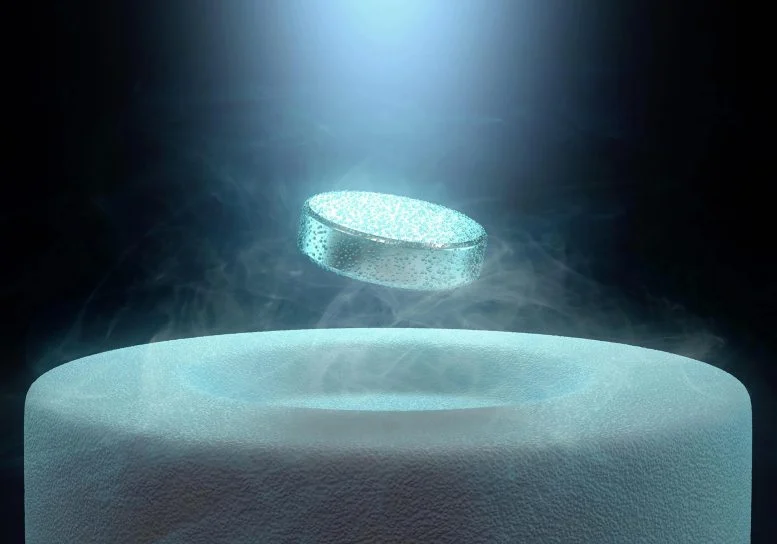
New research sharpens understanding of the hidden symmetry in a mysterious superconductor.
Superconductors are materials that allow electrical current to flow without any resistance, a property that typically appears only at extremely low temperatures. While most known superconductors follow established theoretical frameworks, strontium ruthenate, Sr₂RuO₄, has remained difficult to explain since researchers first identified its superconducting behavior in 1994.
The material is widely regarded as one of the purest and most thoroughly examined examples of unconventional superconductivity. Even so, scientists have not reached agreement on the exact nature of the electron pairing within Sr₂RuO₄, including its symmetry and internal structure, which are central to understanding how its superconductivity arises.
Probing Superconductivity Through Strain
One effective way to uncover the character of a superconducting state is to observe how the temperature at which superconductivity begins, known as Tc, shifts when mechanical strain is applied. Stretching, squeezing, or twisting a crystal can reveal important differences because distinct superconducting states respond to these distortions in unique ways.
Earlier investigations, particularly those using ultrasound techniques, pointed to the possibility that Sr₂RuO₄ supports a two-component superconducting state. This more intricate form of superconductivity could allow unusual effects, including internal magnetic fields or the presence of multiple superconducting regions within the same material. A defining feature of a true two-component state, however, is a strong sensitivity to shear strain.
A New Approach Using Shear Strain
This inspired a team of researchers from Kyoto University to use strain to understand the true nature of the superconducting state of Sr₂RuO₄. The researchers developed a technique that allowed them to apply three distinct kinds of shear strain to extremely thin Sr₂RuO₄ crystals. Shear strain is a type of distortion that shifts part of the crystal sideways, similar to sliding the top of a deck of cards relative to the bottom.
The strain levels were carefully measured using high-resolution optical imaging down to 30 degrees K (−243 degrees C). The key discovery: the superconducting temperature hardly changed at all. Any shift in Tc was smaller than 10 millikelvin per percent strain, effectively below the detection limit.
These results show that shear strain has virtually no effect on the temperature at which Sr₂RuO₄ becomes superconducting, ruling out several proposed theories and setting strict limits on what kinds of superconducting states are still possible. The findings instead point toward a one-component superconducting state, or perhaps even more unusual, still-unexplored superconducting states that behave differently from conventional theoretical expectations.
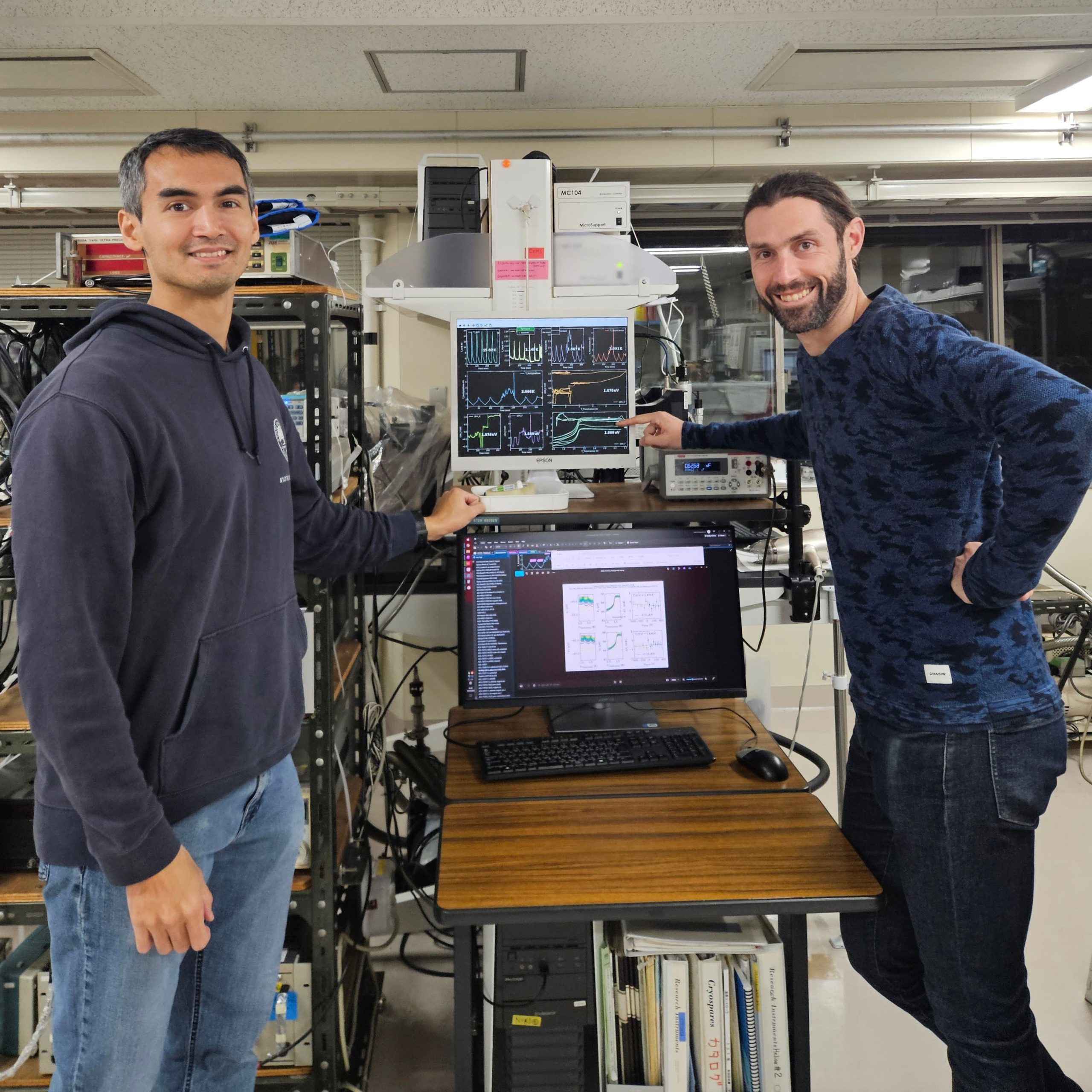
“Our study represents a major step toward solving one of the longest-standing mysteries in condensed-matter physics,” says first author Giordano Mattoni, Toyota Riken – Kyoto University Research Center.
An Ongoing Mystery and Broader Impact
This study tightens the search for the correct explanation of how superconductivity occurs in this compound. Yet a puzzle remains: earlier ultrasound measurements clearly showed a strong effect linked to shear, while the new direct strain measurements do not. Understanding why these two methods disagree is now a major open question.
Beyond Sr₂RuO₄, the strain-control technique developed in this study can be applied to other superconductors that exhibit multi-component behavior, such as UPt₃, as well as other materials with intricate phase transitions.
Reference: “Direct evidence for the absence of coupling between shear strain and superconductivity in Sr2RuO4” by Giordano Mattoni, Thomas Johnson, Atsutoshi Ikeda, Shubhankar Paul, Jake Bobowski, Manfred Sigrist and Yoshiteru Maeno, 16 December 2025, Nature Communications.
DOI: 10.1038/s41467-025-67307-1
Funding: Japan Society for the Promotion of Science
Leave a Reply