
By David Dickinson – December 26, 2025
Collected at: https://www.universetoday.com/articles/top-astronomical-events-to-watch-for-in-2026
The coming year offers eclipses, occultations and much more.
Ready for another amazing year of skywatching? 2025 was a wild year with a steady parade of comets knocking on naked eye visibility, and one extra special interstellar comet, 3I/ATLAS.
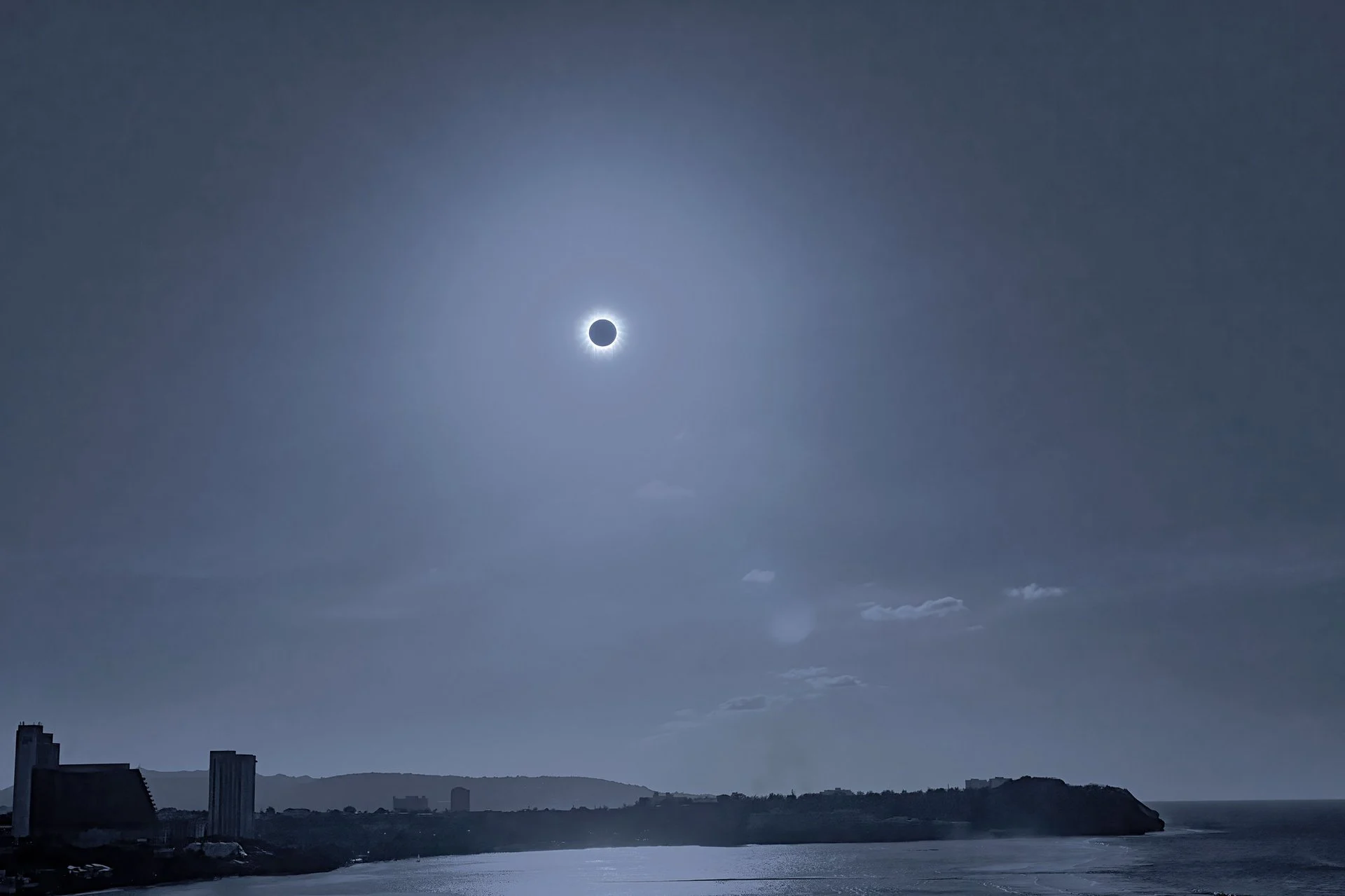
The sky just keeps on turning into 2026. Watch for mutual eclipse season for the major moons of Jupiter, as the moons pass one if front of the other. The ongoing solar cycle is also still expected to be active into 2026 producing sunspots, space weather and more. And (finally!) we’ll see the return of total solar eclipses on August 12th, as umbral shadow of the Moon crosses Greenland, Iceland and northern Spain.
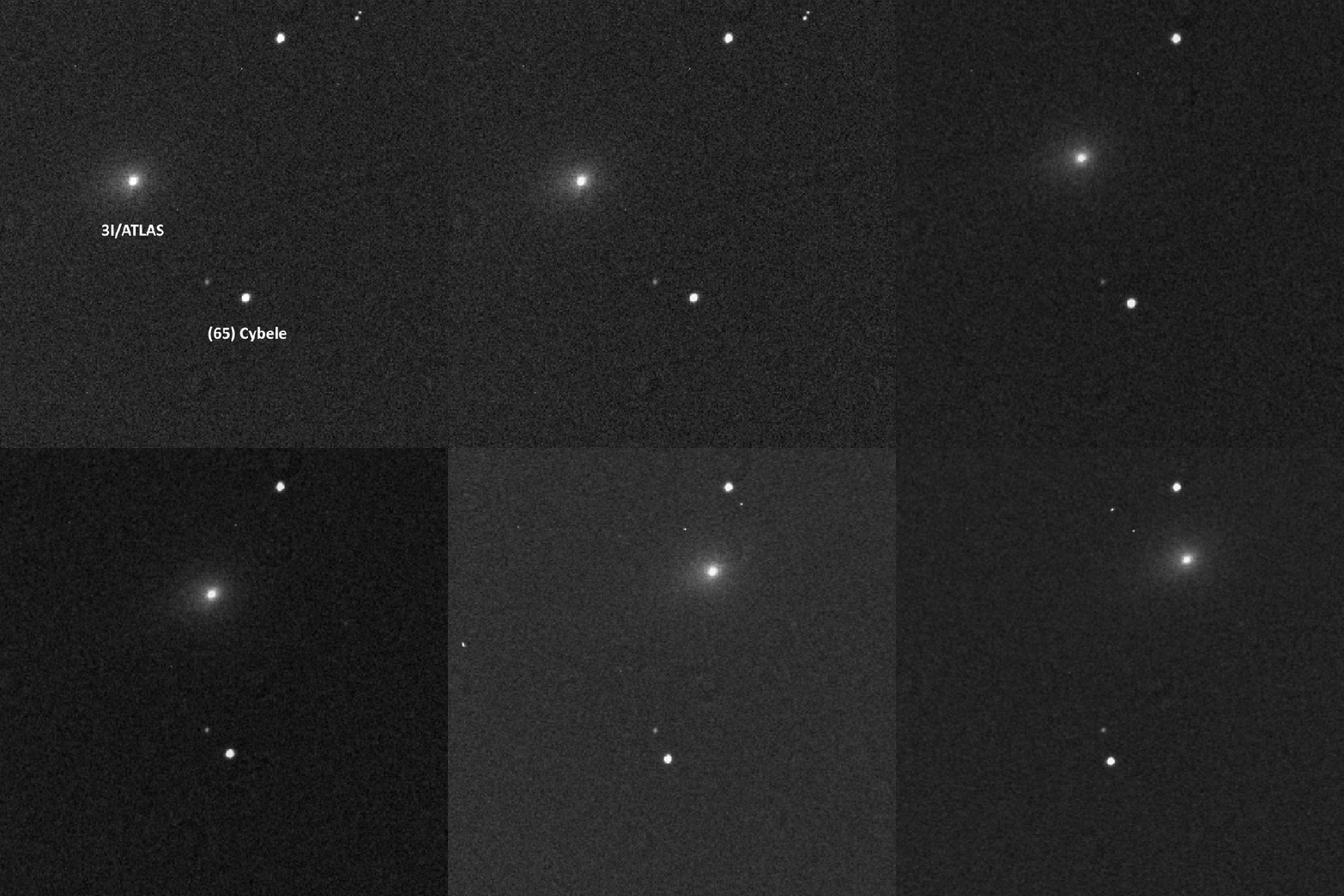
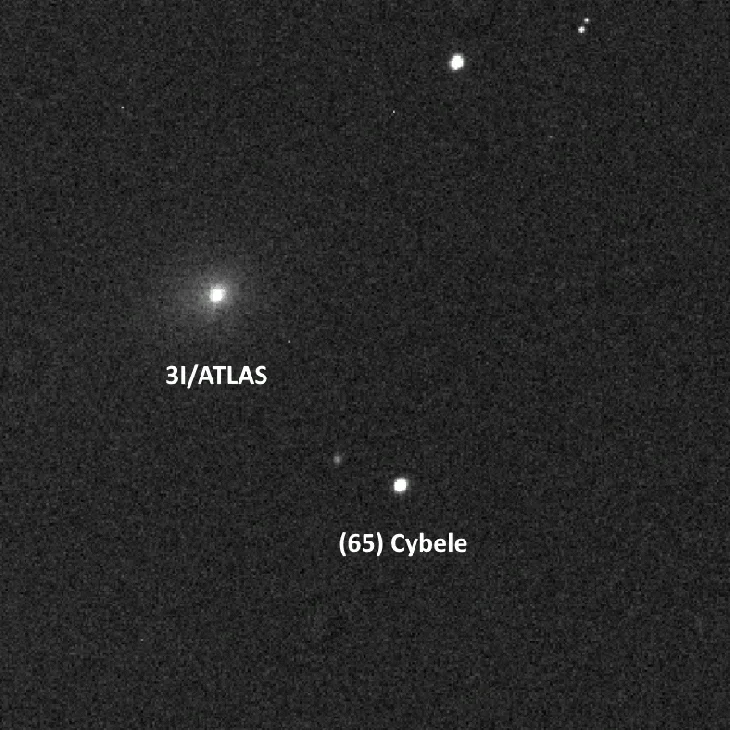
Comet 3I/ATLAS crosses paths with asteroid 65 Cybele. Credit: Filipp Romanov.
Here’s a quick run down of the best of the best events to watch for in 2026:
-A total solar eclipse spanning the North Atlantic into Spain on August 12th. -A return of totality with a total lunar eclipse for North America and the Pacific Region on March 3rd. -Mutual eclipse-transit season resumes for the moons of Jupiter.
-Two fine dusk occultations of Venus by the Moon on June 17th and September 14th. -The Moon occults Jupiter for eastern North America on October 6th. -The Perseid and Geminid meteor showers both put on fine shows, with the Moon near New. -The Moon occults Antares, Regulus and the Pleiades (Messier 45) worldwide. -Saturn meets Mercury in the dusk sky on April 20th.
-Several fine lunar/planetary/stellar groupings occur in November, as the Moon slides by several planets and notable bright stars.
-A good binocular comet C/2025 R3 PanSTARRS makes a brief Spring 2026 apparition.
The Sun in 2026
We’re still coming off of the intense Solar Cycle 25 maximum in 2026, as we head towards the transition dip of solar minimum around 2030 into solar cycle 26.
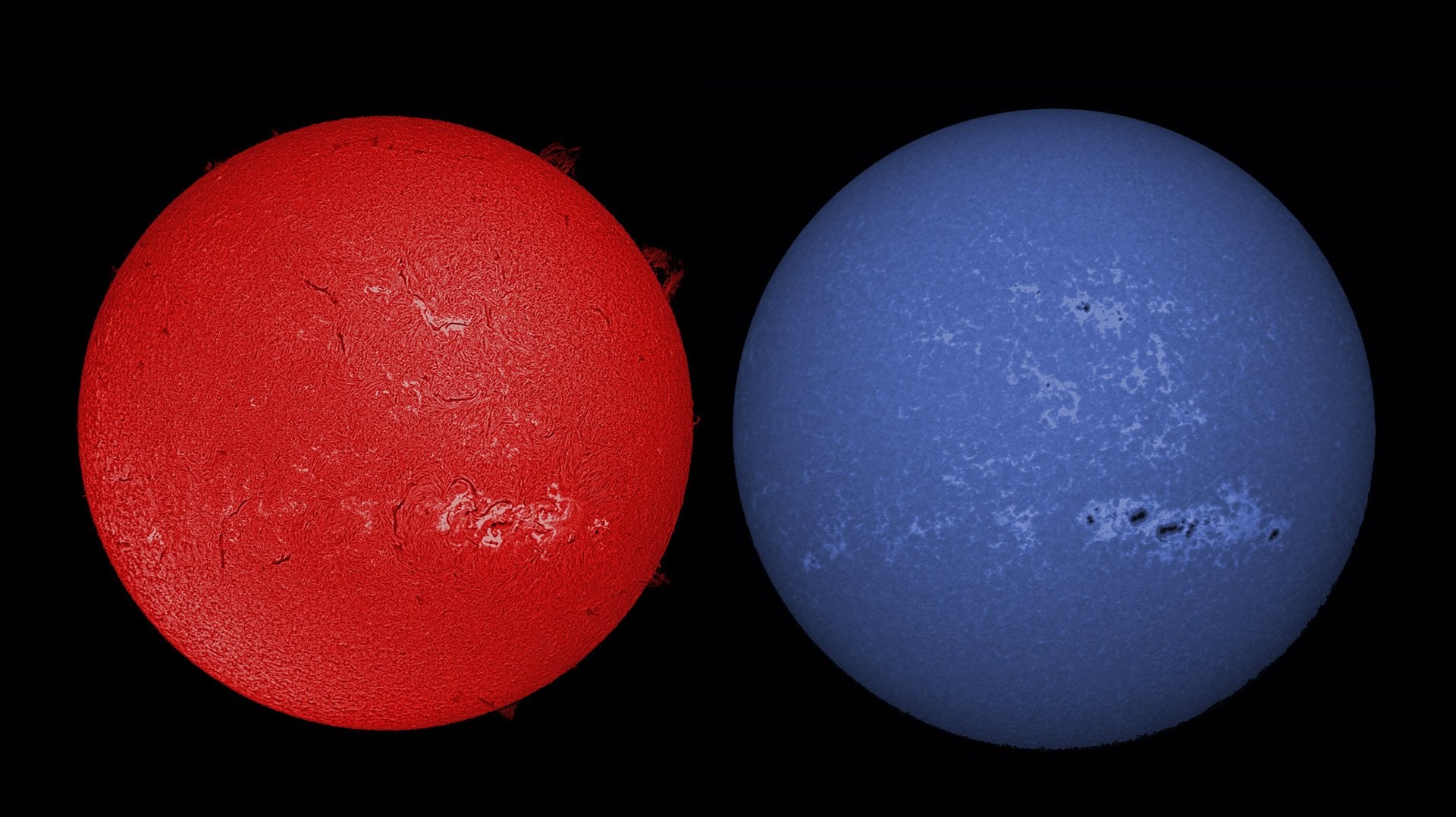
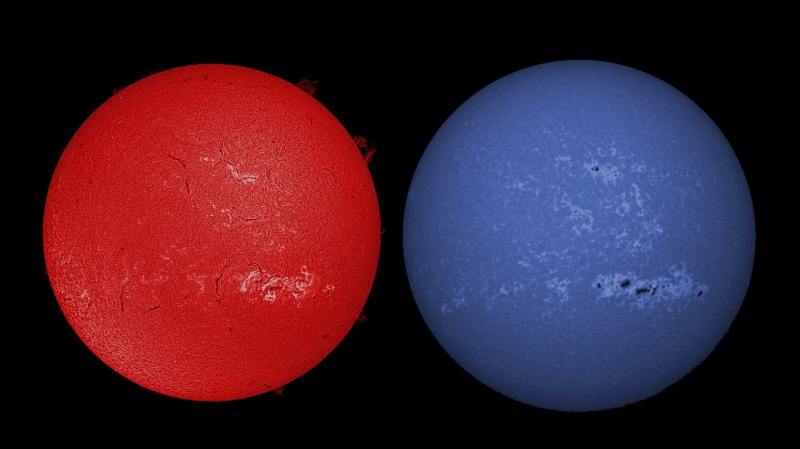
A massive sunspot graces Sol in 2025, as seen in hydrogen-alpha and calcium-k. Credit: Eliot Herman.
Sunspot activity is always a big unknown, as massive sunspots come and go. Here are the definite known phenomena for the Earth and Sun in 2026:
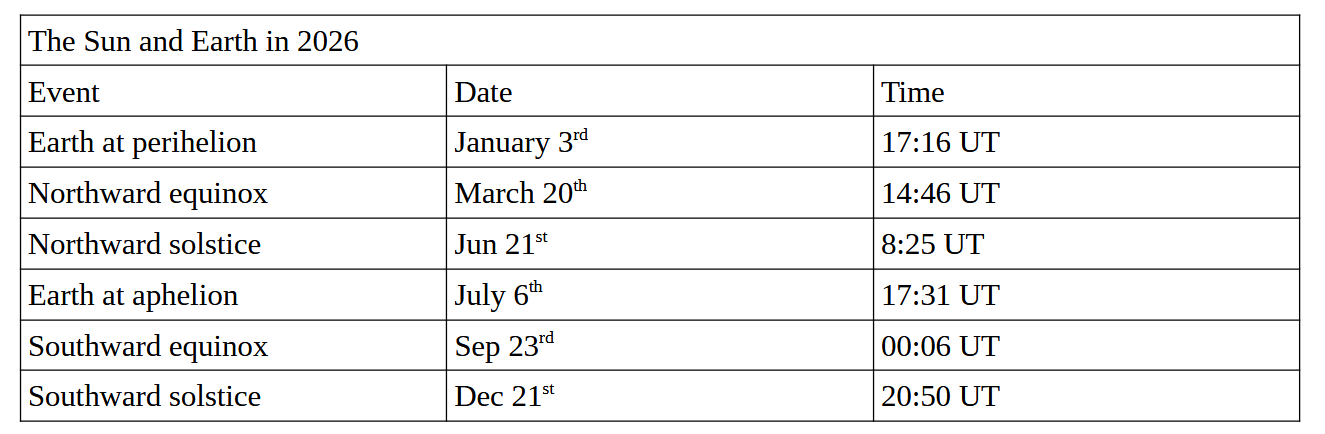
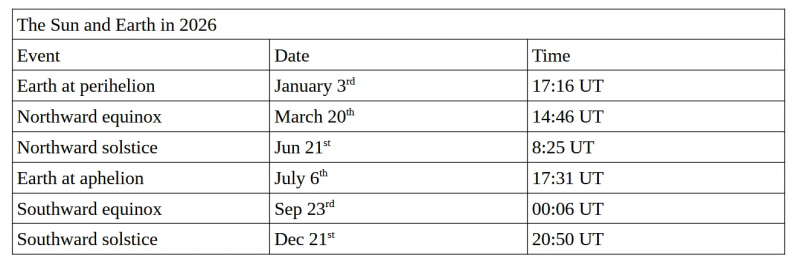
Sun-Earth phenomena for 2026.
The Moon in 2026
The path of the Moon is still transitioning in 2026, from steep versus the ecliptic plane in 2025 fresh off major lunar standstill. We’re now headed back towards shallow and Minor Lunar Standstill in May 2034. This is due to the 5 degree tilt of the Moon’s orbit versus the ecliptic, assuring a cycle transitioning from hilly to shallow to hilly again. This 18.6 year cycle is what’s known as *lunar nodal precession*. The Moon is still swinging wide in 2026, and headed from wide north-to-south near the solstices.
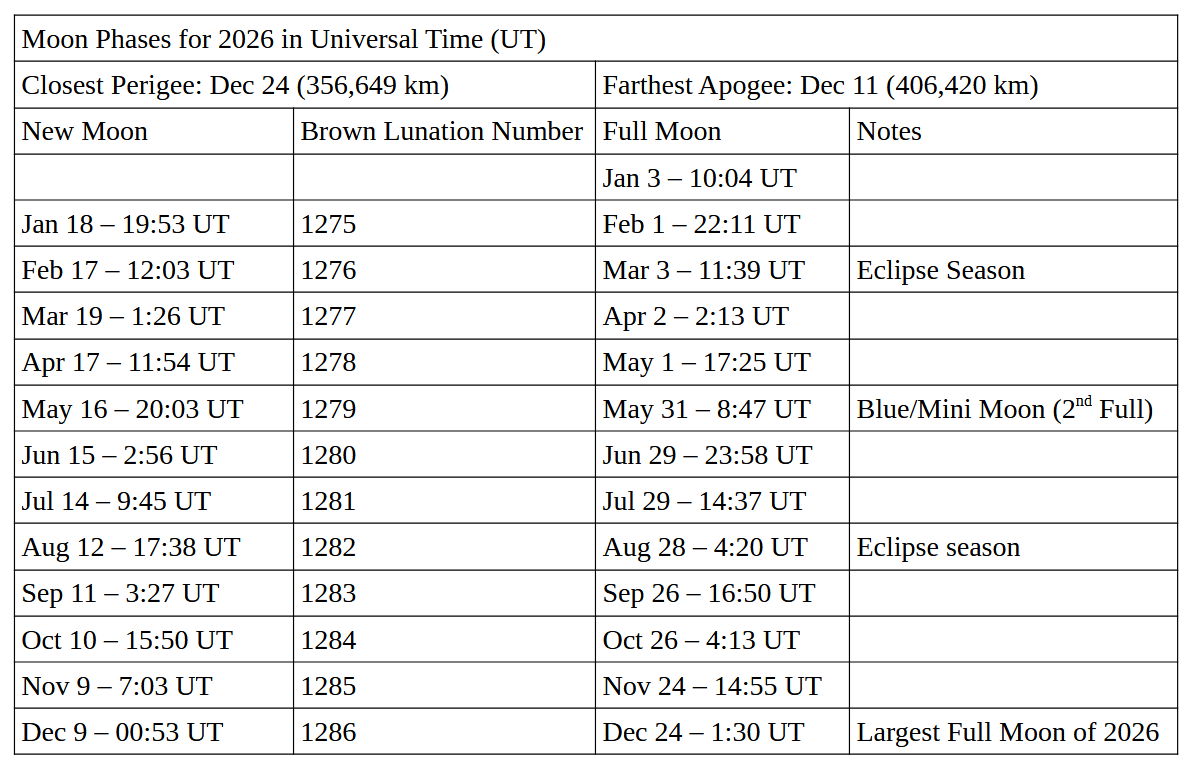
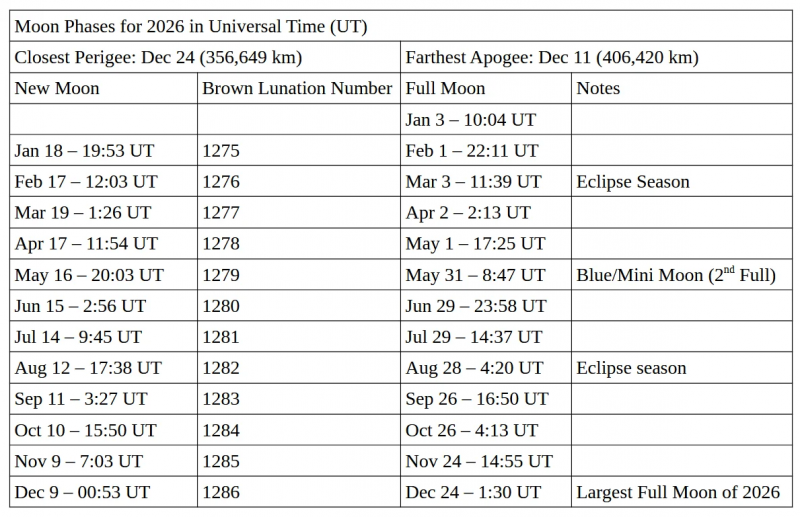
Moon phases for 2026.
Eclipses in 2026
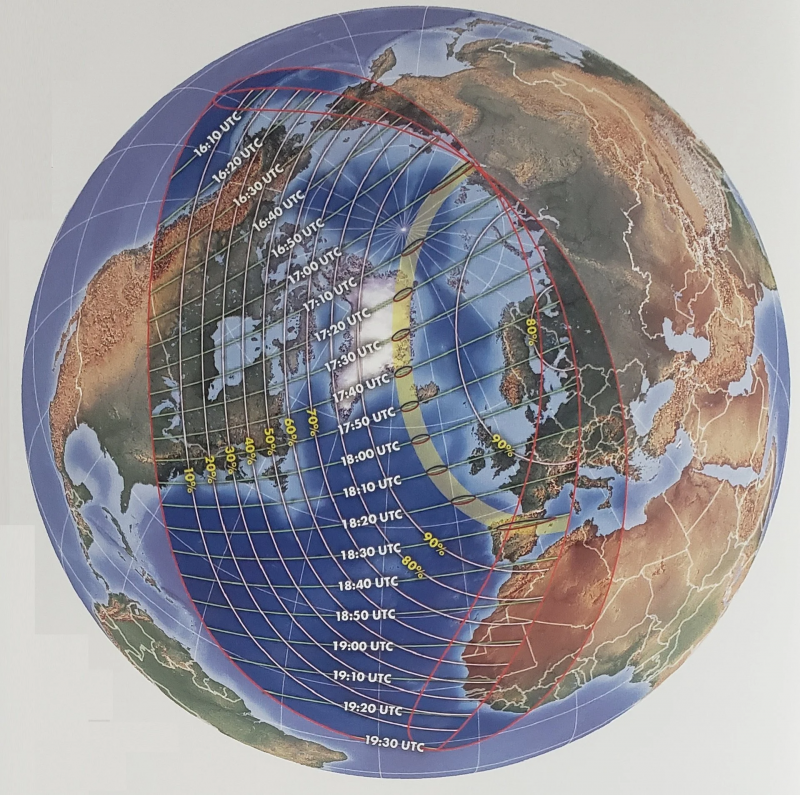
The eclipse path for the August 12th Total Solar Eclipse. From The Atlas of Total Solar Eclipses 2020 to 2045 by Michael Zeiler/Michael E. Bakich
2026 sees four eclipses (2 lunar and 2 solar) the normal minimum that can occur:
February 17th – An annular solar eclipse for the Antarctic.
March 3rd – A total lunar eclipse for the Americas, the Pacific, Australia and the Far East. Totality for this one is just over 56 minutes in duration.
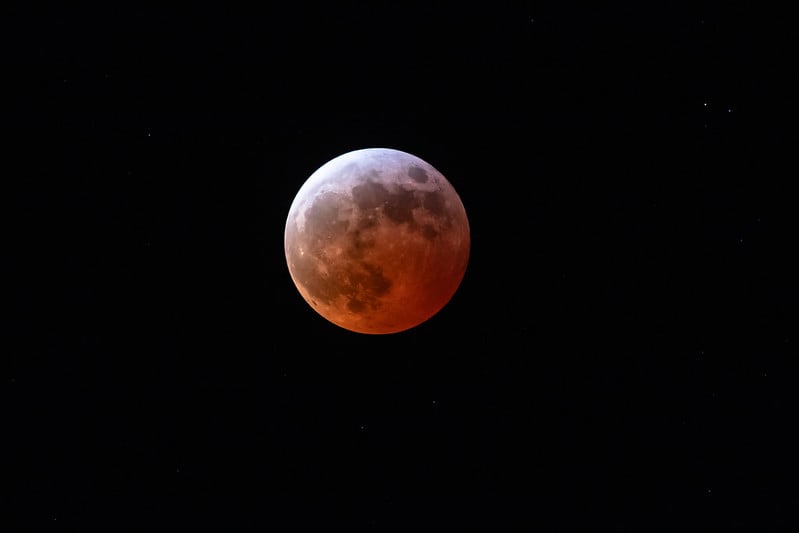
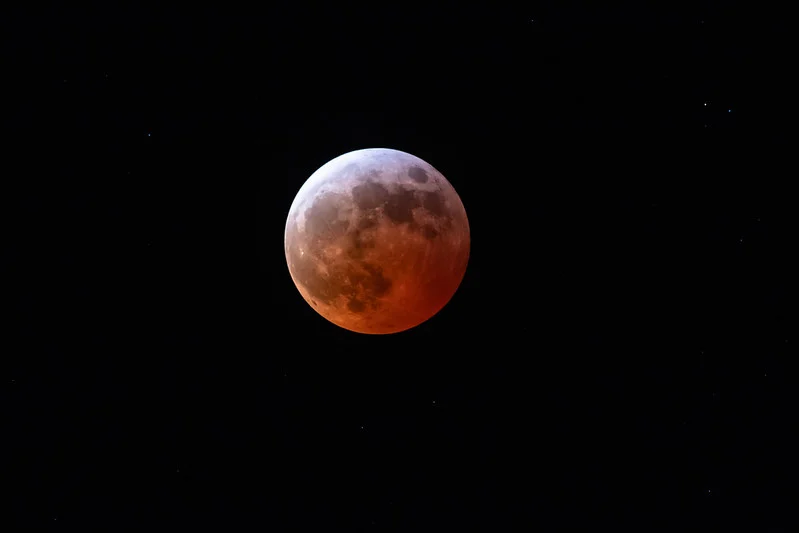
The March 2025 total lunar eclipse. Credit: Robert Sparks.
August 12th – A Total solar eclipse for Iceland, the North Atlantic and northern Spain.
August 28th – A deep (93% obscured) partial lunar eclipse for Africa, Europe, the Atlantic and the Americas.
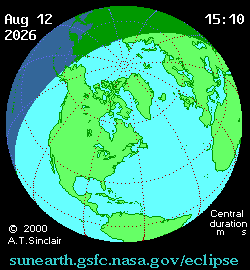
An animation of the August 2026 eclipse. Credit: NASA/GSFC/A.T. Sinclair
Leave a Reply