
By University of Colorado at Boulder November 21, 2025
Collected at: https://scitechdaily.com/physicists-create-first-ever-visible-time-crystal/
Physicists have created a visible, self-sustaining “time crystal” using swirling liquid crystals that move in endlessly repeating patterns when illuminated.
Imagine a clock that runs forever without batteries or wiring, its hands turning on their own without stopping.
In a recent study, physicists at the University of Colorado Boulder used liquid crystals, the same materials found in phone screens, to build something that echoes that idea. Their work produced a new form of what is known as a “time crystal,” a phase of matter in which components such as atoms or particles remain in continuous motion.
Although time crystals have been created before, this version is the first that can be viewed directly, which could open the door to practical uses.
“They can be observed directly under a microscope and even, under special conditions, by the naked eye,” said Hanqing Zhao, lead author of the study and a graduate student in the Department of Physics at CU Boulder.
Zhao and Ivan Smalyukh, a physics professor and fellow with the Renewable and Sustainable Energy Institute (RASEI), recently published their findings in
Nature Materials.
For their experiment, the team prepared glass cells filled with liquid crystals made of rod-like molecules that behave partly like solids and partly like liquids. When illuminated under specific conditions, these molecules begin to shift and swirl, forming motions that loop in repeating sequences.
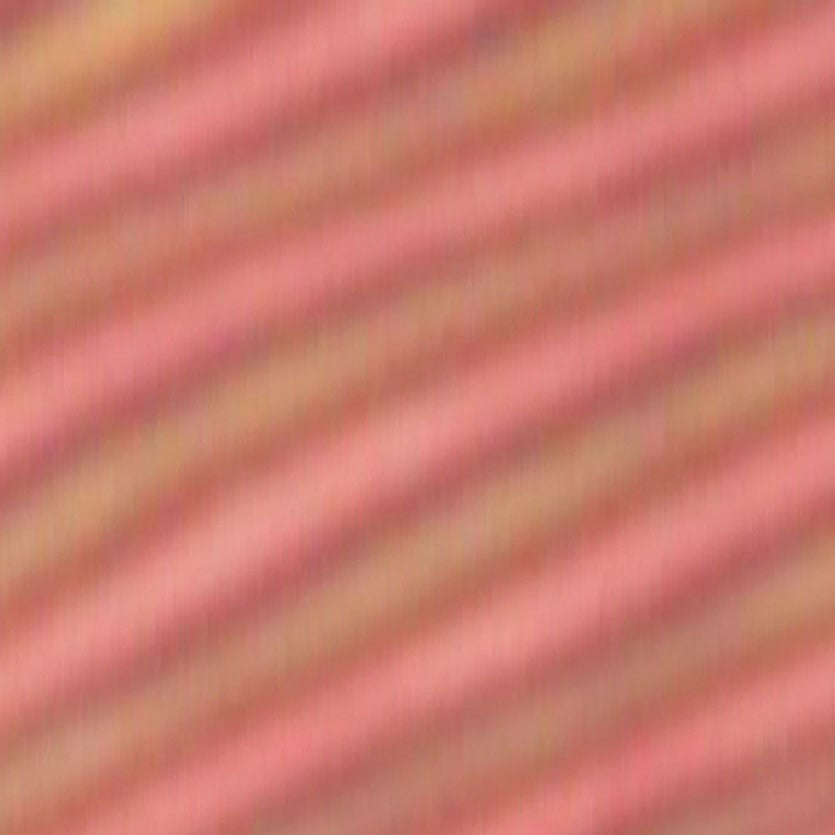
Viewed through a microscope, the samples display patterns that look like colorful, irregular stripes, and these motions can continue for hours, echoing the idea of an endlessly turning clock.
“Everything is born out of nothing,” Smalyukh said. “All you do is shine a light, and this whole world of time crystals emerges.”
Zhao and Smalyukh are members of the Colorado satellite of the International Institute for Sustainability with Knotted Chiral Meta Matter (WPI-SKCM2) with headquarters at Hiroshima University in Japan, an international institute with missions to create artificial forms of matter and contribute to sustainability.
Crystals in space and time
Time crystals may sound like something out of science fiction, but they take their inspiration from naturally occurring crystals, such as diamonds or table salt.
Nobel laureate Frank Wilczek first proposed the idea of time crystals in 2012. You can think of traditional crystals as “space crystals.” The carbon atoms that make up a diamond, for example, form a lattice pattern in space that is very hard to break apart. Wilczek wondered if it would be possible to build a crystal that was similarly well organized, except in time rather than space. Even in their resting state, the atoms in such a state wouldn’t form a lattice pattern, but would move or transform in a never-ending cycle—like a GIF that loops forever.
Wilczek’s original concept proved impossible to make, but, in the years since, scientists have created phases of matter that get reasonably close.
In 2021, for example, physicists used Google’s Sycamore quantum computer to create a special network of atoms. When the team gave those atoms a flick with a laser beam, they underwent fluctuations that repeated multiple times.
Dancing crystals
In the new study, Zhao and Smalyukh set out to see if they could achieve a similar feat with liquid crystals.
Smalyukh explained that if you squeeze on these molecules in the right way, they will bunch together so tightly that they form kinks. Remarkably, these kinks move around and can even, under certain conditions, behave like atoms.
“You have these twists, and you can’t easily remove them,” Smalyukh said. “They behave like particles and start interacting with each other.”
In the current study, Smalyukh and Zhao sandwiched a solution of liquid crystals in between two pieces of glass that were coated with dye molecules. On their own, these samples mostly sat still. But when the group hit them with a certain kind of light, the dye molecules changed their orientation and squeezed the liquid crystals. In the process, thousands of new kinks suddenly formed.
Those kinks also began interacting with each other following an incredibly complex series of steps. Think of a room filled with dancers in a Jane Austen novel. Pairs break apart, spin around the room, come back together, and do it all over again. The patterns in time were also unusually hard to break—the researchers could raise or lower the temperature of their samples without disrupting the movement of the liquid crystals.
“That’s the beauty of this time crystal,” Smalyukh said. “You just create some conditions that aren’t that special. You shine a light, and the whole thing happens.”
Zhao and Smalyukh say that such time crystals could have several uses. Governments could, for example, add these materials to bills to make them harder to counterfeit—if you want to know if that $100 bill is genuine, just shine a light on the “time watermark” and watch the pattern that appears. By stacking several different time crystals, the group can create even more complicated patterns, which could potentially allow engineers to store vast amounts of digital data.
“We don’t want to put a limit on the applications right now,” Smalyukh said. “I think there are opportunities to push this technology in all sorts of directions.”
Reference: “Space-time crystals from particle-like topological solitons” by Hanqing Zhao, and Ivan I. Smalyukh, 4 September 2025, Nature Materials.
DOI: 10.1038/s41563-025-02344-1
Leave a Reply