
Tanya Weaver Fri 21 Nov 2025
Collected at: https://eandt.theiet.org/2025/11/21/brain-implant-help-restore-speech-enters-clinical-trials
A brain-computer interface (BCI) device designed to restore a person’s ability to communicate with real-time speech is to enter long-term clinical trials.
US start-up Paradromics has developed its device with the aim of restoring communication to people with severe motor impairments caused by conditions such as ALS (amyotrophic lateral sclerosis), brainstem stroke and spinal cord injury.
The BCI system completed first-in-human trials earlier this year, and the US Food and Drug Administration (FDA) has now approved a long-term clinical trial. The trial will initially enrol two volunteers, both of whom were left unable to speak because of neurological disease and injury.
Stephen Ryu, a neurosurgeon and chief medical officer at Paradromics, said: “The Connect-One Study marks a new peak for neurotech development, building on a decades-long foundation of rigorous academic studies using research-grade BCI technology.
“Our first human trial will allow us to demonstrate the unmatched performance, safety and reliability of our high-bandwidth BCI to help overcome human limitations.”
Paradromics
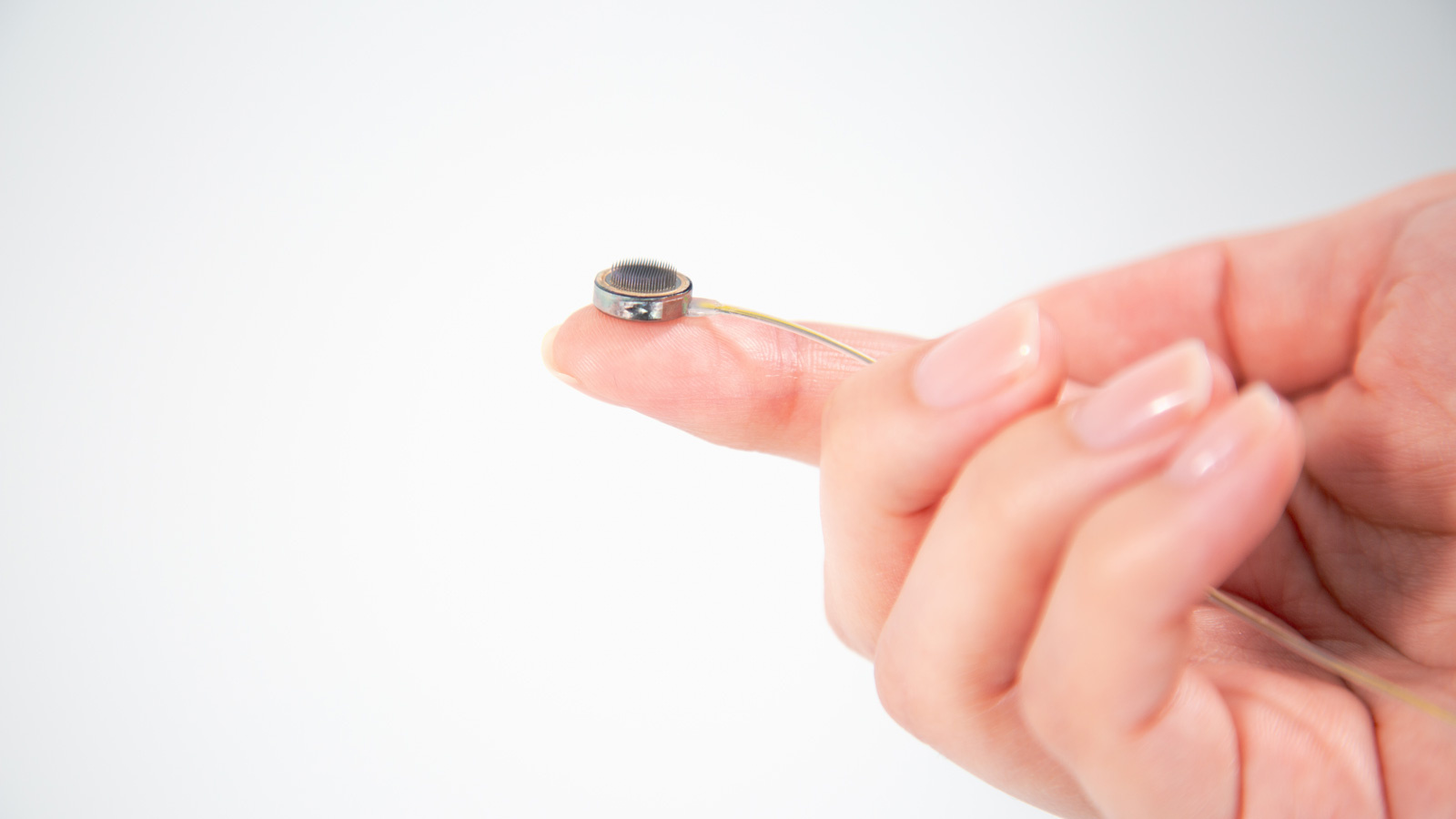
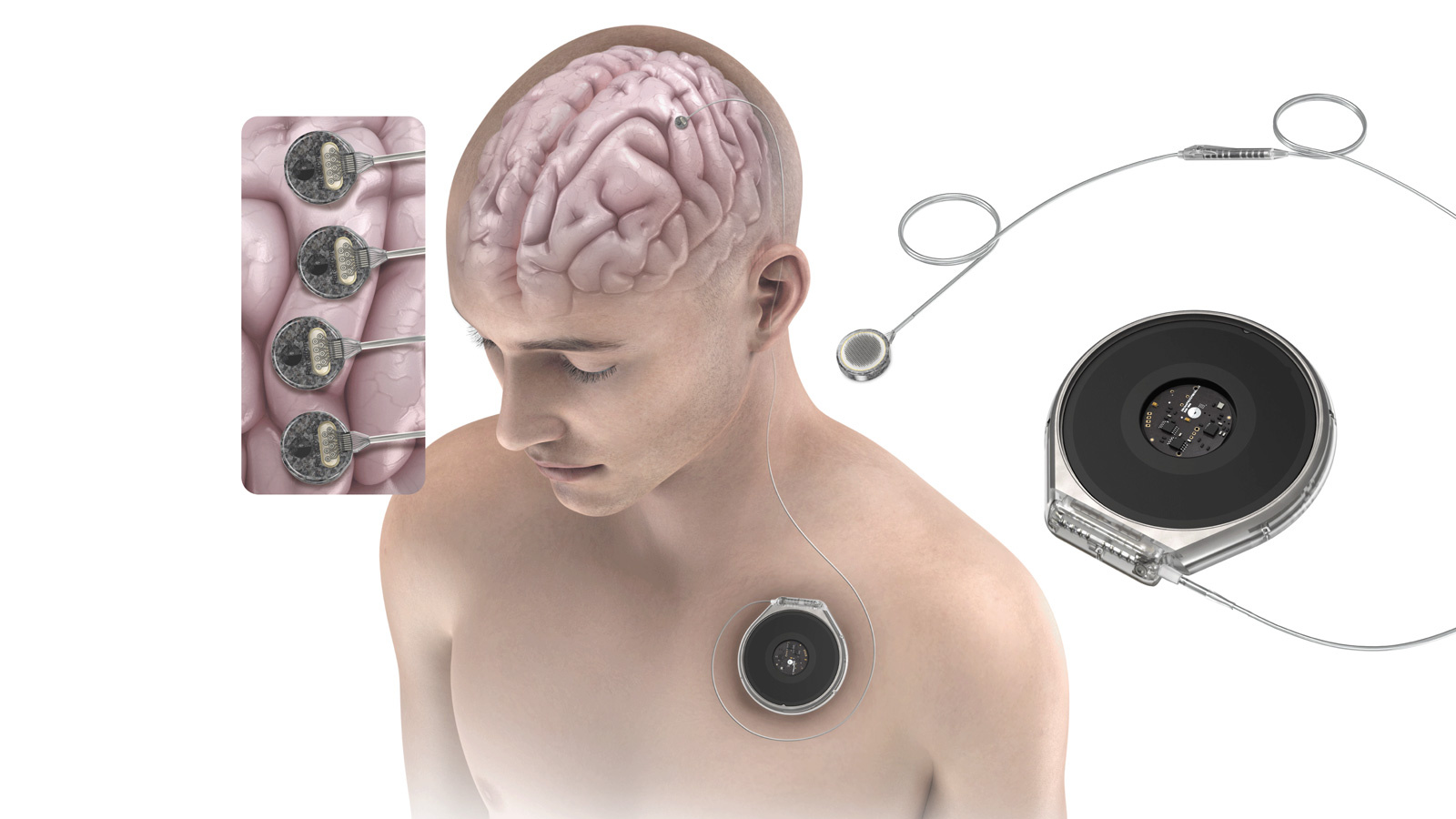
Implanted under the skull, the BCI is a roughly 20mm x 20mm grid of thin, stiff, platinum-iridium electrodes. These electrodes, each thinner than a human hair, penetrates the surface of the cerebral cortex to capture brain activity from individual neurons.
Signals detected by the micro-electrodes travel from the brain to a compact receiver implanted in the chest, which then wirelessly transmits the data through the skin.
The information is processed by an external computer with advanced AI to support the translation of the user’s brain activity into intended speech or computer control.
Matt Angle, chief executive of Paradromics, told Nature journal that the two participants in the trial will each have one electrode array implanted in the area of the motor cortex that controls the lips, tongue and larynx.
Neural activity will then be recorded from this region as the study participants imagine speaking sentences that are presented to them. The system then learns what patterns of neural activity correspond to each intended speech sound.
When the participants imagine speaking, these neural patterns will be converted into text on a screen for participants to approve, or into a real-time voice output based on old recordings of participants’ own voices.
Angle says the trial will also explore whether the system can reliably detect activity from imagined hand movements that would enable an individual to control a computer cursor.
Paradromics is now one of several companies testing an implanted BCI system similar to what it intends to market in a long-term trial. California-based neurotechnology company Neuralink, founded by Elon Musk in 2016, announced in July 2025 that it has now entered human trials as part of its PRIME (Precise Robotically Implanted Brain-Computer Interface) study.
Leave a Reply