
Published on October 15, 2025 Written by Samir Sebti
Collected at: https://dailygalaxy.com/2025/10/scientists-baffled-by-galaxy-spin-patterns-that-could-prove-were-inside-a-black-hole/
For decades, astronomers have looked to the outer reaches of the cosmos for answers to our most fundamental questions: Where did we come from? What lies beyond? And how does it all work? A recent study leveraging data from NASA’s James Webb Space Telescope (JWST) has opened a surprising new chapter in this ongoing quest — one that challenges long-held assumptions about how the universe behaves, and even what it is.
The unexpected discovery centers around something deceptively simple: the way galaxies spin. Spiral galaxies, like our own Milky Way, rotate in one direction or the other — clockwise or counterclockwise — depending on the observer’s point of view. In a perfectly uniform universe, these spin directions should be evenly distributed. But according to new analysis of high-redshift galaxies observed by JWST, they are not.
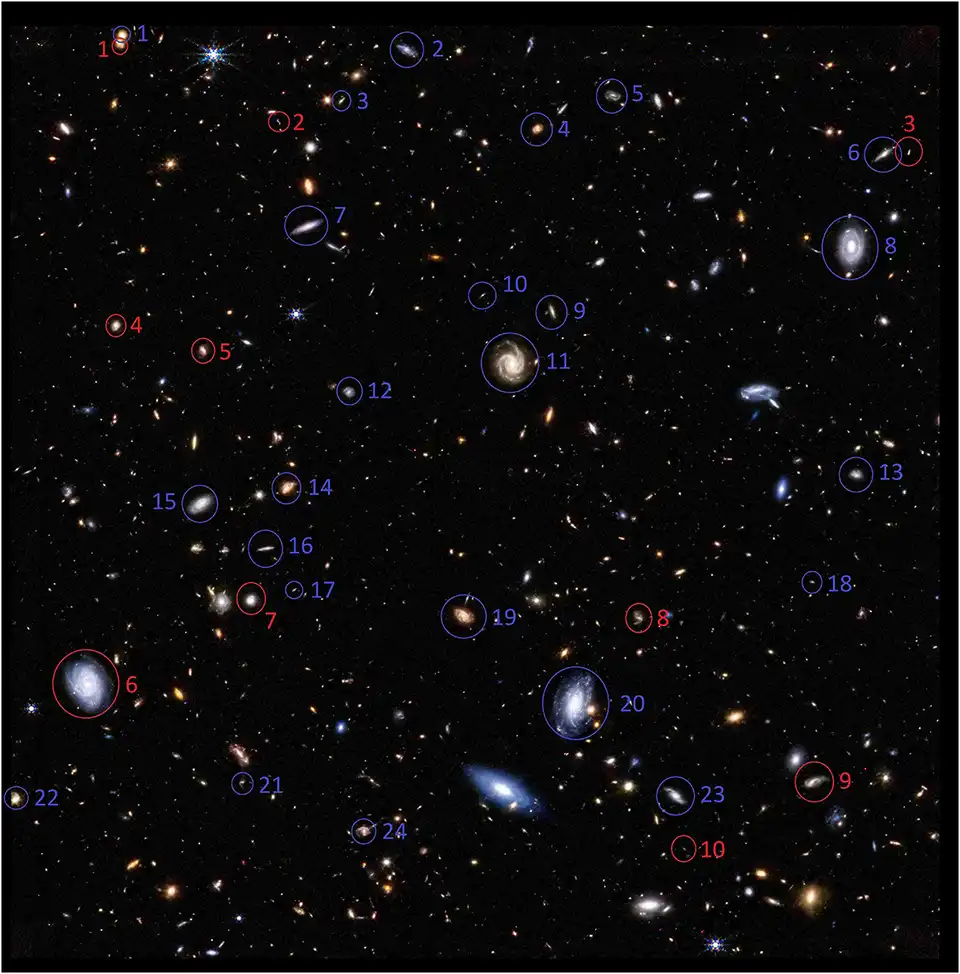
Out of 263 galaxies examined in a recent study, nearly 60 percent rotated in the same direction, a statistically significant imbalance that defies expectations. The deeper researchers looked into the universe — and therefore further back in time — the stronger this imbalance became. The implications have stirred both intrigue and skepticism, touching on ideas as bold as the notion that the universe itself may have a built-in direction — or even that it might be the interior of a black hole.
A Twist in the Cosmic Fabric
Most modern cosmological models rest on the assumption of isotropy — that the universe is, on large scales, the same in all directions. This principle underpins our understanding of cosmic expansion, dark energy, and even the Big Bang. But Shamir’s findings challenge this idea in a strikingly visual way: galaxies, as seen by JWST, appear to favor one spin direction over the other.
Using images from the JWST’s JADES deep field survey, researchers identified the rotational direction of hundreds of galaxies with redshifts corresponding to the early universe, just a few hundred million years after the Big Bang. The images were clear enough to allow for shape-based analysis, and the difference, Shamir said in a Kansas State University press release, “is so obvious that anyone looking at the image can see it.”
The apparent anisotropy in galaxy spin aligns with earlier, less dramatic findings from other large-scale surveys such as the Sloan Digital Sky Survey (SDSS) and the Hubble Space Telescope. But JWST’s deeper view makes the trend harder to dismiss as noise or error. A related open-access paper, published in Symmetry, confirmed a similar bias using independent data from the Hyper Suprime-Cam (HSC) on the Subaru Telescope.
A Question of Perspective — or Physics?
One possible explanation involves a Doppler-related bias. The Milky Way itself rotates, and Earth-based observers are part of that motion. If light from galaxies rotating in the opposite direction appears slightly brighter — as the Doppler effect suggests — these galaxies might be overrepresented in our observations.
This subtle distortion, if true, could help explain longstanding anomalies, such as the Hubble tension — the disagreement between different measurements of the universe’s expansion rate. It could also affect distance measurements, especially for the most ancient galaxies observed by JWST, some of which appear inexplicably mature given their redshift.

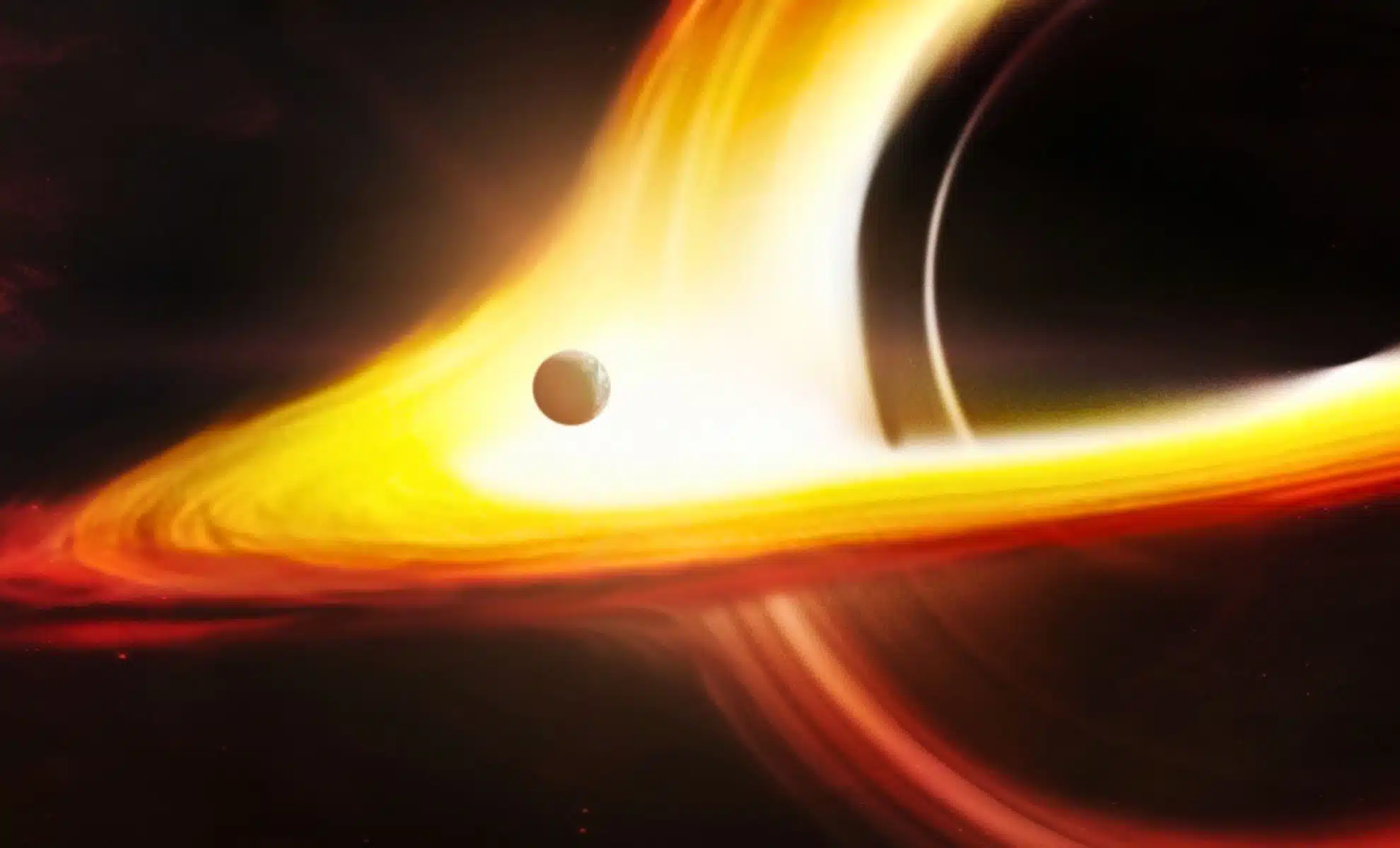
Still, the extent of the observed asymmetry suggests there may be more at play than observational quirks. “If the universe was born rotating,” Shamir noted in an article on IFLScience, “it means that the existing theories about the cosmos are incomplete.” This idea is not new; it’s part of an older theoretical framework known as black hole cosmology, which posits that our entire universe could be the interior of a black hole in a higher-dimensional space.
Originally floated in the 1970s by physicist Raj Pathria and expanded by researchers like Nikodem Popławski, the theory has remained largely speculative — until now.
Echoes From Deep Time
Interestingly, the asymmetry is not uniform across space. It appears to align along a dipole axis — a preferred cosmic direction that’s surprisingly close to the Milky Way’s own pole. In past studies, this axis has shown up in multiple datasets, including those from SDSS, Pan-STARRS, and Hubble. The fact that it resurfaces in JWST data — despite its different instruments, wavelengths, and fields of view — adds weight to the pattern’s credibility.
A statistical breakdown in the Symmetry paper further revealed that the asymmetry increases with redshift: the older the galaxy, the more likely it is to show spin alignment. This could indicate that the early universe was more ordered than today’s cosmos — a finding that would support theories involving anisotropic inflation or large-scale rotational models.
What Happens if the Data Holds?
If these results are replicated and confirmed, the impact could be profound. The assumption of isotropy underpins nearly every model of modern cosmology, from galaxy evolution simulations to dark matter mapping. A verified large-scale directional bias would demand a rethinking of foundational physics.
Still, the findings are under scrutiny. The peer-reviewed study, published in Monthly Notices of the Royal Astronomical Society, details the methodology and statistical analysis behind the claims. The team has also made their data and tools open-source, inviting the wider scientific community to test the results.
Leave a Reply