
Tanya Weaver Fri 24 Oct 2025
Collected at: https://eandt.theiet.org/2025/10/24/tiny-pupil-sized-screen-delivers-breakthrough-resolution-and-clarity
Researchers have developed a retina e-paper that uses tiny pixels to produce a display indistinguishable from reality.
A team across three Swedish universities – Chalmers University of Technology, the University of Gothenburg and Uppsala University – has created a tiny, pupil-sized screen with an ultra-high display of over 25,000 pixels per inch.
They say this represents the smallest amount of pixels ever achieved on a screen that the human eye can perceive, which could offer a breakthrough for virtual or augmented reality applications.
The current issue with such applications is that as the screen moves closer to the eye, the pixels that comprise it need to get smaller and smaller.
However, currently pixels cannot be made small enough. For example, on a micro-LED screen, pixels can’t get much smaller than one micrometre in size, which means the image will start to look ‘pixelated’ and lose its crispness.
In their study, the researchers developed a retina e-paper, a new type of electronic paper or reflective screen, with each pixel measuring approximately 560 nanometres.
Andreas Dahlin, professor at the department of chemistry and chemical engineering at Chalmers, said: “This means that each pixel roughly corresponds to a single photoreceptor in the eye, i.e. the nerve cells in the retina that convert light into biological signals. Humans cannot perceive a higher resolution than this.”
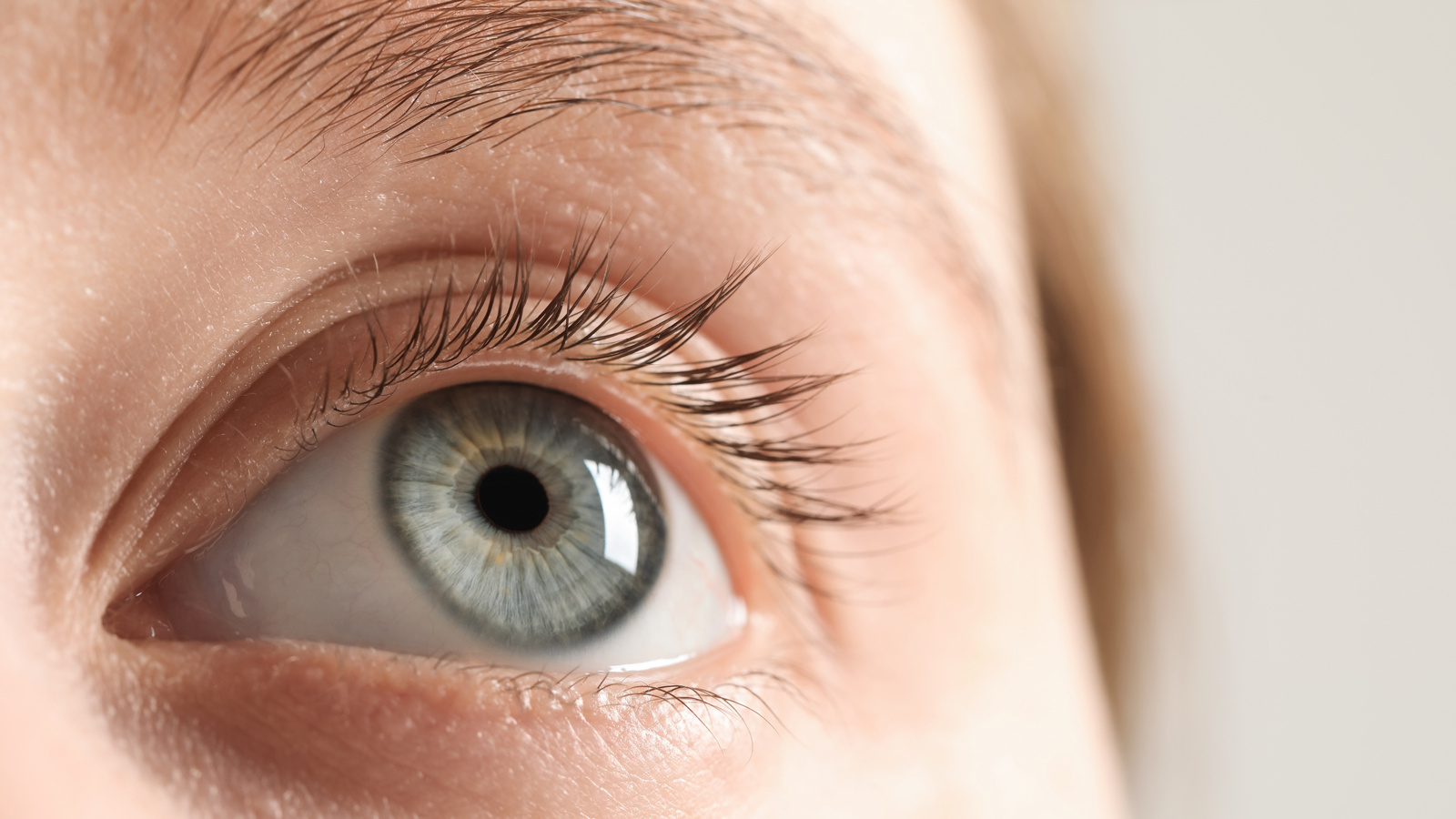
The arrangement of aligning each pixel with a single photoreceptor in the retina ensures that the display’s resolution is visually indistinguishable from reality. This is because it surpasses the theoretical human visual limit of 60 pixels per degree across a 120° field of view on an 8mm screen.
According to the researchers, the e-paper is passive, reflecting ambient light rather than emitting its own. Colours appear when ambient light hits tiny structures on a surface.
Each pixel is made from nanoparticles of tungsten oxide. By controlling their size and arrangement, the researchers can manipulate how light is scattered, and the optical properties of the particles can be adjusted with a small voltage. Using this method, they created red, green and blue pixels – the primary colours that combine to make all others. When ‘switched off’ with a weak voltage, the pixels turn black.
The team compares their approach to the bright, iridescent feathers of some small birds, where microscopic structures manipulate light to produce vivid colours.
To demonstrate the technology’s performance, the researchers recreated an image of Gustav Klimt’s famous artwork ‘The Kiss’ on a surface area of approximately 1.4 × 1.9 millimetres, which is about 1/4000th the size of a standard smartphone screen. The retina e-paper display was placed very close to the eye, demonstrating its potential for ultra-compact, high-resolution applications.
They say their breakthrough paves the way for the creation of virtual worlds that are visually indistinguishable from reality.
Kunli Xiong, associate senior lecturer/assistant professor at the department of materials science and engineering at Uppsala University and lead author, said: “The technology that we have developed can provide new ways to interact with information and the world around us. It could expand creative possibilities, improve remote collaboration and even accelerate scientific research.”
Giovanni Volpe, professor at the department of physics at the University of Gothenburg, said: “This is a major step forward in the development of screens that can be shrunk to miniature size while improving quality and reducing energy consumption.
“The technology needs to be fine-tuned further, but we believe that retina e-paper will play a major role in its field and will eventually have an impact on us all.”
Leave a Reply