
Tanya Weaver Mon 20 Oct 2025
Collected at: https://eandt.theiet.org/2025/10/17/tiny-electronic-eye-implant-restores-reading-vision-blind-eyes
An electronic eye implant has restored central reading vision in patients with sight loss, according to a study.
The retinal implant device PRIMA, developed by neural engineering firm Science Corporation, has been trialled by researchers at University College London (UCL) and Moorfields Eye Hospital.
During the clinical trials, conducted in 17 hospital sites across five countries, 38 patients were implanted with the device.
All these patients had lost the central sight of the eye being tested, leaving only limited peripheral vision. This was due to an untreatable progressive eye condition called geographic atrophy with dry age-related macular degeneration.
The results showed 84% of participants implanted with the PRIMA device were able to read letters, numbers and words following the trial.
They could also read, on average, five lines of a vision chart; some participants could not even see the chart before their surgery.
Mr Mahi Muqit, associate professor in the UCL Institute of Ophthalmology and senior vitreoretinal consultant at Moorfields Eye Hospital, who led the UK arm of the trial, said: “In the history of artificial vision, this represents a new era. Blind patients are actually able to have meaningful central vision restoration, which has never been done before.
“Getting back the ability to read is a major improvement in their quality of life, lifts their mood and helps to restore their confidence and independence. The PRIMA chip operation can safely be performed by any trained vitreoretinal surgeon in under two hours.”

Science Corporation
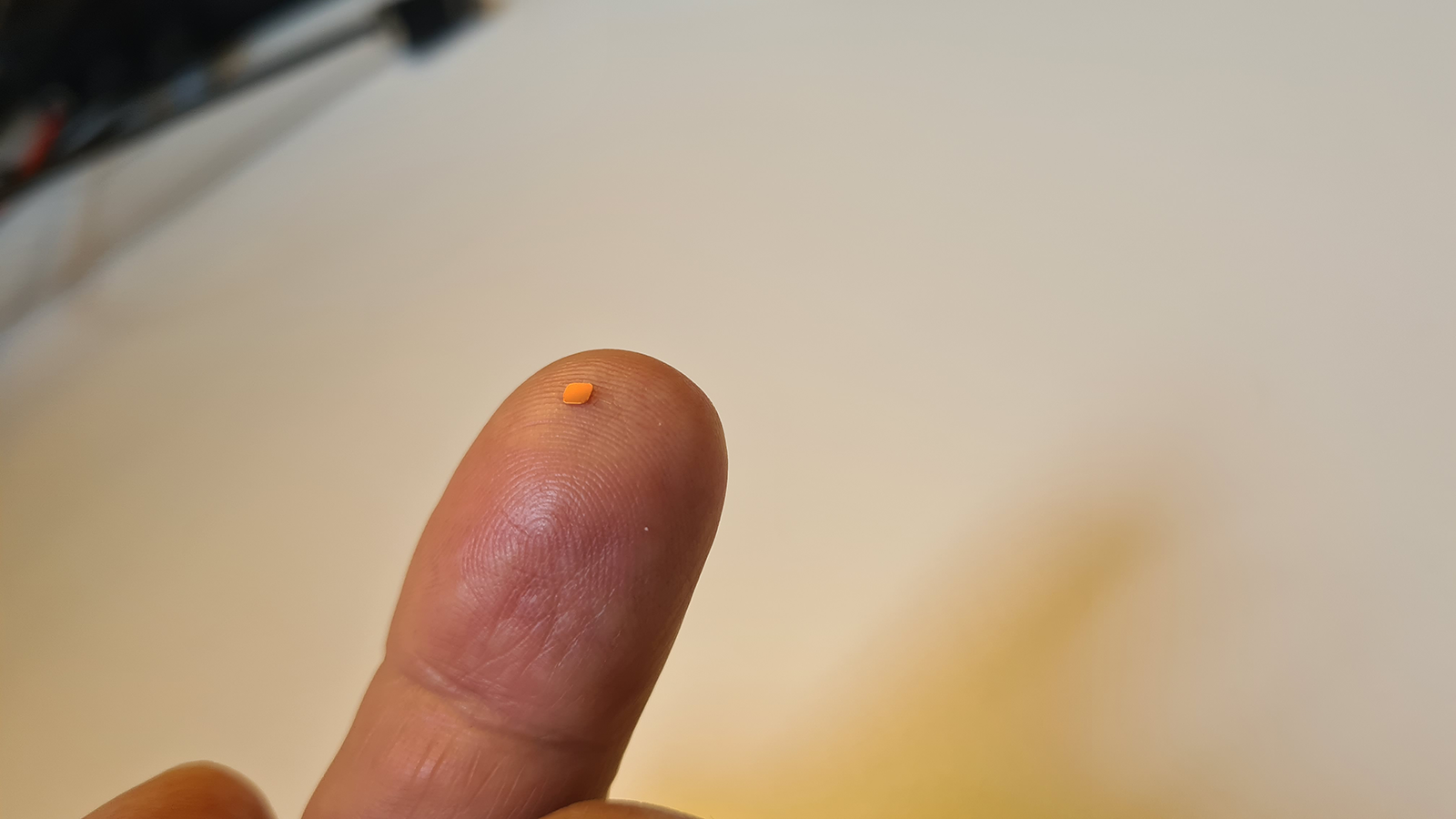
The procedure involves a vitrectomy, where the eye’s vitreous jelly is removed from between the lens and the retina. An ultra-thin 2mm x 2mm microchip is implanted under the centre of the retina.
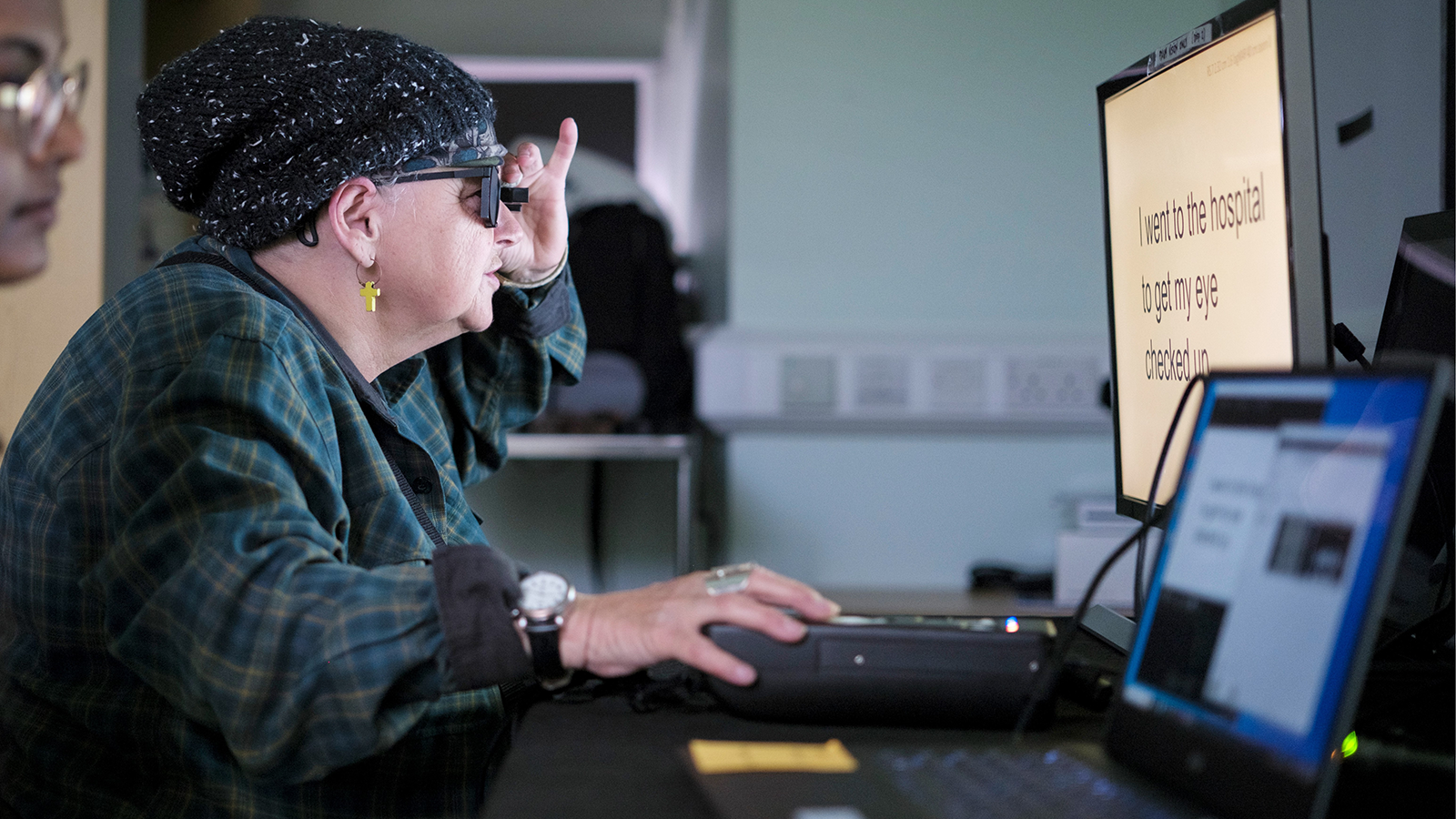
The photovoltaic implant is paired with augmented-reality specialised glasses that project near-infrared light to the implant, which acts like a miniature solar panel.
The glasses contain a video camera connected to a small waistband computer. The video camera projects the visual scene as an infra-red beam directly across the chip. AI algorithms through the small computer process this information, which is then converted into an electrical signal. This signal passes through to the brain, where it is interpreted as vision.
Using the glasses, the patient can scan the text and use the zoom feature to magnify letters.
Moorfields Eye Hospital
Sheila Irvine, one of Moorfields’ patients on the trial who was diagnosed with age-related macular degeneration, said: “Before receiving the implant, it was like having two black discs in my eyes, with the outside distorted.
“I was an avid bookworm, and I wanted that back. It’s a new way of looking through your eyes, and it was dead exciting when I began seeing a letter. It’s not simple, learning to read again, but the more hours I put in, the more I pick up.”
Muqit said: “The rehabilitation process is key to these devices. It’s not like you’re popping a chip in the eye and then you can see again. You need to learn to use this type of vision.”
The researchers hope that the findings of the study will pave the way for seeking approval to market the new device.
Leave a Reply