
Tanya Weaver Tue 14 Oct 2025
Collected at: https://eandt.theiet.org/2025/10/14/biodegradable-circuit-boards-look-meet-specs-next-gen-wireless-electronics
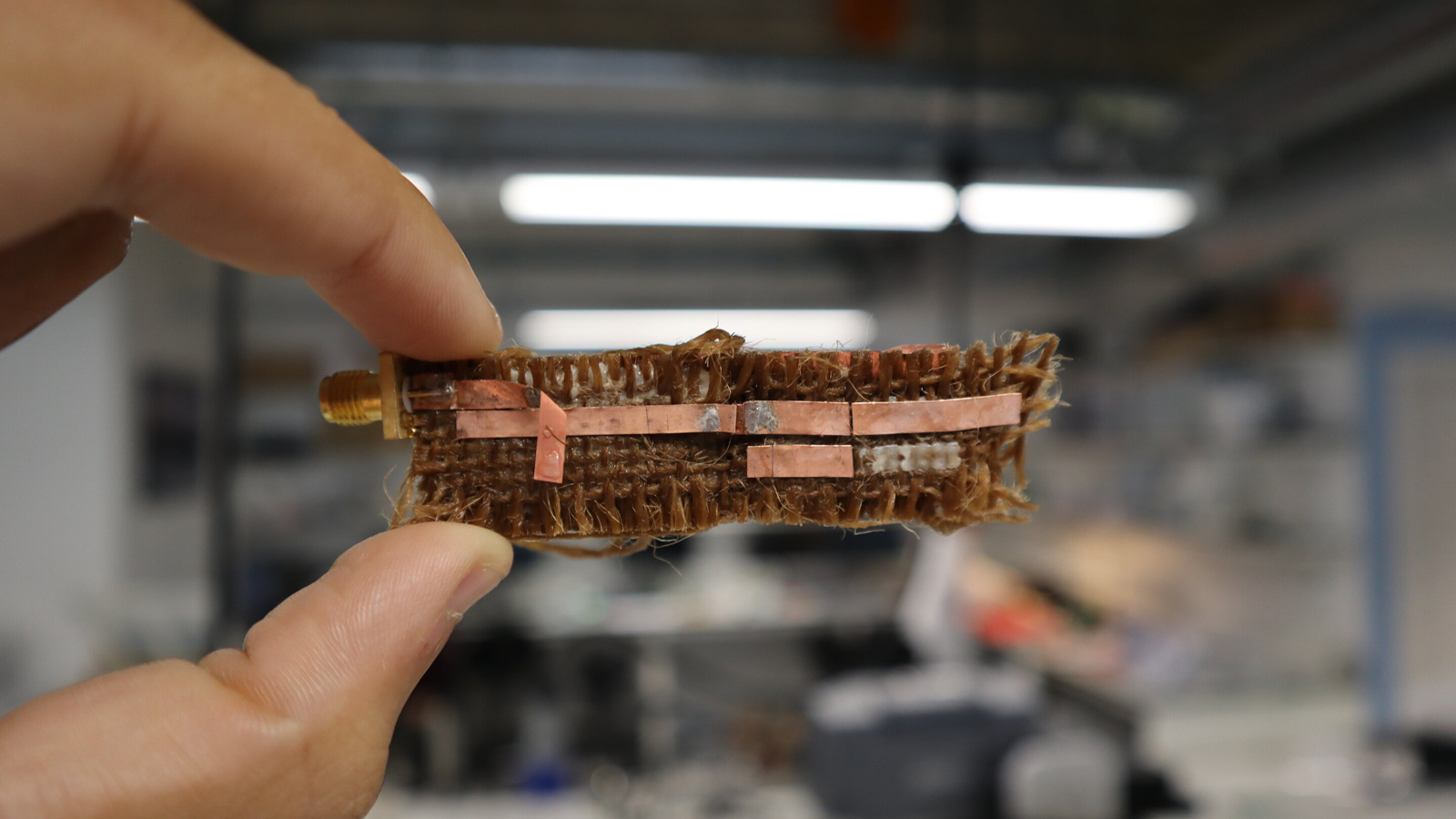
Biodegradable printed circuit boards (PCBs) are being tested for use in wireless communication technologies through a collaboration of researchers at the University of Glasgow and Jiva Materials.
UK tech start-up Jiva Materials has developed the Soluboard, a biodegradable PCB. With researchers from University of Glasgow’s James Watt School of Engineering, they are testing the potential of the PCB for use in high-speed electronics operating at GHz frequencies.
At its end-of-life, Soluboard’s copper tracks and integrated circuit chips can be delaminated and recycled. The rest of the PCB, which is made from natural fibres such as jute and flax, coated with a water-soluble resin, can simply be degraded in hot water.
Traditional PCBs, which contain flame-retardant composites or ceramics, are difficult to recycle, and so largely end up in landfill. The chemicals contained within these components often leach into the environment.
The partnership is testing how Soluboard’s greener PCB can be used for radio frequency applications. The tests show that the PCBs can transmit signals at frequencies exceeding 4GHz, which covers common wireless applications such as Wi-Fi, Bluetooth and RFID.
Their research also shows how Soluboards can support high-speed signals exceeding 3Gb per second without any distortion, a range that could allow mainstream consumer electronics with interfaces such as HDMI and USB.
Dr Mahmoud Wagih, reader at the James Watt School of Engineering, and project lead, said: “Working with natural and plant-based circuit materials is inherently challenging, particularly in wireless applications for RF and microwave applications. Together with our partners at Jiva Materials, we are developing new designs which improve the circuits’ efficiency, accelerating the adoption of green PCBs.
“The way forward is to co-design the materials with the specifications for meeting the wireless RF specifications, coming up with antenna and radio designs which meet the size and performance requirements of end users, particularly in consumer applications.”
Jiva Materials is hopeful this partnership will result in the changes required to enable its device to achieve higher electrical performance without compromising its environmental credentials.
Stephen Driver, CEO at Jiva Materials, said: “The complex demands on what appears to be a simple component are challenging, and changing the resin’s reinforcement materials to biodegradable alternatives requires extensive testing and analysis.”
On International E-Waste Day 2025 (14 October), the non-profit, Brussels-based Waste Electrical and Electronic Equipment Forum (WEEE Forum) has published a report highlighting the urgent need to recover critical raw materials, such as copper, from electronic waste before it ends up in landfill.
Its analysis finds that each year, e-waste in Europe – discarded phones, laptops, servers, cables and appliances – contains roughly one million tonnes of critical raw materials.
Jessika Roswall, the EU commissioner for environment, water resilience and a competitive circular economy, said: “We need a real change in mindset in how Europe collects, dismantles and processes this fast-growing e-waste mountain into a new source of wealth. Trade disruptions, from export bans to wars, expose Europe’s vulnerability. Recycling is both an environmental imperative and a geopolitical strategy.”
Pascal Leroy, director general of the WEEE Forum, said: “Without critical raw materials, we cannot build the batteries, turbines, chips and cables that underpin Europe’s green and digital future.
“By mining our e-waste instead of the planet, Europeans have a powerful opportunity to build our own circular supply chains, reduce exposure to global shocks, and secure the building blocks of our future.”
E+T recently did a deep dive into the challenges facing mineral supplies, including the growing momentum in Western democracies to seek out alternative sources.
Leave a Reply