
By Pranjal Malewar September 26, 2025
Collected at: https://www.techexplorist.com/new-skull-discovery-china-shaking-human-origins-research/101114/
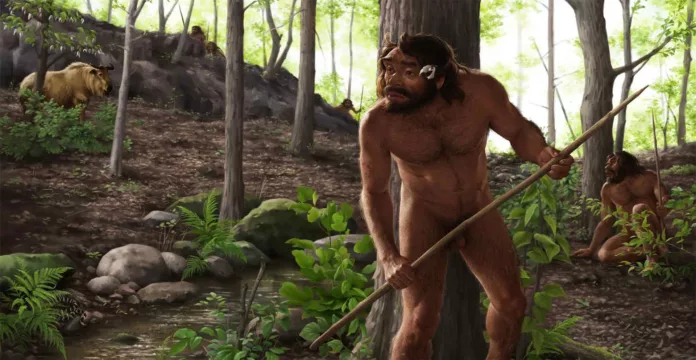
In the quiet bends of the Han River in central China, three ancient skulls lay buried for nearly a million years. Time had warped them, sediment had pressed them into silence, and for decades, they were thought to belong to a familiar chapter in our evolutionary tale, Homo erectus. This upright walker ventured out of Africa and into the wider world.
But science, like the river itself, never stands still.
Now, a new analysis of these skulls, known as Yunxian 1, 2, and 3, is challenging long-held beliefs about our origins, evolution, and the true beginning of our story. And it all started with a hunch.
“These fossils have usually been called Homo erectus by researchers,” explains Professor Chris Stringer of the Natural History Museum in London. “But for a long time I haven’t thought that they were Homo erectus as I could see that the shape was not typical, although I’d never had a closer look at them.”
That closer look came thanks to Xijun Ni, Stringer’s collaborator on the Dragon Man paper. Ni managed to obtain high-quality CT scans of the Yunxian 1 and 2 skulls, allowing the team to reconstruct the crania digitally. The fossils had been distorted during fossilisation, so the researchers built a 3D model, carefully filling in gaps in one skull using surviving material from the other.
What emerged was something unexpected, a face that looked less like Homo erectus and more like Dragon Man.
Dragon Man, a fossil unearthed in China and described by Stringer and colleagues in 2021, was named as the species Homo longi. It had already stirred debate in the scientific community, with some suggesting it belonged to the elusive Denisovan lineage, a mysterious group of archaic humans known primarily from DNA traces and a few fragmentary fossils.

“Our analysis suggests that the Yunxian skulls are actually an early member of the same group as Dragon Man,” says Chris. “And because Dragon Man increasingly now looks like it’s a Denisovan, there’s a lot of evidence pointing to the fact that the Yunxian fossils also belong to the Denisovan group.”
This connection is more than just a reclassification; it is a transformation. It has the potential to reshape the entire timeline of human evolution.
New research suggests that the age of the skulls indicates that the split between our lineage and that of Neanderthals and Denisovans may have occurred at least half a million years earlier than previously thought. This would mean that our origin dates back at least 400,000 years earlier than previously thought, and possibly even further.
“Our analysis suggests that all large-brained humans from the last 800,000 years or so can probably be put into one of five groups,” says Chris. “These are the groups of Asian Homo erectus, Homo heidelbergensis, Homo neanderthalensis, the Homo longi group, which likely contains the Denisovans, and of our own species Homo sapiens.”
“What’s revolutionary about our analysis is that it suggests all these five lineages trace their ancestry back more than a million years, which is much older than almost everyone has said, including me. And there are a couple of aspects that suggest that it could be an even more ancient divergence.”

For decades, the dominant narrative of human evolution has centered on the continent of Africa. It’s where the earliest hominins emerged some seven million years ago, and where Homo sapiens was believed to have evolved around 300,000 years ago. From there, our ancestors spread across the globe, encountering and sometimes interbreeding with other human species, such as Neanderthals and Denisovans.
Historically, research has focused on a range of hominin species emerging in the grasslands and forests of the African continent. Some of these animals, which would have exhibited a mixture of human and ape-like characteristics, remained within Africa, while others migrated out into Asia and Europe.
As these populations moved into different environments and split apart, some evolved into separate species. On the conventional view, by around two million years ago, Homo erectus appeared in Africa and then soon after in Eurasia. However, it remains unclear whether all fossils dating between 1 and 1.5 million years ago can be assigned to this species.
Regardless, by around 600,000 years ago another species of human, Homo heidelbergensis, was living in Africa and Europe, and presumably the regions in between. The reasoning suggests that by 400,000 years ago, this species had given rise to the Neanderthals in Europe, and by 300,000 years ago to our own species, Homo sapiens, in Africa.
Finally, it is believed that the Denisovans branched off from the Neanderthal lineage in the regions between Europe and Asia within the last half million years.
This has been the very general picture that has emerged over the last 25 years or so. However, as more fossils are discovered, analytical and dating techniques have improved, and with the addition of sampling ancient DNA, our understanding of this story has also evolved.
The new analysis of the Yunxian craniums puts the Denisovans as the most closely related extinct human species to our own lineage. Therefore, if the Denisovans split off over a million years ago, it means that ours did too, and that the Homo sapiens lineage is equally as ancient.
Considering that it was previously thought that our lineage and that of Neanderthals last shared a common ancestor around 500,000 years ago, this new finding would at least double that split.
“Some people probably won’t accept it, so we’ll have to see how that goes,” says Chris. “But it does have some implications.”
“It means that there must be some early members of the lineages of H. heidelbergensis, H. naerthalensis, and H. sapiens that we haven’t found yet, or which we have found but we haven’t recognised yet. There must be some million-year-old proto-sapiens, proto-neanderthals, and proto-heidelbergensis out there.”
It also opens the door to the possibility that our own lineage first emerged somewhere in Eurasia, before populations migrated into Africa, where Homo sapiens then evolved. Chris, however, is quick to point out that this conclusion still needs to be checked against million-year-old human fossils unearthed on the African continent, which were unavailable for the current study.
Meanwhile, other fossils, from Callao Cave in the Philippines, Rising Star Cave in South Africa, and Harbin in China, continue to challenge the boundaries of what we consider human. Some are so different from other fossil humans that they’ve been proposed as entirely new species, distinct from previously identified taxa such as Homo sapiens, H. neanderthalensis, H. heidelbergensis, H. erectus, and H. habilis.
It remains a matter of intense debate whether these morphologically diverse archaic humans represent multiple evolutionary clades or whether they are transitional variants leading to H. sapiens.
Our understanding of human evolution is largely based on fossil cranial specimens, but many of these are incompletely preserved and/or distorted. Proper reconstruction of these imperfect fossils is therefore critical to studying their phylogenetic relationships.
Journal Reference:
- Xiaobo Feng, Qiyu Yin et al. The phylogenetic position of the Yunxian cranium elucidates the origin of Homo longi and the Denisovans. Science. DOI: 10.1126/science.ado9202
Leave a Reply