
Jack Loughran Tue 19 Aug 2025
Collected at: https://eandt.theiet.org/2025/08/19/space-junk-detection-system-could-give-early-warnings-protect-satellites
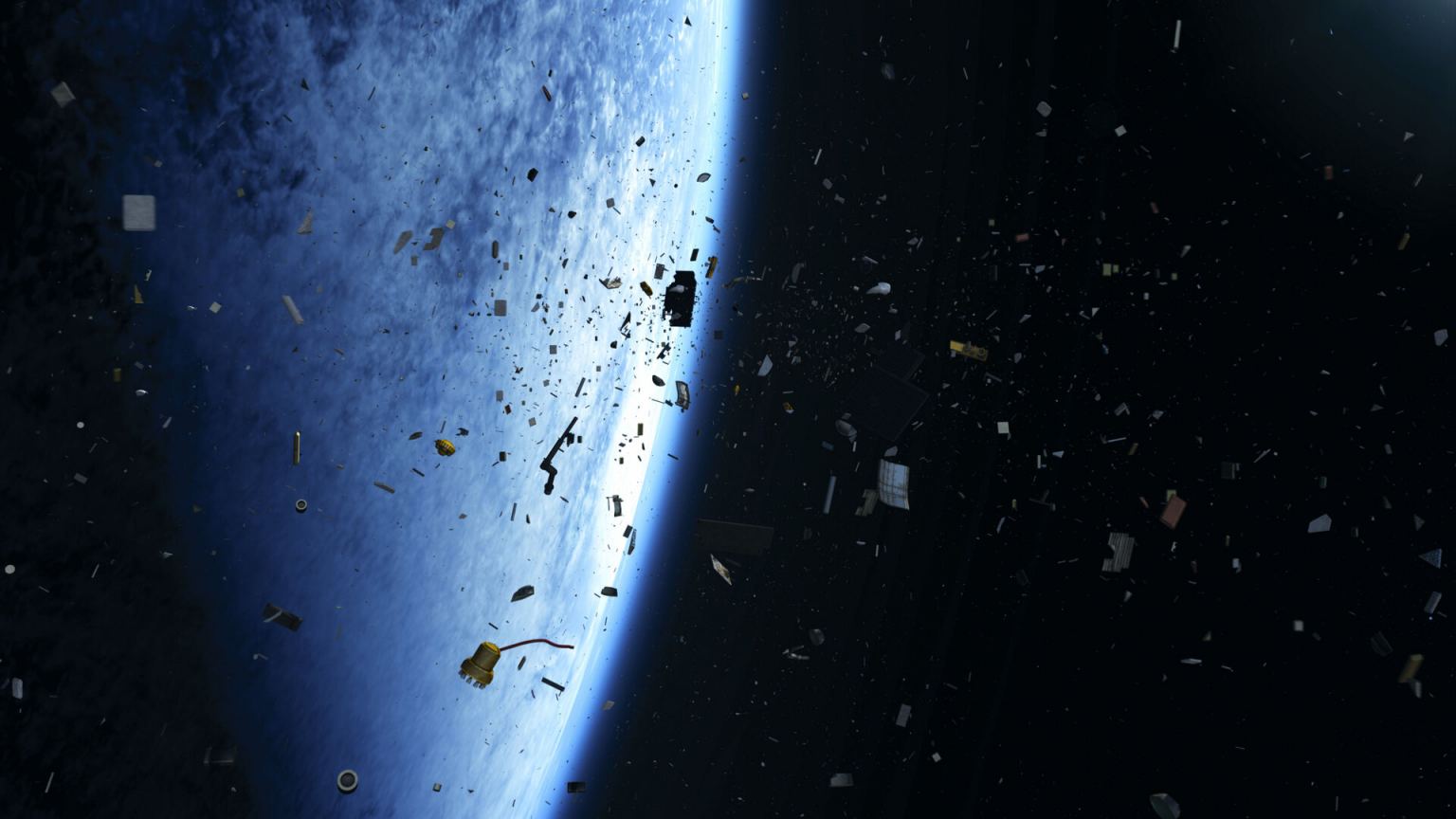
A detection system for orbital debris could provide early warnings to allow spacecraft and satellites to move away from the point of impact and inform teams on the ground if they are damaged.
The UK Space Agency estimates that 140 million pieces of space debris smaller than 1cm, and over 54,000 tracked objects larger than 10cm, are in low-Earth orbit. This junk can collide with vital space infrastructure, including satellite networks that power GPS, weather forecasting and emergency communications.
Since its launch in 1998, the International Space Station has been forced to correct its course 32 times to avoid satellites and trackable space debris, according to a 2022 Nasa report. However, some of the smaller pieces are difficult to track and have caused damage to the station.
Researchers at the Southwest Research Institute (SwRI) in Texas have developed a micrometeoroid and orbital debris (MMOD) detection system that provides critical “post-impact data” allowing teams on the ground to be aware of when a space asset has been hit, even if there is no immediate damage.
The system can be mounted on to a spacecraft or integrated into its design and consists of a structural element embedded with sensors that collect data for software analysis to identify impact details.
The data collected can provide insights into both the size and volume of particles orbiting Earth, including many that are too small to be seen from the planet’s surface. It can also alert spacecraft or satellites when they’ve been hit.
“Most spacecraft survive minor impacts without systems breaking or operators on Earth knowing,” said SwRI scientist Sidney Chocron, who led the development of the MMOD system. “Our device is designed to send data back to Earth with important insights before any damage is apparent, which can also influence future design decisions.”
SwRI used its light gas gun, which can replicate the vacuum of space and the impact conditions of space debris, to fire small projectiles at panels equipped with the MMOD device.
“While not every aspect of the space environment can be replicated, our tests create realistic particle impacts,” Chocron said. “This helps determine whether structures can withstand such collisions.”
The data could also help Nasa and the industry develop more resilient spacecraft. While it doesn’t help existing ships directly avoid collisions, the data could play a role in early warning systems. If a satellite detects a debris strike, it could warn others in the same orbit to move out of the way, if possible.
Now that the system has been successfully tested at full scale, SwRI is working to secure funding for a flight-ready version.
“Ultimately, our primary goal is to map and characterise the MMOD debris field around the Earth to better protect future missions,” Chocron said. “Our MMOD detection and characterisation system is a step toward better understanding and mitigating those risks.”

Throughout this great design of things you’ll receive a B+ for hard work. Where you actually confused us ended up being in all the specifics. You know, people say, details make or break the argument.. And it could not be more accurate here. Having said that, let me reveal to you precisely what did deliver the results. Your authoring can be incredibly convincing and that is possibly why I am making an effort in order to opine. I do not make it a regular habit of doing that. Secondly, whilst I can certainly notice a jumps in logic you make, I am not certain of how you seem to connect your points which in turn help to make your final result. For right now I will, no doubt subscribe to your position but hope in the foreseeable future you link the facts much better.


Leave a Reply