
By Amy C. Oliver, Center for Astrophysics | Harvard & Smithsonian June 27, 2025
Collected at: https://scitechdaily.com/cosmic-mystery-solved-astronomers-have-discovered-the-universes-missing-matter/
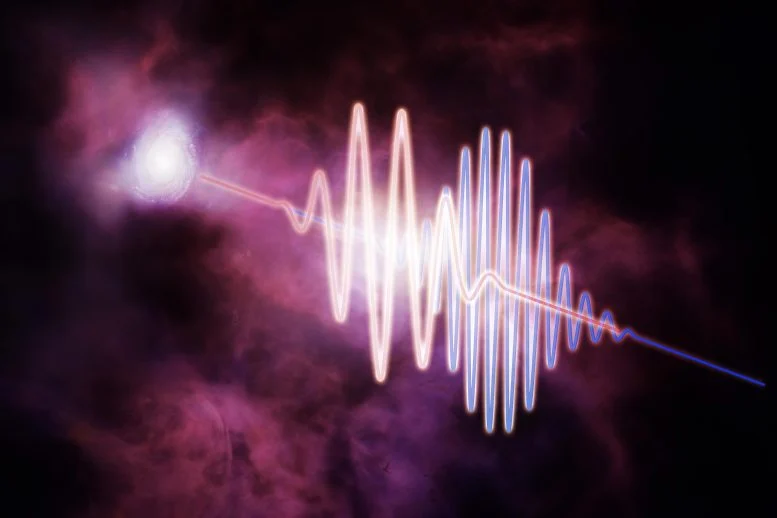
Guided by fast radio bursts, astronomers at the Center for Astrophysics have mapped how ordinary matter is distributed in the space between galaxies and have detected the most distant fast radio bursts ever observed.
A new breakthrough study has identified the location of the Universe’s “missing” matter and recorded the most distant fast radio burst (FRB) ever observed. Using FRBs as a tool, astronomers at the Center for Astrophysics | Harvard & Smithsonian (CfA) and Caltech discovered that more than three-quarters of the Universe’s ordinary matter is contained in the thin gas between galaxies.
This discovery represents a major advance in understanding how matter is distributed and behaves across the cosmos. With this new data, scientists have made the first detailed measurement of how ordinary matter is spread throughout the cosmic web.
For decades, researchers have known that at least half of the Universe’s ordinary matter—also known as baryonic matter, made mostly of protons—was missing from observational data. Astronomers had previously used X-ray emissions and ultraviolet light from distant quasars to search for this elusive mass, finding hints of it in the form of thin, warm gas located between galaxies.
However, because this gas is both hot and low in density, it remained nearly invisible to most telescopes, making it difficult to confirm exactly how much of it existed or where it was located.
Using FRBs to trace baryons
Enter FRBs: brief, bright radio signals from distant galaxies that scientists have only recently begun to use to measure baryonic matter in the Universe. Until now, they had not been able to determine where that matter was located. In this new study, researchers analyzed 60 FRBs, with distances ranging from about 11.74 million light-years—such as FRB 20200120E in the galaxy M81—to approximately 9.1 billion light-years, the distance of FRB 20230521B, the most distant FRB detected so far. This analysis enabled them to pinpoint the missing matter in the space between galaxies, known as the intergalactic medium (IGM).
“The decades-old ‘missing baryon problem’ was never about whether the matter existed,” said Liam Connor, CfA astronomer and lead author of the new study. “It was always: Where is it? Now, thanks to FRBs, we know: three-quarters of it is floating between galaxies in the cosmic web.” In other words, scientists now know the home address of the “missing” matter.
Measuring light to weigh the fog
By measuring how much each FRB signal was slowed down as it passed through space, Connor and his team tracked the gas along its journey. “FRBs act as cosmic flashlights,” Connor, who is also an assistant professor of astronomy at Harvard, said. “They shine through the fog of the intergalactic medium, and by precisely measuring how the light slows down, we can weigh that fog, even when it’s too faint to see.”
The results were clear: about 76 percent of the Universe’s baryonic matter is located in the intergalactic medium (IGM). Around 15 percent is found in galaxy halos, while a small portion is contained within stars or cold gas inside galaxies.
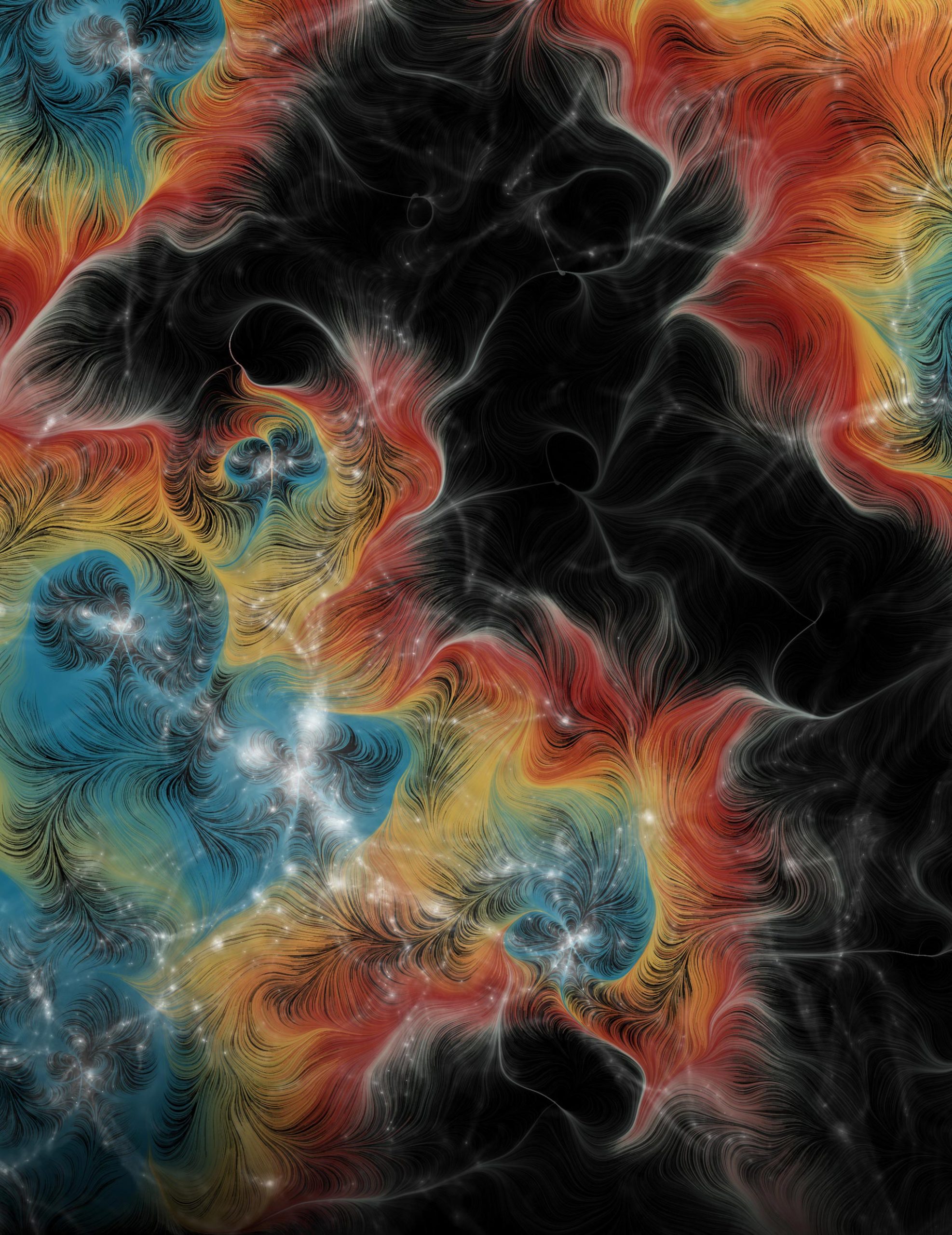
This distribution lines up with predictions from advanced cosmological simulations, but has never been directly confirmed until now.
“It’s a triumph of modern astronomy,” said Vikram Ravi, an assistant professor of astronomy at Caltech and co-author of the paper. “We’re beginning to see the Universe’s structure and composition in a whole new light, thanks to FRBs. These brief flashes allow us to trace the otherwise invisible matter that fills the vast spaces between galaxies.”
The structure and feedback of galaxies
Finding the missing baryons isn’t just an exercise in building an address book or taking a census. Their distribution holds the key to unlocking deep mysteries about how galaxies form, how matter clumps in the Universe, and how light travels across billions of light-years.
“Baryons are pulled into galaxies by gravity, but supermassive black holes and exploding stars can blow them back out—like a cosmic thermostat cooling things down if the temperature gets too high,” said Connor. “Our results show this feedback must be efficient, blasting gas out of galaxies and into the IGM.”
And this is just the beginning for FRB cosmology. “We’re entering a golden age,” said Ravi, who also serves as the co-PI of Caltech’s Deep Synoptic Array-110 (DSA-110). “Next-generation radio telescopes like the DSA-2000 and the Canadian Hydrogen Observatory and Radio-transient Detector will detect thousands of FRBs, allowing us to map the cosmic web in incredible detail.”
Reference: “A gas-rich cosmic web revealed by the partitioning of the missing baryons” by Liam Connor, Vikram Ravi, Kritti Sharma, Stella Koch Ocker, Jakob Faber, Gregg Hallinan, Charlie Harnach, Greg Hellbourg, Rick Hobbs, David Hodge, Mark Hodges, Nikita Kosogorov, James Lamb, Casey Law, Paul Rasmussen, Myles Sherman, Jean Somalwar, Sander Weinreb, David Woody and Ralf M. Konietzka, 16 June 2025, Nature Astronomy.
DOI: 10.1038/s41550-025-02566-y
Leave a Reply