
Arezki Amiri Published on June 19, 2025
Collected at: https://dailygalaxy.com/2025/06/physicists-baffled-by-mysterious-radio-signals-detected-antarctica/
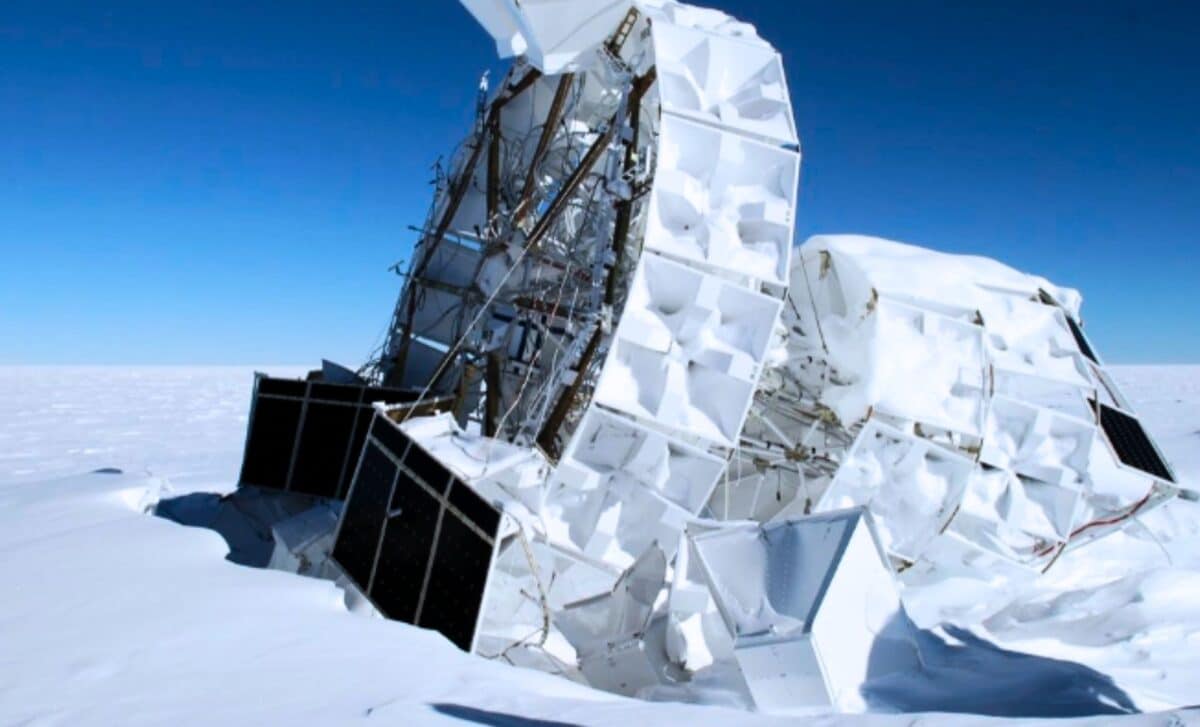
In a discovery that has both intrigued and perplexed the scientific community, a series of unusual radio signals detected over the icy expanse of Antarctica have prompted researchers to reconsider their assumptions about the cosmos. What was initially thought to be the detection of elusive neutrinos has instead led to a much deeper mystery that defies current models of physics. The signals, recorded by an instrument known as ANITA (Antarctic Impulsive Transient Antenna), suggest the presence of phenomena that challenge well-established scientific theories.
The Unexpected Signals from Antarctica
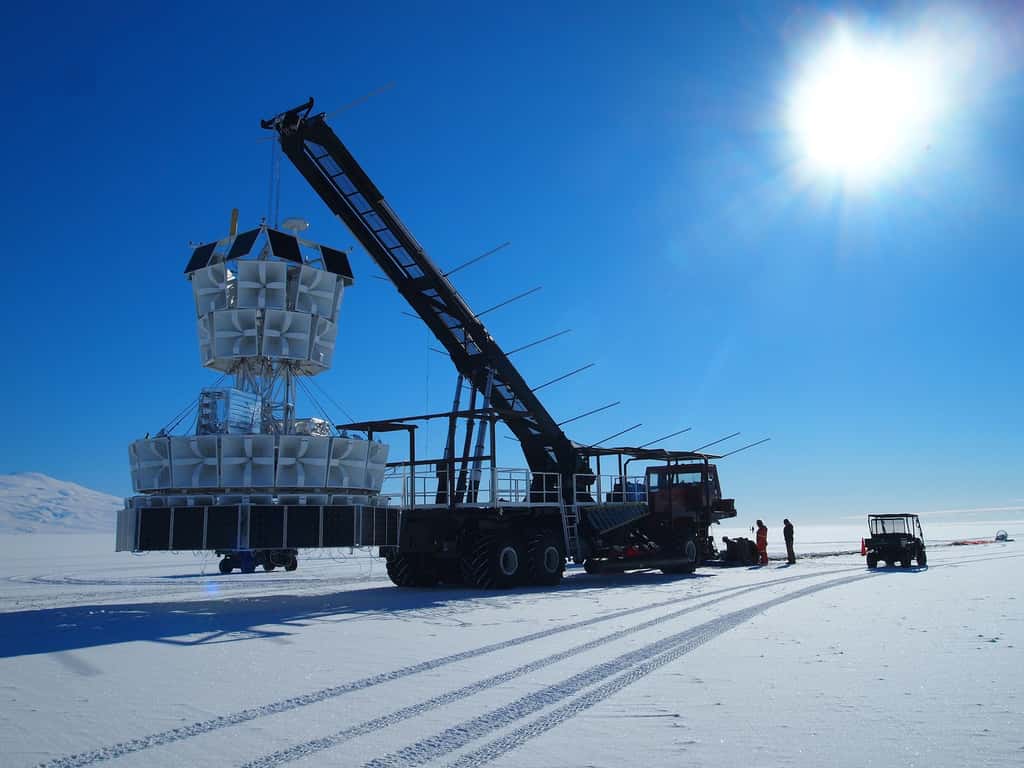
In 2020, an international team of scientists using ANITA, an antenna mounted on a high-altitude balloon, set out to detect signs of neutrinos—subatomic particles believed to travel through space undetected by most instruments. The researchers were hoping to capture signals emitted when these neutrinos interacted with the ice sheets of Antarctica. Instead, they recorded anomalous radio pulses from a direction that seemed impossible. The signals appeared to come from below the Earth’s surface, defying predictions about the behavior of such particles.
“The signals are coming from an angle that we don’t expect,” said Stephanie Wissel, a professor of physics, astronomy, and astrophysics at Penn State University. According to the current models, signals from neutrinos should not originate from such steep angles. The detection has raised questions about the very nature of the data, with some speculating that the readings may not even be caused by neutrinos at all.
A Growing Mystery
In theory, neutrinos are incredibly difficult to detect due to their weak interaction with matter. They are produced in massive quantities by cosmic events such as supernovae and the Big Bang, yet pass through the Earth virtually undisturbed. The ANITA team was hoping to capture these elusive particles by detecting the radio waves they produce when interacting with ice. But instead, the data revealed signals that defied traditional expectations. These signals, showing a distinct horizontal polarization, seemed to emanate from an unusual source beneath the ice rather than from high-energy cosmic particles crashing into the atmosphere.
For Wissel and her colleagues, this posed a major challenge. “We don’t have a precise explanation for these anomalies, but we know they’re probably not neutrinos,” Wissel remarked. With the current models failing to explain the phenomenon, the team’s findings have raised the possibility of new, as-yet-unknown types of particles or processes in the universe.
Theories and Challenges
One theory proposed by the team suggested that the strange signals might be the result of interactions between tau neutrinos—a type of neutrino with higher energy—inside the Earth’s crust. According to this hypothesis, the neutrinos could be producing tau leptons, which then emerge from the Earth and decay into atmospheric showers that could generate detectable radio waves. However, this idea is far from settled.
The problem with this theory lies in the physics involved. For the signals to match those recorded by ANITA, the neutrinos would need to travel through several kilometers of Earth’s crust—a scenario that is highly unlikely according to the laws of particle physics.
The Pierre Auger Observatory, located in Argentina, and the IceCube experiment in Antarctica, which also study high-energy particles, have found no evidence to support this idea. “The flux of such neutrinos should have been detected by these other instruments,” Wissel explained in the study published in Physical Review Letters, adding that the lack of corroborating data from other detectors further challenges the hypothesis.
Looking to the Future
The search for answers continues, with scientists now turning their attention to more sophisticated detection technologies. Pueo, a new detector currently under construction at Penn State University, is expected to provide more detailed observations and a better understanding of these anomalies. This new instrument, designed to study ultra-high energy particles, could hold the key to unraveling the mystery behind these strange radio pulses.
While the anomalous signals detected by ANITA do not appear to fit neatly into existing models of particle physics, they may ultimately point to new, groundbreaking discoveries. As Wissel and her team continue their work, they remain hopeful that Pueo will help clarify the nature of these mysterious signals and perhaps offer a glimpse into unknown aspects of the universe.
Leave a Reply