
Tanya Weaver Fri 20 Jun 2025
Collected at: https://eandt.theiet.org/2025/06/20/tiny-robots-unleashed-water-pipes-find-and-fix-leaks-autonomously
Miniature robots that can find and fix leaky water pipes autonomously without the need to dig up roads have been developed by researchers at the University of Sheffield.
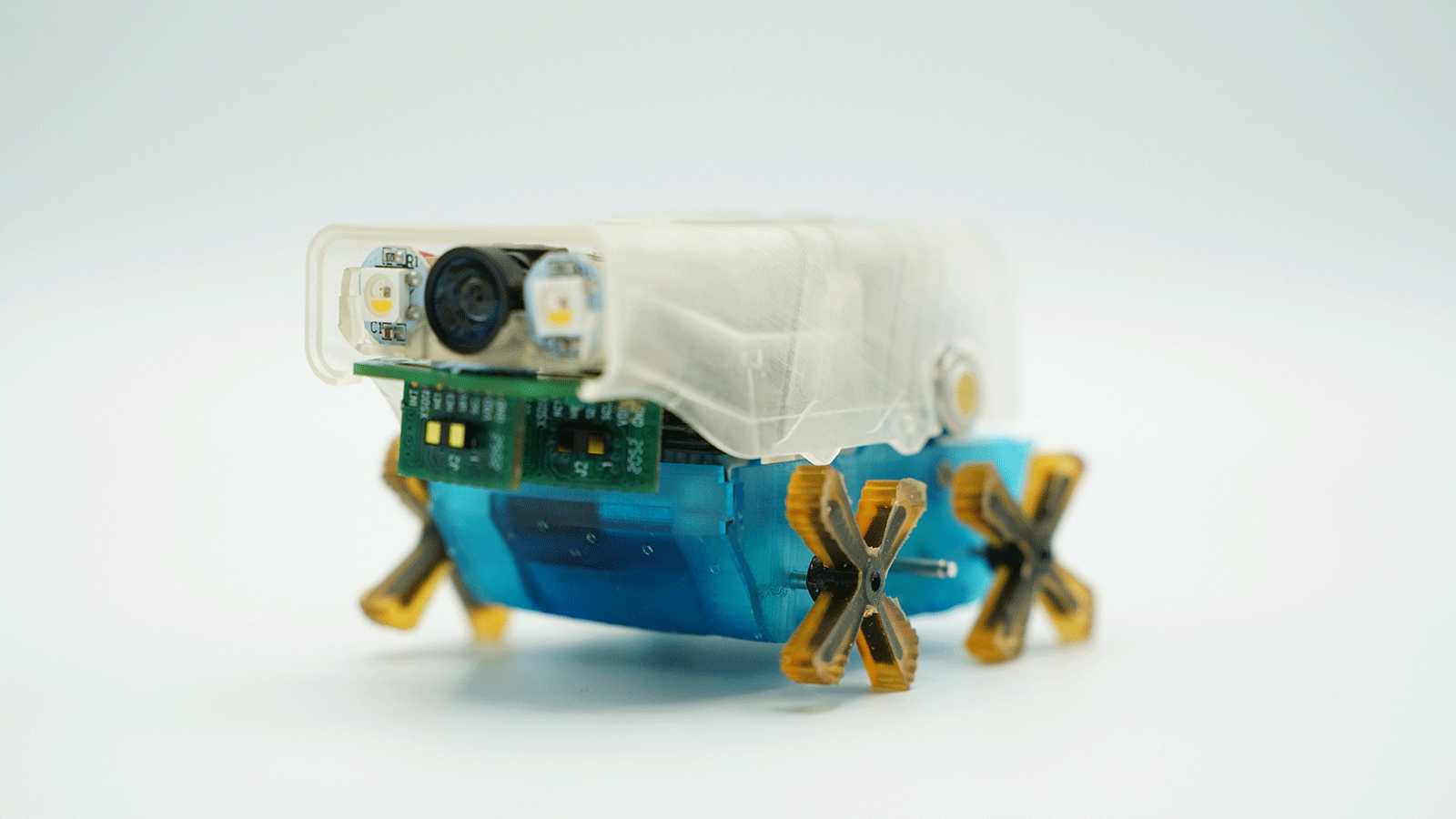
‘Pipebots’ are miniature robots equipped with sensors that can travel through pipes and check for defects in underground infrastructure.
The project, led by researchers at the University of Sheffield’s School of Mechanical, Aerospace and Civil Engineering, with input from the universities of Birmingham, Bristol and Leeds, started over six years ago.
The aim was to revolutionise how water infrastructure is managed to prevent water being lost through cracks and defective pipes.
Professor Kirill Horoshenkov, Pipebots programme director and professor of acoustics at the University of Sheffield, said: “Leaky water pipes are one of the biggest issues facing the water industry, not just here in the UK, but also globally as companies and governments grapple with ageing infrastructure.
“Whilst pipe inspection technologies have improved, it is still incredibly difficult to monitor the condition of water pipes and find leaks in these vast networks, especially when the leaks are small.”
According to statistics from Discover Water, the UK’s water network is formed of around 350,000km of pipes, many of which dates back to the Victorian era.
It estimates that over three billion litres of water are leaking out of this network every day, equivalent to 1,200 Olympic swimming pools.
For human workers to locate leaks is time-consuming, costly and disruptive as it often requires road closures.
A Pipebot, the smallest of which is 40mm wide, can navigate easily in pipes and with its tiny acoustic sensors and cameras is able to detect faults easily.
Equipped with all-terrain legs, these bots can also navigate through difficult paths in the pipes.
A swarm of Pipebots could even be deployed across a whole area. Lowered into a water pipe through a hydrant, they can relay real-time data back to an engineer above ground.
Horoshenkov said: “The bots would lessen the strain on resources and potentially save the UK economy part of the £4bn lost annually due to utility street works and related disruptions.”
Apart from water pipes, the bots are capable of operating in a range of other environments, including sewers, gas pipes and dangerous sites that are inaccessible to humans.
The Pipebot team are currently working with members of the water industry and local authorities across the UK on a number of different projects using the tiny robots.
One of these initiatives is Pipebot Patrol,which is developing an autonomous sewer robot that lives permanently in the sewer.
The Sheffield team is also working on a European Union-funded project called Pipeon to develop advanced robotic and AI technologies for autonomous sewer inspection and maintenance.
Horoshenkov said: “The Pipebots project is a great example of the importance of collaboration between universities and industry.
“Our research has demonstrated how effective the technology can be, and partners from industry are helping us to make it relevant to the end-user needs, test, advance and ultimately deploy it to help tackle a key challenge the water industry faces.”

Leave a Reply