
Tanya Weaver Tue 10 Jun 2025
Collected at: https://eandt.theiet.org/2025/06/10/co2-pollution-captured-and-converted-cement-precursor-new-study
A carbon capture method that converts carbon dioxide into metal oxalates – a precursor for cement production – has been developed by a team of researchers.
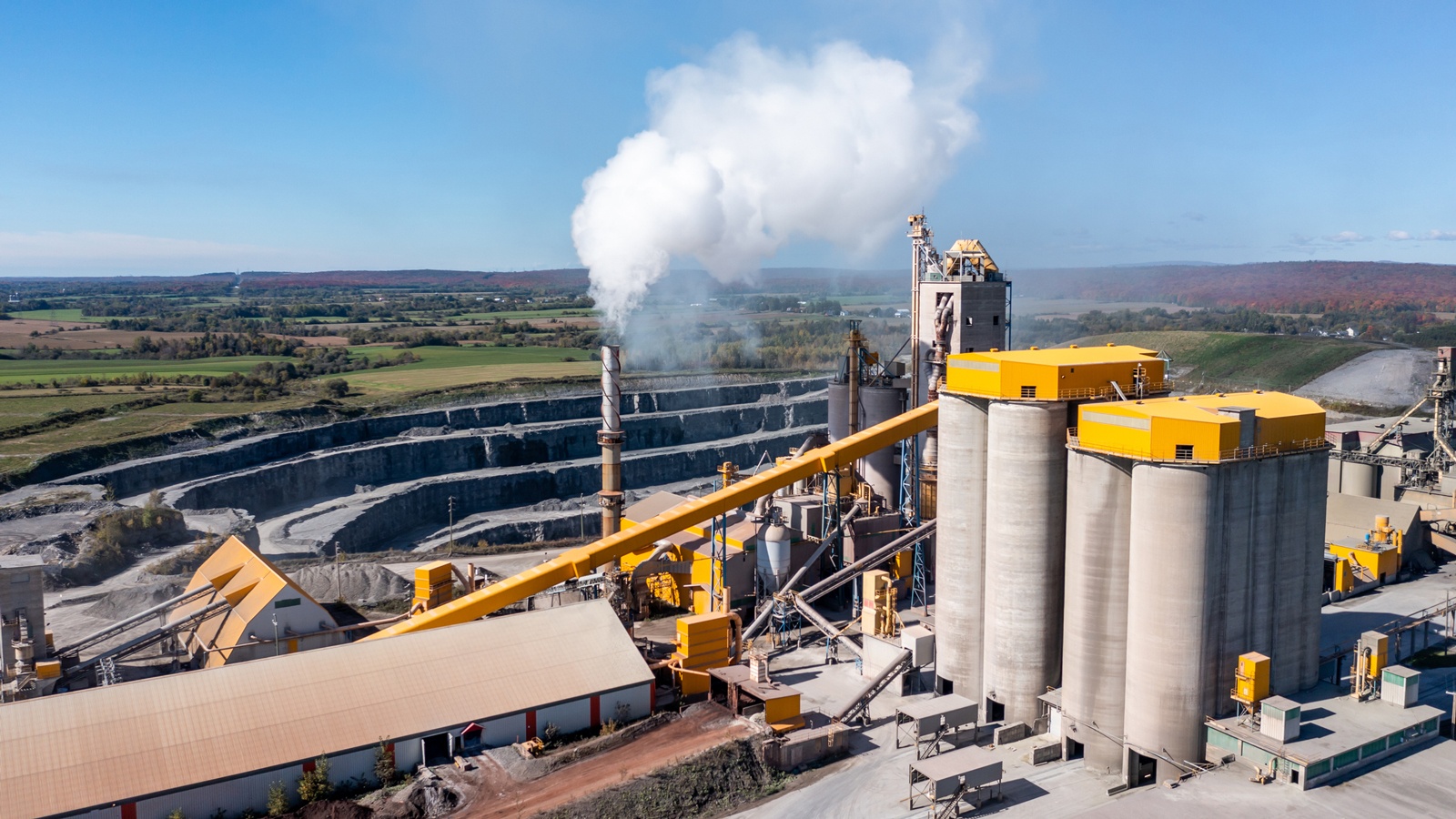
Concrete is the most widely used manufactured material on earth. It has quite literally created the foundations of our built environment, but it comes with a massive environmental cost.
The production of cement, the key ingredient of concrete, generates around 2.5 billion tonnes of CO2 every year – about 8% of the global total.
Cement’s lack of sustainability is well known. When producing clinker – a precursor to cement – the calcining process converts calcium carbonate to calcium oxide, releasing carbon dioxide. In addition, the reaction itself takes place at close to 1,400°C, which involves burning large quantities of fossil fuel.
The most common type of cement is Portland cement, which is typically made from limestone and minerals such as calcium silicates.
To reduce the environmental impact of producing Portland cement, a research team from the University of Michigan and the University of California has developed a method that is able to capture CO2 from the process and convert it into metal oxalates that can be used as a precursor in the production of alternative, sustainable construction materials.
Charles McCrory, associate professor of chemistry and macromolecular science and engineering at the University of Michigan, said: “This research shows how we can take carbon dioxide, which everyone knows is a waste product that is of little-to-zero value, and upcycle it into something that’s valuable.
“We’re not just taking carbon dioxide and burying it; we’re taking it from different point sources and repurposing it for something useful.”
The method they have developed uses trace elements of lead as a catalyst. While large quantities of lead poses health and environmental risks, the research team fine-tuned the catalytic process.
By manipulating the microenvironment around the lead catalyst, they were able to reduce the required lead concentration to parts per billion, minimising its hazards.
These trace amounts of lead were used to then drive a series of electrochemical reactions using a pair of electrodes. At one electrode, CO2 is converted into oxalate ions through the action of the lead catalyst.
The other metal electrode is oxidised and releases metal ions that bond with the oxalate ions, resulting in a precipitate of metal oxalate that can be harvested as a solid product.
McCrory said: “Those metal ions are combining with the oxalate to make a solid, and that solid crashes out of the solution. That’s the product that we collect and that can be mixed in as part of the cement-making process.”
Anastassia Alexandrova, study co-author and professor of chemistry and materials science at the University of California, said: “Metal oxalates represent an under-explored frontier – serving as alternative cementitious materials, synthesis precursors and even carbon dioxide storage solutions.”
Once the carbon dioxide is converted into the metal oxalate solid, the researchers said it would not be rereleased into the atmosphere as carbon dioxide again under normal conditions.
McCrory said: “It’s a true capture process because you’re making a solid from it. But it’s also a useful capture process because you’re making a useful and valuable material that has downstream applications.”
The next steps will involve further study in how to scale up the portion of the process that produces the solid product.
In another recent study, researchers in Japan created a cement-free soil solidifier from recycled glass and construction waste.
Leave a Reply