
By Amit Malewar 1 Mar, 2025
Collected at: https://www.techexplorist.com/new-limits-found-dark-matter-properties/97331/
A team led by Tokyo Metropolitan University has made significant strides in the search for dark matter. Using advanced spectrographic technology and the Magellan Clay Telescope, they observed galaxies. With just four hours of observations in the infrared range, they set new limits on the lifetime of dark matter. Their findings demonstrate the power of their technology and expand the search to less explored parts of the spectrum.
For decades, cosmologists have noticed that galaxies rotate in a way that suggests there is more mass than we can see, dubbed “dark matter.” This elusive substance is challenging to study because it is invisible and has unclear properties.
The Japanese team, led by Associate Professor Wen Yin, used the 6.5-meter Magellan Clay Telescope in Chile to observe light from two galaxies, Leo V and Tucana II. They focused on a dark matter candidate called the axionlike particle (ALP) and studied how it might decay and emit light.
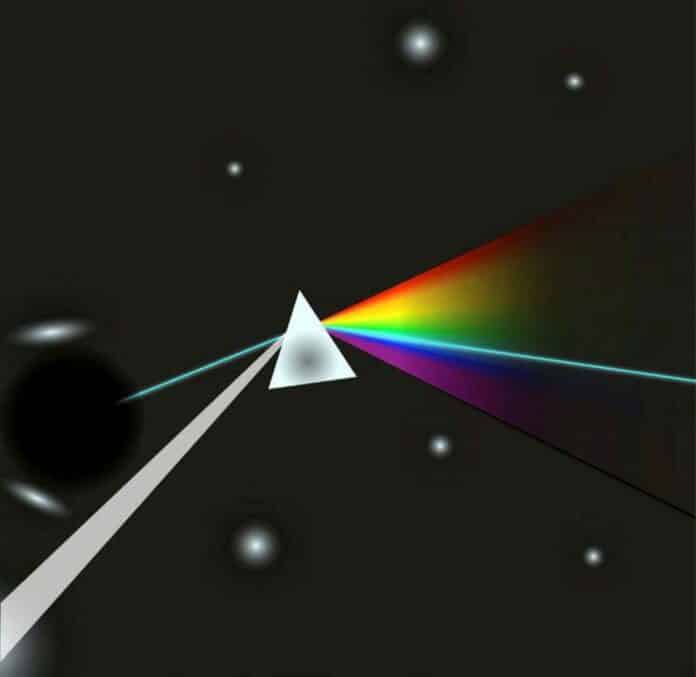
The infrared part of the spectrum is promising for this research but is often cluttered with noise from other sources. The team’s new technique filters out this noise by focusing on narrow wavelength ranges where decay events are more visible. This approach uses state-of-the-art infrared spectrographs like WINERED and NIRSpec to act as dark matter detectors.
Thanks to their precision technology, they found no decay events in the near-infrared, setting a new lower limit on the lifetime of ALP particles. Their findings suggest these particles could live for 10^25 to 10^26 seconds, far longer than the universe’s age.
This breakthrough sets the most stringent limit yet for dark matter’s lifetime and shows how cutting-edge infrared technology can address fundamental questions in particle physics. The team’s analysis hints at potential anomalies that could lead to the actual detection of dark matter with more data.
This research, supported by various grants and institutions, including the University of Tokyo and Kyoto Sangyo University, represents a crucial step in the ongoing quest to uncover the universe’s missing piece.
Journal Reference:
- Wen Yin, Taiki Bessho, Yuji Ikeda et al. First Result for Dark Matter Search by WINERED. Physical Review Letters. DOI: 10.1103/PhysRevLett.134.051004

Leave a Reply