
By Casey Crownh February 6, 2025
Collected at: https://www.technologyreview.com/2025/02/06/1111033/supersonic-climate-fast/
As I’ve admitted in this newsletter before, I love few things more than getting on an airplane. I know, it’s a bold statement from a climate reporter because of all the associated emissions, but it’s true. So I’m as intrigued as the next person by efforts to revive supersonic flight.
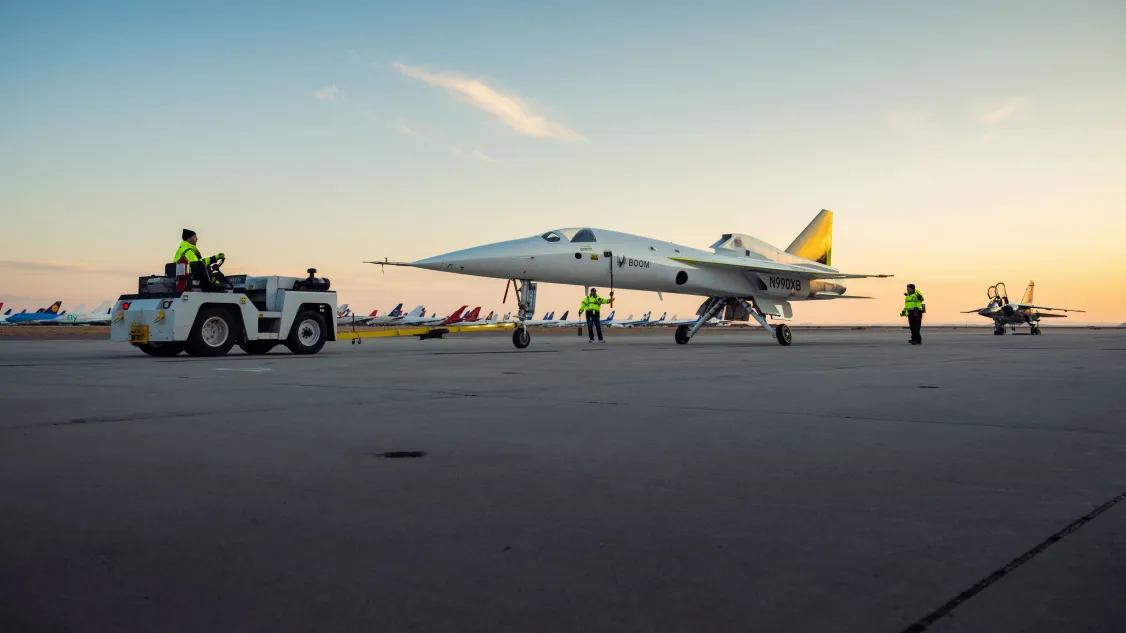
Last week, Boom Supersonic completed its first supersonic test flight of the XB-1 test aircraft. I watched the broadcast live, and the vibe was infectious, watching the hosts’ anticipation during takeoff and acceleration, and then their celebration once it was clear the aircraft had broken the sound barrier.
And yet, knowing what I know about the climate, the promise of a return to supersonic flight is a little tarnished. We’re in a spot with climate change where we need to drastically cut emissions, and supersonic flight would likely take us in the wrong direction. The whole thing has me wondering how fast is fast enough.
The aviation industry is responsible for about 4% of global warming to date. And right now only about 10% of the global population flies on an airplane in any given year. As incomes rise and flight becomes more accessible to more people, we can expect air travel to pick up, and the associated greenhouse gas emissions to rise with it.
If business continues as usual, emissions from aviation could double by 2050, according to a 2019 report from the International Civil Aviation Organization.
Supersonic flight could very well contribute to this trend, because flying faster requires a whole lot more energy—and consequently, fuel. Depending on the estimate, on a per-passenger basis, a supersonic plane will use somewhere between two and nine times as much fuel as a commercial jet today. (The most optimistic of those numbers comes from Boom, and it compares the company’s own planes to first-class cabins.)
In addition to the greenhouse gas emissions from increased fuel use, additional potential climate effects may be caused by pollutants like nitrogen oxides, sulfur, and black carbon being released at the higher altitudes common in supersonic flight. For more details, check out my latest story.
Boom points to sustainable aviation fuels (SAFs) as the solution to this problem. After all, these alternative fuels could potentially cut out all the greenhouse gases associated with burning jet fuel.
The problem is, the market for SAFs is practically embryonic. They made up less than 1% of the jet fuel supply in 2024, and they’re still several times more expensive than fossil fuels. And currently available SAFs tend to cut emissions between 50% and 70%—still a long way from net-zero.
Things will (hopefully) progress in the time it takes Boom to make progress on reviving supersonic flight—the company plans to begin building its full-scale plane, Overture, sometime next year. But experts are skeptical that SAF will be as available, or as cheap, as it’ll need to be to decarbonize our current aviation industry, not to mention to supply an entirely new class of airplanes that burn even more fuel to go the same distance.
The Concorde supersonic jet, which flew from 1969 to 2003, could get from New York to London in a little over three hours. I’d love to experience that flight—moving faster than the speed of sound is a wild novelty, and a quicker flight across the pond could open new options for travel.
One expert I spoke to for my story, after we talked about supersonic flight and how it’ll affect the climate, mentioned that he’s actually trying to convince the industry that planes should actually be slowing down a little bit. By flying just 10% slower, planes could see outsized reductions in emissions.
Technology can make our lives better. But sometimes, there’s a clear tradeoff between how technology can improve comfort and convenience for a select group of people and how it will contribute to the global crisis that is climate change.
I’m not a Luddite, and I certainly fly more than the average person. But I do feel like, maybe we should all figure out how to slow down, or at least not tear toward the worst impacts of climate change faster.

Leave a Reply