
Tanya Weaver Mon 20 Jan 2025
Collected at: https://eandt.theiet.org/2025/01/20/wildfires-and-fossil-fuel-burning-caused-record-surge-atmospheric-co2-levels-2024
The biggest-ever annual rise in atmospheric CO2 levels has been recorded by a Hawaii-based atmospheric monitoring station.
The Mauna Loa Observatory in Hawaii has been recording atmospheric CO2 levels since 1958. Based on continuous measurements taken at the observatory, a graph is produced, known as the Keeling Curve. It depicts the annual variation and overall accumulation of CO2 in the atmosphere.
Last year, the Keeling Curve revealed that the level of CO2 in the atmosphere increased by 3.58 parts per million (ppm) to 427ppm – the biggest leap since records began there almost 70 years ago. This exceeded the Met Office’s prediction of 2.84±0.54 ppm.
This predictive overshooting is concerning: the Intergovernmental Panel on Climate Change (IPCC) calculates that if global warming is to be limited to 1.5°C, the build-up of CO₂ in the air needs to be slowing to 1.8ppm a year.
The reason for the huge surge in CO2 levels in 2024 is down to a number of factors. These include CO2 emissions from burning fossil fuels hitting a record high and the decimation of natural carbon sinks due to deforestation activities, as well as unprecedented wildfires brought about by record global temperatures and the El Niño weather pattern, which delivered hotter and drier conditions in the tropics.
According to the Met Office, the CO2 rise between 2024 and 2025 is forecast to be less extreme than 2024 at 2.26±0.56 ppm. This is due to a partial restrengthening of carbon sinks linked to a shift from El Niño to La Niña weather patterns.
However, this slower rise will still be too fast to track the IPCC’s scenarios that limit global warming to 1.5°C with little or no overshoot.
Professor Richard Betts at the Met Office said: “La Niña conditions are expected to cause forests and other ecosystems to soak up more carbon than last year, temporarily slowing the atmospheric CO2 rise.
“However, stopping global warming needs the build-up of greenhouse gases in the air to come to a complete halt and then start to reduce. Large, rapid emissions cuts could limit the extent to which global warming exceeds 1.5°C – but this needs urgent action internationally.”
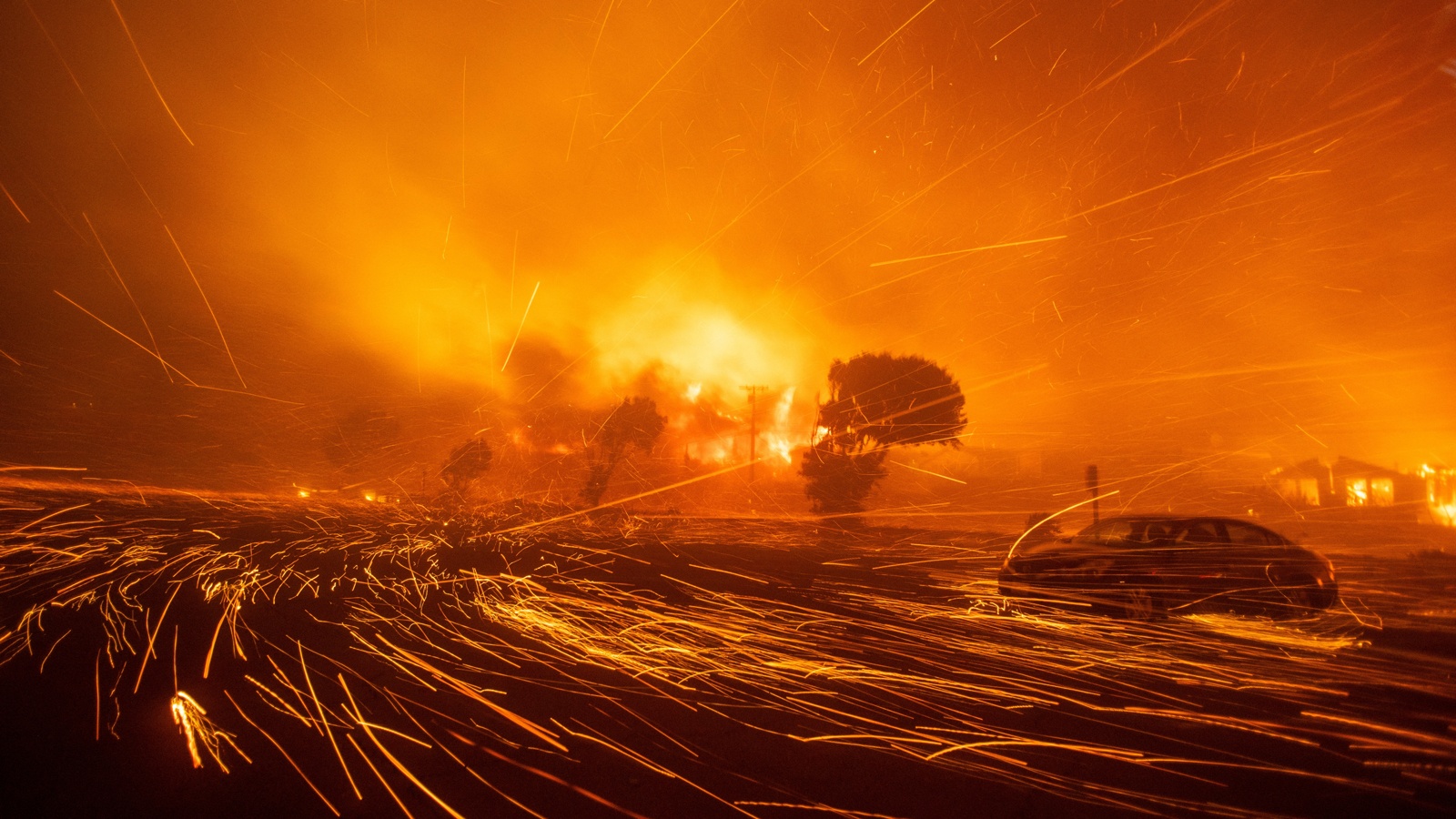
Wildfires release billions of tonnes of CO2 into the atmosphere each year and this year has already seen catastrophic wildfires raging across Los Angeles. This event was unprecedented not just due to its scale and the devastation wrought but how early it was in the year. In California, wildfire season typically starts in June and continues through October, when the weather is hot and dry.
However, following a summer of record-breaking temperatures and extreme heat, below-average rainfall since October and extreme windy conditions in January all contributed to the disaster.
According to an article in The Guardian, with a total of 12,000 structures having been destroyed, estimates put the total cost of the fire’s damage at around $250bn, making it the costliest fire in US history.
While the LA County officials have said that many as 11,000 people could return to their homes having been put under evacuation orders, they are being warned about hazardous waste and toxins in the ruins of their properties.
Yana Garcia, California Environmental Protection Agency secretary, told the Los Angeles Times: “We understand completely that people are anxious to get back onto their property. But I cannot emphasise enough how important it is to have hazardous waste removed by trained personnel with protective equipment.”
Hazards in the area can include “batteries, ammunition, propane tanks, pesticides, even household cleaning products that can become extremely volatile and toxic when exposed to heat and fire”.
Leave a Reply