
Tanya Weaver Fri 3 Jan 2025
Collected at: https://eandt.theiet.org/2025/01/03/german-researchers-develop-passive-radar-system-using-signals-starlink-satellites
Researchers at the Fraunhofer Institute for High Frequency Physics and Radar Techniques (Fraunhofer FHR) in Germany have proven that passive radar using signals from satellite mega-constellations is suitable for avalanche detection.
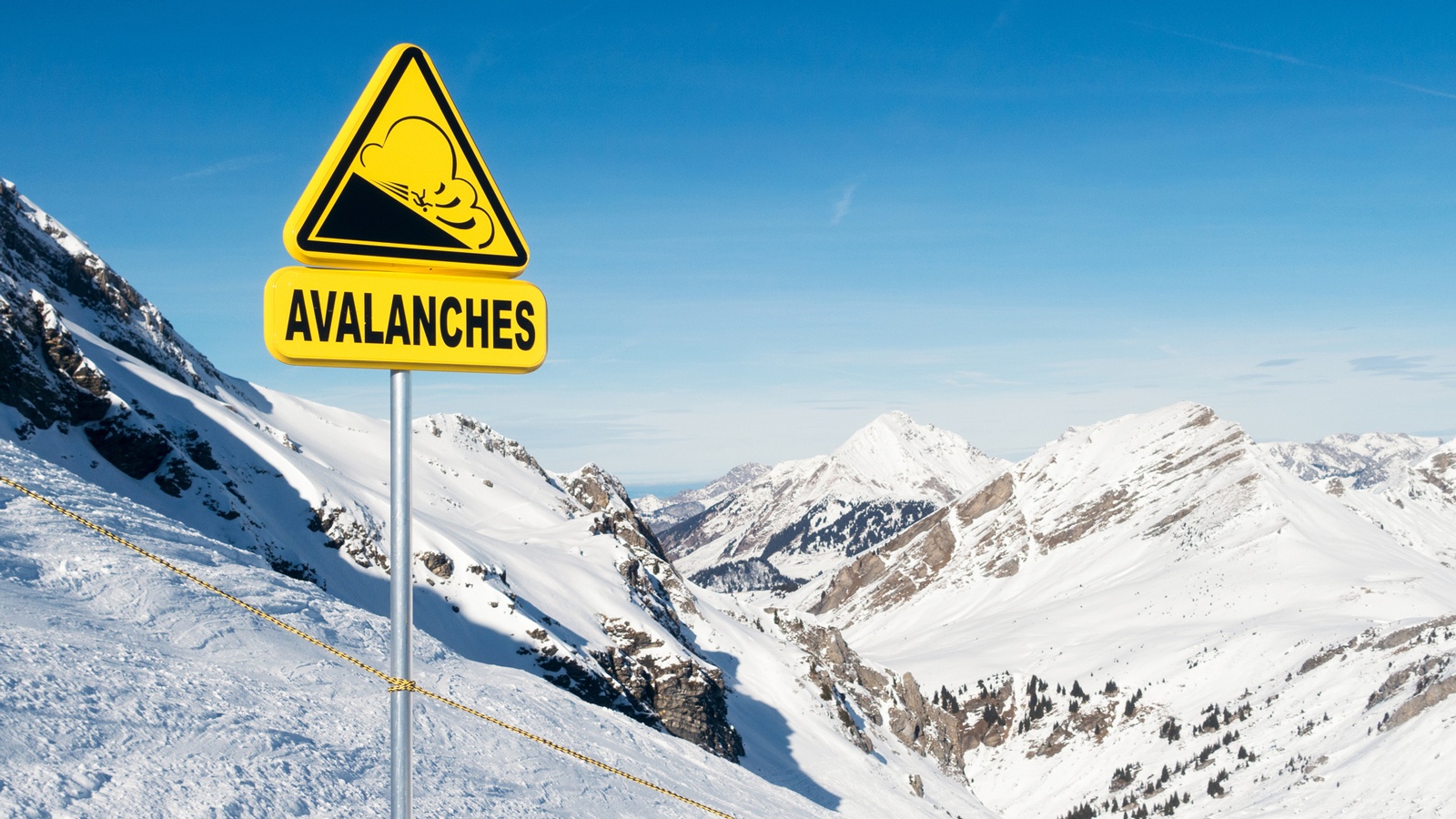
The increased snowfall in mountainous areas during winter significantly increases the risk of an avalanche. To protect people and infrastructure, avalanche monitoring is critically important.
To prevent an avalanche from occurring, controlled artificial detonations are carried out in the affected area. These trigger the release of huge masses of snow, which thunder down into the valley along a predetermined path.
To confirm that the avalanche was triggered as planned, monitoring equipment is employed using methods such as mechanical wires that break when the avalanche starts, radar technologies for continuous remote monitoring or helicopters that monitor the area during the detonation.
However, all of these methods present some form of disadvantage – mechanical wires have to be re-tensioned after every avalanche, helicopters can only fly in good weather and active radar technologies require transmission licences.
To combat these issues, researchers decided to investigate the use of passive radar, which unlike conventional active radar uses radio or mobile communication signals, does not emit radar beams and can be operated without transmission licences.
Dr Diego Cristallini, group leader at Fraunhofer FHR, said: “As passive radar does not require transmitting antenna and needs fewer components, it is cheaper and easier to put into operation. It can easily be set up without a licence.”
In a feasibility study commissioned by the European Space Agency and the European Space Research and Technology Centre, the researchers investigated whether signals from Starlink and OneWeb, which are used for broadband coverage around the world, would be suitable for avalanche detection. More specifically, they wanted to know whether they are actually capable of detecting and confirming an avalanche after a detonation.
Cristallini said: “Satellite links are always used when terrestrial networks are unavailable, overloaded or disrupted. Like OneWeb, Starlink is a low-Earth orbit satellite service. This means that a large number of satellites circle the Earth in a low orbit.
“This proximity is advantageous in terms of latency, as the distance from the ground to the satellite and back is only a few hundred kilometres.”
The satellite mega-constellations are permanently available as a signal source enabling continuous radar images of mountain regions. Using this topographical data, Cristallini and his team developed a simulation environment of the mountainous area. This enabled them to simulate avalanches and analyse whether they can be detected using the Starlink signals.
To test the theory, the researchers used their passive radar system to detect small and controlled landslides in a former basalt mine on the Rhine near the German town of Remagen.
Cristallini said: “Both the simulations and the practical test have shown that passive radar with signals from satellite mega-constellations is suitable for detecting and confirming avalanches.”
Leave a Reply